In hostage rescue operations, the ability to assess the interior of a room or vehicle through a window is often the difference between a successful intervention and a catastrophic outcome. Hostage takers routinely barricade themselves inside buildings or vehicles, using windows as both a vantage point and a shield. Traditional optical surveillance—binoculars, spotting scopes, or even high-zoom cameras—fails when the subject is behind glass. Reflections, glare, and tinted coatings obscure critical details such as the hostage taker’s posture, the position of a weapon, or the hostage’s movement. Thermal imagers, while useful for detecting heat signatures, cannot see through glass because the glass blocks infrared radiation. This leaves tactical teams with a dangerous gap: they must either breach blindly or rely on incomplete intelligence. The Penetrating Imager addresses this exact vulnerability by providing a clear, real-time view through standard automotive and architectural glass, enabling commanders to make decisions based on visual confirmation rather than guesswork.
The technology behind The Penetrating Imager is a laser-based range-gated active imaging system. It emits high-repetition-rate laser pulses in the visible or near-infrared spectrum, synchronised with an image-intensified gated camera that opens only when the light reflected from the target returns. This time-gating mechanism selectively captures photons that have travelled through the glass and bounced off objects behind it, while rejecting scattered light from the glass surface itself and from atmospheric particles. The result is a high-contrast, high-resolution image that cuts through reflections, tinting, and even moderate fog or rain. For hostage rescue scenarios, the key functional advantage is tactical observation through automotive glass—the device can see through car windows, van side panels, and even the thick windshields of armoured vehicles. The operator does not need to be positioned directly in front of the glass; a slight oblique angle still yields usable imagery, which is essential when the attacker may be scanning the surroundings.
In practice, The Penetrating Imager is deployed as a handheld unit or mounted on a tripod for sustained monitoring. During a vehicle hostage standoff, a tactical observer positions the imager at a safe distance—typically 50 to 200 metres away—and aims it at the target window. The device’s built-in zoom lens and digital display present a live feed that shows the occupants’ positions and movements through the glass. Because the system is active (it emits its own laser illumination), it works equally well in daylight and total darkness, making it a 24-hour tool. The through-window tactical recce capability has been field-tested in simulated rescues, where teams successfully identified the hostage taker’s hand holding a weapon, the hostage’s location relative to the door, and even the presence of concealed wires or booby traps. The imager can also be coupled with a video transmitter to stream the feed to the command post, allowing the entire team to see the same information without exposing additional personnel.
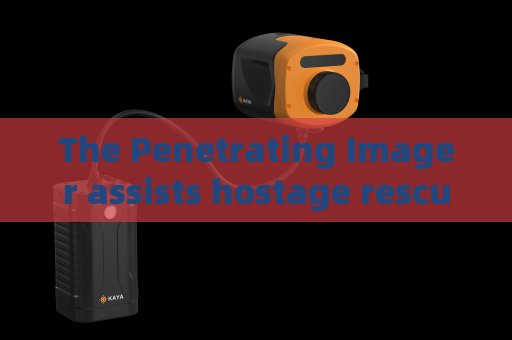
Operational procedures dictate that the team first establishes a secure perimeter and then deploys The Penetrating Imager for a low-signature observation phase. Unlike radar or acoustic sensors, the laser-based system emits no audible sound and only a faint, invisible beam, making it virtually undetectable by the hostage taker. Once the imager confirms the tactical picture, negotiators or snipers can adjust their approach with precision. For example, if the imager reveals that the hostage taker is momentarily looking away, a window-breaching team can exploit the window of opportunity. The device also supports forensic documentation: recorded imagery can be used in post-incident analysis or legal proceedings. Every hostage rescue scenario carries unique challenges—tinted windows, rain-slicked glass, or low-light interiors—and The Penetrating Imager consistently delivers a reliable visual solution. Its role has become indispensable in modern tactical operations, transforming what was once a blind spot into a command asset.




