In hostage rescue scenarios, the ability to see inside a room or vehicle through a closed window is often the single most critical intelligence gap. Windows—whether standard automotive glass, aircraft portholes, or building curtain walls—present a paradox: they are transparent to the naked eye under ideal conditions, yet they become impenetrable barriers when low light, fog, rain, or fire obscures the view. Glare from sunlight or interior lighting further degrades visibility, while tinted or reflective coatings can render the interior completely invisible. Traditional optical tools like binoculars or conventional cameras struggle to overcome these environmental and material challenges. This blind spot forces tactical teams to rely on risky assumptions, delayed reconnaissance, or potentially lethal forced entries. The Penetrating Imager directly addresses this pain point by providing a reliable through-window observation capability that remains effective across the most demanding hostage rescue conditions.
The Penetrating Imager is an advanced active optical system built on laser range-gated imaging (gated imaging) technology. It consists of a high-repetition-rate pulsed laser, an intensified gated camera (incorporating an MCP image intensifier, high-voltage module, timing module, beam expander, and imaging lens). By emitting extremely short laser pulses and synchronizing the camera shutter to receive only the light reflected from the target at a precise distance, the system effectively eliminates backscatter from fog, rain, snow, or smoke and suppresses surface reflections from the glass itself. This allows it to see through a wide range of optical media—automotive windows, train windows, aircraft portholes, glass curtain walls, and even heavily tinted or coated glazing. The same technology also delivers high-contrast imagery in zero-light conditions, making it equally effective at night or in darkened interiors. In fire-affected scenes, the Penetrating Imager boosts visibility by 3 to 5 times by cutting through the thermal haze, though it cannot penetrate dense, opaque smoke. Its core strength lies in its ability to isolate the target scene behind the glass while rejecting all optical clutter that would otherwise render the image unusable.
In practical hostage rescue operations, the Penetrating Imager is typically deployed from a covert observation position outside the target building or vehicle. The operator sets up the unit on a tripod or vehicle mount, adjusts the zoom and focus to frame the window of interest, and fine-tunes the gating delay to lock onto the interior plane. Within seconds, a clear, real-time image appears on the display, revealing the positions, movements, and armaments of both hostages and perpetrators. This through-window tactical observation capability eliminates the need for physical breach or insertion of sensors, thereby reducing exposure risk for the rescue team. Even when the glass is heavily tinted or partially frosted, the pulsed laser’s short wavelength and precise timing can resolve details such as facial features, hand gestures, or weapon outlines. The system’s strong light suppression function also handles direct sunlight or bright indoor lighting without blooming, ensuring continuous surveillance during day or night transitions.
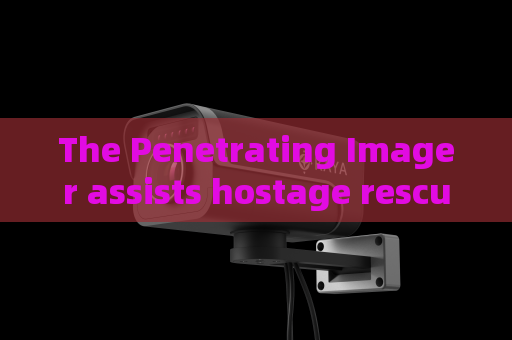
For covert operations, the Penetrating Imager can be paired with a remote control interface, allowing the tactical command post to monitor the scene from a safe distance. The emitted laser is invisible to the naked eye and operates at a low duty cycle, making it undetectable by the subjects inside. This covert through-glass reconnaissance capability is especially valuable when negotiations are ongoing, as it enables real-time verification of hostage welfare and perpetrator intent without breaking the sterile perimeter. In vehicle-borne hostage situations, such as a carjacking or a parked SUV containing victims, the system’s see-through automotive glass imaging function allows officers to confirm the number of occupants, the presence of weapons, and the accessibility of door locks before initiating a takedown. Every piece of intelligence extracted through the Penetrating Imager contributes directly to a safer, faster resolution of the crisis, proving that seeing through the window is not just a technological feat—it is a life-saving tactical imperative.




