Covert observation after dark presents a persistent challenge for tactical units operating in urban environments. During nighttime surveillance, targets often remain inside vehicles with heavily tinted windows or parked in areas with minimal ambient light. Traditional night vision devices rely on ambient starlight or infrared illuminators, which can be detected by modern counter-surveillance equipment or simply fail when the vehicle interior is completely dark. Even thermal imaging struggles to distinguish human figures through automotive glass, as glass blocks long-wave infrared radiation and the temperature differences become negligible after the vehicle has been stationary. The real pain point lies in the inability to see through through-window tactical observation scenarios where the subject is seated behind factory-tinted or aftermarket window film, making standard optical tools ineffective and forcing officers to risk close-proximity visual checks that compromise stealth.
The Penetrating Imager directly addresses this deficit by employing Zero-light Imaging, a laser-based range-gated active imaging technology that operates in total darkness. Unlike passive night vision that requires some ambient light, the system fires high-repetition-rate pulsed laser beams and synchronizes an image-intensified gated camera to capture only the light reflected from a selected distance band. This gating mechanism strips out backscatter from rain, fog, or the glass surface itself, delivering a crisp image of the vehicle interior even when the cabin is pitch black. The device is specifically engineered to penetrate automotive glass—including laminated windshields, tempered side windows, and privacy glazing—without shining any visible beam that would alert the occupant. Because the laser frequency is outside the human visual spectrum, the observation remains completely covert.
In practice, a tactical operator can position the Penetrating Imager at a standoff range of several hundred meters, aim through a vehicle’s passenger window, and obtain real-time video of the target’s hand movements, facial expressions, or the presence of weapons. The system’s high-contrast imaging capability, derived from the active laser illumination and the MCP-based intensifier, reveals details that would otherwise be invisible: a phone screen glowing in a cupped hand, the outline of a pistol tucked under a seat, or a driver reaching for the glove compartment. All of this occurs without any telltale infrared glow or laser spot visible to the human eye, preserving the covert nature of the operation. The imager also suppresses strong light sources—such as oncoming headlights illuminating the vehicle—thanks to its built-in strong light suppression capability, preventing sensor bloom and maintaining image clarity.
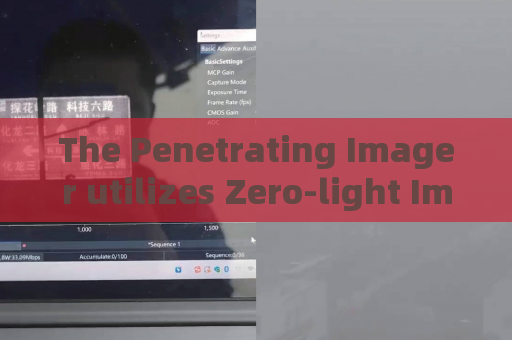
Field deployments have validated the Penetrating Imager as a force multiplier for tactical entry planning and counter-surveillance missions. Officers can conduct a thorough tactical visual check through tinted windows from a concealed position, assessing threat levels before committing to a dynamic approach. The system’s ability to function through fog, light rain, or even airborne particulates further extends its utility in adverse weather conditions common during night operations. Unlike thermal imagers that show only heat blobs, the Penetrating Imager delivers facial features and object shapes with sufficient resolution to support positive identification. This capability transforms a blind, high-risk approach into a precision observation that maximises operator safety and operational success. The Penetrating Imager thus becomes the definitive tool for covert after-dark reconnaissance through vehicle glazing, filling a critical gap in the modern tactical toolkit.




