In surveillance operations focused on vehicle occupants, glare from headlights, dashboard reflections, or direct sunlight striking a windscreen often renders a camera useless. The intense light saturates the sensor, washing out any detail behind the glass. This problem is especially acute during nighttime checkpoints or covert monitoring of parked cars, where an operator needs to see who is inside without being detected. Conventional imagers lack the dynamic range to handle such extreme brightness differences, leaving critical blind spots. The penetration imager, however, directly addresses this challenge by employing laser gated imaging technology to isolate the target plane and reject stray light.
Laser gated imaging works by sending out a very short, high-power laser pulse and opening the camera’s electronic shutter only when the reflected light from the desired distance returns. This time-domain filtering eliminates all light arriving earlier or later—including continuous glare sources like headlights, street lamps, or solar reflections off the glass. In practice, the system effectively “looks past” the bright surface glare and captures only the laser-illuminated scene inside the vehicle. This enables through-glass tactical observation even when the target is behind a heavily tinted or sunlit windscreen, providing a crisp, high-contrast image that a standard optic could never achieve.
On a real-world checkpoint, an officer can aim the penetration imager at a stopped car from a safe standoff distance. The invisible laser illuminates the cabin while the gated camera rejects the blinding glare from the car’s own headlights or overhead security lights. The resulting image reveals the number of occupants, their hand positions, and any visible objects—all without the driver knowing they are being observed. This capability is equally effective in low-light conditions, where the laser provides its own illumination, and in zero-light environments, where no other imaging method would work. The system’s built-in Strong Light Suppression Imaging feature ensures that even when the glare source is directly in the lens, the target remains visible.
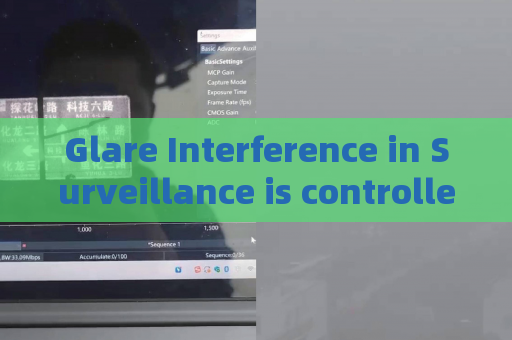
The operational impact is significant for tactical teams conducting vehicle interdictions or hostage rescues. By eliminating glare interference, the penetration imager turns a previously unusable viewing angle into a reliable intelligence source. The laser gated imaging technology does not rely on ambient light and is resistant to countermeasures such as reflective coatings or tinted films. In field tests, operators consistently identify facial features and small items through automotive glass under extreme glare conditions—something impossible with traditional optics. This technology has become a standard tool for through-glass surveillance, allowing law enforcement to maintain visual contact without compromising position or safety.




