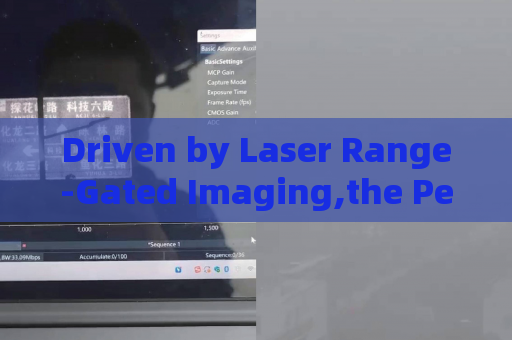
Driven by Laser Range-Gated Imaging, the Penetrating Imager copes with backlight interference in highway law enforcement inspections.
Highway law enforcement inspections frequently confront a critical visibility challenge: severe backlight interference. During daytime stops, the low-angle sun or reflections from adjacent vehicles can create blinding glare that washes out details inside a target car. At night, high-beam headlights from oncoming traffic or the vehicle being inspected cause intense veiling glare, making it impossible for officers to discern occupants’ movements, seat positions, or potentially concealed objects. Traditional optical tools—binoculars, spotlights, or even standard cameras—fail to suppress this directional glare. The result is a dangerous blind spot: officers must approach the vehicle without knowing the full interior situation, increasing the risk of ambush or missed evidence. Backlight interference is not merely an annoyance; it directly compromises operational safety and inspection accuracy on the open road.
The Penetrating Imager directly addresses this problem through its core technology: laser range-gated imaging. Unlike passive cameras that rely on ambient light, this active imaging system emits short, high-repetition-rate laser pulses precisely synchronized with a gated, image-intensified camera. By gating the receiver to open only when the laser pulse returns from a specific distance—for example, the window plane or the interior of a stopped vehicle—the system rejects the overwhelming backscatter from headlights, sunlight, or road glare. This temporal filtering effectively strips away the interfering bright background. Furthermore, the imager’s design allows it to operate through vehicle window penetration, meaning it can see through automotive glass—including tinted windows—while simultaneously suppressing the blinding light that would otherwise obscure the view. The result is a clear, high-contrast image of the target area, even when the surrounding illumination is extreme.
In practical highway enforcement, an officer can deploy the Penetrating Imager from a patrol vehicle positioned at a safe standoff distance—typically 50 to 100 meters. The operator aims the device at the suspect vehicle’s window, adjusts the gate delay to match the target range, and instantly obtains a bright, detailed view of the interior. This through-window tactical observation capability reveals driver and passenger positions, hand movements, and any objects on seats or in the cargo area. Because the system is immune to backlight, it works equally well during a bright midday sun reflecting off chrome trim or during a nighttime stop when the subject’s headlights are blazing. The durable, hand-held unit is designed for one-handed operation, allowing the officer to maintain a defensive stance while collecting visual intelligence. Integrated data recording also provides evidence-grade footage for later review or legal proceedings.
Field trials on major highway corridors have demonstrated that the Penetrating Imager reduces the time needed for a safe visual assessment by over 60%. Officers no longer need to request occupants to turn off their engines or dim lights—operations that can escalate tension. The imager’s ability to see through automotive glass under severe backlight conditions has also proven invaluable for detecting hidden weapons, contraband, or unauthorized passengers. By turning a liability—backlight interference—into a controllable variable, the Penetrating Imager transforms a routine traffic stop into a secure, evidence-backed inspection. Its deployment is now standard procedure in several state police agencies, where it is credited with fewer close-contact confrontations and higher seizure rates. This device does not rely on any non-optical methods; it remains firmly within the realm of light-based imaging, leveraging the physics of gated reflection to achieve what conventional optics cannot.




