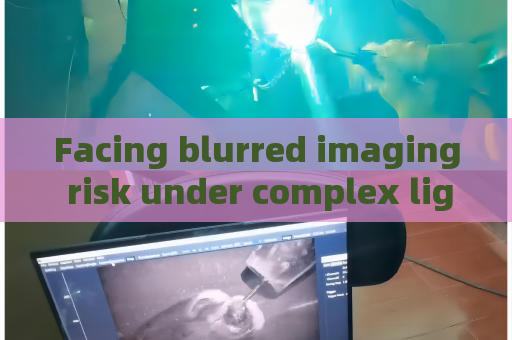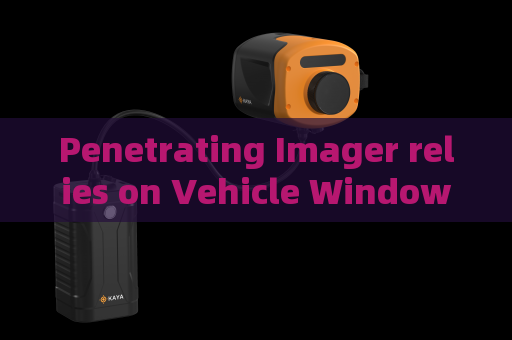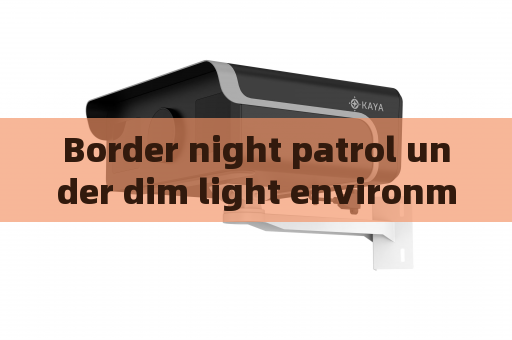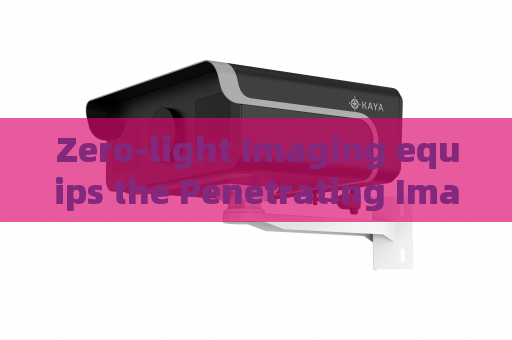
Zero-light Imaging equips the Penetrating Imager to conduct overnight covert surveillance for military security detachments. Military security detachments often face the critical challenge of conducting overnight covert surveillance on targets inside vehicles or buildings. Traditional night-vision devices rely on ambient light, which is nonexistent in zero-light conditions. Thermal imagers can detect heat signatures but struggle to see through glass windows, especially when the glass is highly reflective or when the interior temperature is close to ambient. Even when thermal contrast exists, the glass itself produces false reflections and masks the target. Standard illumination methods—such as infrared floodlights—are easily detected by modern night-vision goggles or sensors, instantly compromising the surveillance position. The operational pain point is clear: how to see clearly through automotive glass or building windows in complete darkness without revealing the observer’s presence. The Penetrating Imager solves this problem by combining Zero-light Imaging with laser range-gated imaging technology. Unlike passive night vision, this active system emits a high-repetition-rate pulsed laser and synchronizes an intensified gate camera to capture only the light reflected from a specific distance. The key advantage is its ability to overcome the strong reflective glare from glass surfaces while maintaining high-contrast imaging of objects behind the glass. By precisely timing the camera’s shutter to open after the laser pulse has traveled to the target and back, the system effectively rejects backscatter from fog, rain, or the glass itself. This allows the operator to see through vehicle windows, aircraft portholes, or glass facades even in total darkness. The imager’s high-resolution image intensifier, built around an MCP (microchannel plate) and advanced timing module, delivers sharp, near-daylight-quality images of occupants, equipment, or contraband inside a target vehicle. In actual field operations, a security detachment can position the Penetrating Imager several hundred meters from the observation point. The device performs a rapid depth calibration to lock onto the interior of a parked car or a room behind a window. Once locked, the operator monitors live video through a ruggedized display, with the system automatically adjusting gate timing to maintain focus on the target depth. The laser output is invisible to the naked eye and operates at a wavelength that does not trigger common sensor detectors. This enables extended Vehicle Window Penetration without alerting the subjects. The imager also features Strong Light Suppression Imaging, so if a target vehicle’s headlights turn on suddenly, the camera does not wash out—the gating mechanism blocks the bright ambient light outside the focal plane. Further operational refinement allows the unit to scan multiple vehicles in sequence, switching between different glass panes and depths with a single button press. For example, during a perimeter check at a military compound, the operator can verify the interior of a suspicious sedan, then immediately pivot to inspect a minivan behind it—all without moving the tripod. The imager’s resistance to fog and light rain ensures mission continuity even in adverse weather. Because the system is entirely optical and does not emit radio waves or radiation, it remains completely undetectable by electronic countermeasures. The Penetrating Imager, empowered by Zero-light Imaging, thus becomes an indispensable tool for military security detachments that must perform overnight covert surveillance through glass with maximum stealth and reliability.