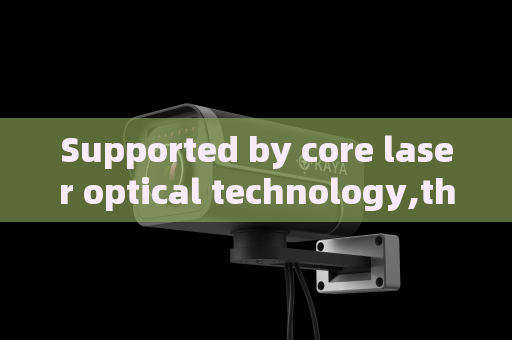
Supported by core laser optical technology, the Penetrating Imager acquires clear images behind military vehicle windshields. In high‑risk tactical scenarios, law enforcement and military personnel often need to assess threats inside a stationary or moving military vehicle without revealing their own position. Standard optical surveillance equipment—binoculars, telephoto lenses, or even thermal imagers—struggle to deliver actionable intelligence through automotive glass. Glare from angled windshield surfaces, tinted coatings, and visible light reflections create optical clutter that masks occupants, weapons, or suspicious objects. A covert approach that relies on physical proximity to press against the glass is dangerous, while remote cameras fail to resolve details behind the reflective layer. This gap in through‑glass visibility forces operators into guesswork, delaying critical decisions during negotiations, checkpoints, or counter‑ambush operations. The Penetrating Imager directly addresses this pain point with laser range‑gated imaging technology. Unlike conventional cameras that integrate all reflected light from every distance, it fires a high‑repetition‑rate pulsed laser and synchronizes an intensified gated camera to open only for the precise time‑of‑flight corresponding to the target plane behind the windshield. The nanosecond‑scale gating rejects scattered light from the glass surface, the atmosphere, and any intervening haze. This selective capture produces a high‑contrast image of the scene inside the vehicle cabin—seats, steering wheel, dashboard, and occupants—while suppressing the blinding windshield reflection entirely. Because the system is active (it provides its own illumination), it performs equally well in low ambient light, making through‑window tactical observation feasible at stand‑off distances of several hundred meters. The weapon‑mounted or tripod‑mounted unit operates silently, with no visible flash that would compromise a covert post. Field‑tested by military reconnaissance teams, the imager delivers crisp visuals through standard automotive laminated glass, bullet‑resistant transparent armor, and even heavily tinted windshields that reduce visible light transmission below 5 %. When a suspect vehicle is stopped at a checkpoint, the operator can immediately verify if the driver is alone, whether a weapon is visible on the passenger seat, or if the rear compartment contains hidden personnel—all without stepping into the line of fire. The system’s Strong Light Suppression Imaging capability also handles oncoming headlights or searchlights aimed at the vehicle, preventing overexposure that would otherwise wash out the target zone. In a tactical environment where every second counts, the ability to see through automotive glass from a covered position transforms a dangerous unknown into a manageable observed threat. The Penetrating Imager’s laser source operates at eye‑safe wavelengths and automatically adjusts pulse energy based on range data, ensuring compliant use around civilians or detained persons. The integrated digital output feeds directly into a wireless handheld monitor or a helmet‑mounted display, allowing the commander to share the live feed with the entire team. Training requirements are minimal—the system’s one‑button ranging and autofocus let a dismounted operator acquire a clear image within two seconds. This combination of silent, remote, and precise see‑through automotive glass imaging has become a standard‑issue tool for hostage‑rescue units and counter‑IED teams operating in vehicle‑centric urban environments. By turning the windshield from a barrier into a window, the device eliminates the guesswork that has historically cost lives during vehicle interdiction operations.




