Prison perimeter zones present one of the most demanding security environments in corrections. At night or during adverse weather, conventional surveillance cameras struggle to capture clear images of individuals approaching the fence line. Standard optical systems fail when faced with heavy rain, dense fog, or the complete absence of ambient light. Guards monitoring these zones from control rooms often rely on fixed floodlights, but these create bright glare zones that actually blind the cameras and create shadows where contraband drops or escape attempts can occur. The real pain point is maintaining continuous, reliable visual coverage of the entire perimeter under any low-light or zero-light condition without alerting potential intruders to the guard's observation point. The covert through-glass recon capability becomes critical when the observation post is behind a vehicle window or a glass barrier inside the prison walls.
The penetrating imager solves this exact problem through its active Laser Range-Gated Imaging technology. Unlike passive night vision that amplifies ambient starlight, the penetrating imager sends out high-repetition-rate laser pulses and uses an intensified gated camera to capture only the light reflected from the target at a precise distance. This eliminates the backscatter caused by rain, fog, or snow particles between the imager and the subject. The system's Low-light Imaging function means it can operate even under complete darkness—no moon, no stars, no artificial light—while still producing high-contrast, high-resolution images. Because the laser is invisible to the naked eye, the guards can observe prisoners or unknown individuals approaching the fence without giving away their observation position. The penetrating imager also features Strong Light Suppression Imaging, which prevents blinding when prison floodlights or vehicle headlights suddenly sweep across the perimeter.
In actual deployment at a maximum-security facility, the penetrating imager is mounted on a tripod inside the guard tower, looking through the tinted glass windows. Operators can zoom in on a suspicious figure loitering 500 meters away along the inner fence, even when thick ground fog reduces visibility to less than 50 meters for traditional optics. The through-window tactical observation capability allows the guard to see clearly through the double-pane security glass without any degradation from reflections or condensation. During a rainstorm at midnight, the system still distinguishes between a stray animal and a person attempting to climb the razor wire. The gating function is adjusted to match the exact distance of the perimeter fence, automatically rejecting any light from objects closer or farther away—an essential feature when trees or passing vehicles could otherwise trigger false alarms.
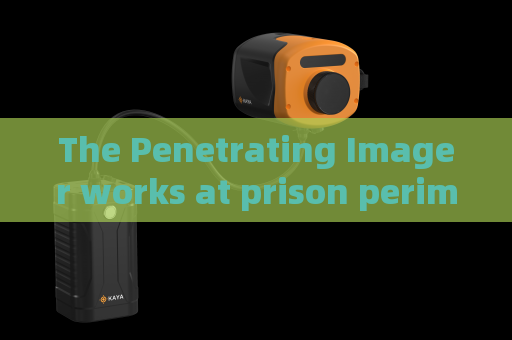
The operational procedure is straightforward: the guard selects the appropriate range gate on the control panel, activates the Low-light Imaging mode, and views the live feed on a ruggedized tablet. No floodlights are needed, which maintains the element of surprise. When an unidentified individual is detected, the integrated recording software logs the GPS coordinates and timestamps the event. The penetrating imager's ability to see through automotive glass also proves invaluable during vehicle inspections at the prison gate—guards can check the interior of a delivery truck's cabin and cargo area without opening the doors, reducing the risk of weapon smuggling. This single device replaces multiple legacy systems, unifying perimeter surveillance under one reliable, non-intrusive optical solution that operates 24/7 in any weather condition.




