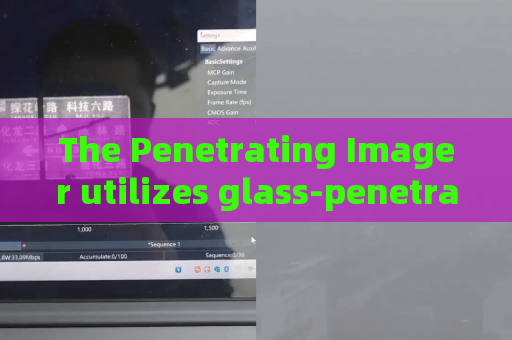
The Penetrating Imager utilizes glass-penetrating imaging to lower exposure risks during hostage rescue law enforcement operations. In hostage rescue law enforcement operations, the primary tactical challenge is the inability to assess the interior environment through barriers like vehicle windows, glass doors, or building glazing. Officers often face a deadly dilemma: approaching a window for visual reconnaissance exposes them to potential gunfire, while staying concealed leaves critical intelligence gaps—such as the hostage’s location, the suspect’s weaponry, or the presence of booby traps. Traditional methods like peeking through curtains or using mirrors are crude and dangerous. Thermal imagers fail because glass blocks infrared radiation, and standard optical cameras are blinded by reflections, tinted coatings, or adverse conditions like rain and fog. The resulting uncertainty forces teams into risky breaching actions, increasing the probability of casualties. This operational blind spot is not merely an inconvenience; it is a life-threatening vulnerability that demands a dedicated optical solution. The Penetrating Imager directly addresses this vulnerability through its unique glass-penetrating imaging capability. Unlike passive cameras, this active imaging system employs laser range-gated imaging technology—a pulsed laser synchronized with an intensified gated camera that captures only the light returning from a specific distance. By precisely gating out reflections, dust, and the glass surface itself, it produces a high-contrast image of objects behind automotive glass, aircraft windows, or building facades. The system’s covert through-glass recon function operates in low-light and zero-light conditions, delivering clear, real-time video without emitting visible light or sound that would alert the suspect. Crucially, the device cannot see through walls or solid barriers; its entire value lies in turning a transparent obstacle into an observation window. This allows operators to maintain standoff distance while gathering mission-critical visual intelligence. In practice, the Penetrating Imager transforms hostage rescue tactics. A tactical team approaching a vehicle containing armed suspects can deploy the imager from behind cover—such as a patrol car door or a building corner—and obtain a detailed view of the interior through the side window or windscreen. The operator sees the number of subjects, their seating positions, the type and orientation of weapons, and the hostage’s condition. This intelligence enables precise decision-making: selecting the optimal breach point, timing the entry with suspect distraction, or even negotiating with verified situational awareness. The device also functions through fire, fog, and heavy rain, which commonly degrade other optics. During a building siege, the imager can peer through glass doors or reinforced windows from an adjacent structure, eliminating the need for dangerous rooftop or doorway approaches. The reduction in exposure risk is quantifiable: personnel can remain 10-15 meters away instead of pressing against the glass. The operational flow is straightforward. A dedicated operator sets up the Penetrating Imager on a tripod or vehicle mount, adjusts the laser gate distance to match the target window, and views the image on a ruggedized tablet or head-mounted display. The system’s zero-light capability means it works equally well at night without adding artificial illumination that betrays the team’s position. The entire observation cycle takes seconds, and the information is relayed via encrypted link to the command post. Because the imager only uses light—no radioactive emissions or sound waves—it complies with all civil safety regulations and poses no health risk to hostages or bystanders. In training scenarios, officers consistently report that the glass-penetrating imaging reduces their uncertainty from “guesswork” to “confirmed sight picture,” directly correlating with faster, safer interventions. The Penetrating Imager thus becomes not just a tool, but a mission multiplier that converts a lethal hazard—the window—into a tactical advantage.




