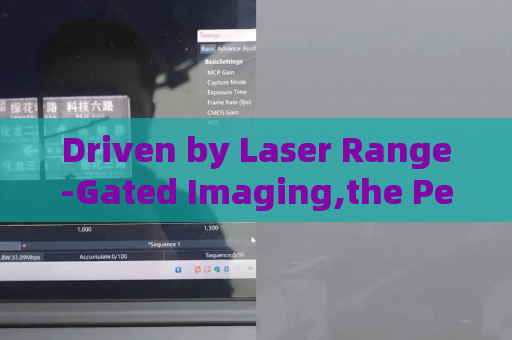
Driven by Laser Range-Gated Imaging, the Penetrating Imager delivers remote glass observation for tactical military missions. In modern tactical reconnaissance, the ability to observe threats inside vehicles from a safe distance is a persistent challenge. Standard optical systems—binoculars, spotting scopes, or daytime cameras—are easily defeated by tinted windows, glare from direct sunlight, or the low-light conditions of dawn and dusk. Even when a target vehicle is stationary, reflections on the glass surface create a mirror-like effect that masks the occupants and their movements. For military personnel conducting covert surveillance or urban patrols, this limitation forces risky close-range approaches or reliance on less reliable intelligence. The real pain point is not just seeing through glass, but doing so remotely, with high resolution, and without revealing the observer’s position. Any flash or visible illumination would compromise the mission. The need for a non-linear, non-reflective, and distance-capable imaging solution is therefore acute. The Penetrating Imager directly addresses this operational gap through its laser range-gated architecture. By emitting nanosecond laser pulses synchronized with an ultra-fast gated camera, the system isolates reflections from the target depth while rejecting backscatter from atmospheric particles, dust, or glass surfaces. This is not a passive sensor—it is an active imaging system that sends out light but only opens its camera sensor for a precise window corresponding to the distance of the vehicle interior. The result is a clear, high-contrast image of what lies behind the glass, regardless of window tint, angle, or ambient lighting. The technology is specifically designed for through-window tactical observation—it cannot see through walls or other solid barriers, but it excels at penetrating automotive glass, aircraft windows, and glass facades. Even under fog, rain, or snow, the gating mechanism suppresses scatter noise, enabling reliable identification of human shapes, weapons, or communication devices. In a typical field deployment, the operator sets the Penetrating Imager on a tripod or vehicle mount, selects the approximate range to the target window, and initiates the laser-gated scan. The device’s built-in laser is eye-safe and operates in the near-infrared, making it invisible to the naked eye and standard night-vision goggles. Within seconds, the display shows a real-time image of the vehicle’s interior—dashboard, seats, and occupants—without any glow or reflection interfering. The high-repetition-rate pulse laser and the microchannel plate (MCP) intensifier together produce video-rate frames that allow the observer to track subtle movements, such as a driver reaching for a glove compartment or a passenger adjusting a hidden object. The system’s Strong Light Suppression Imaging capability also handles headlight beams or streetlights hitting the glass, maintaining detail in the shadowed areas. This capability transforms tactical decision-making. Instead of closing the distance to confirm a suspect’s identity—potentially triggering an ambush—the operator can confirm from 200 meters or more whether the target is hostile, armed, or coordinating with others. The same technology works for observing through helicopter windows during aerial overwatch, or through a building’s ground-floor glass doors. Because the Penetrating Imager relies only on reflected laser light and not on thermal signatures, it works equally well in zero-light environments, making it a true Zero-light Imaging solution for nighttime urban operations. The device’s ruggedized housing and quick-connect battery system ensure it remains operational through extended missions. The military unit gains a persistent, covert, and long-range glass-penetrating surveillance tool that replaces guesswork with visual proof, all while keeping personnel safely outside the kill zone.




