Fog presents a persistent and severe challenge in border surveillance. Thick mist reduces visibility to mere meters, rendering standard optical systems—binoculars, telescopic sights, and daylight cameras—almost useless. Patrol units cannot identify approaching vehicles or individuals at safe distances, and fixed observation posts lose their advantage when haze swallows the landscape. The core problem is not just poor visibility; it is the inability to conduct covert observation without alerting targets. Any attempt to move closer or use active illumination like white light instantly exposes the observer’s position. In foggy border areas, the need for a non-contact, long‑distance, and stealthy imaging solution is critical. The Penetrating Imager directly addresses this operational gap.
The Penetrating Imager employs laser range‑gated imaging technology, an active optical system composed of a high‑repetition‑rate pulsed laser, an intensified gated camera with an MCP image intensifier, a high‑voltage module, and a timing module. By emitting short laser pulses and synchronizing the camera’s shutter to only receive reflections from a specific depth, the system effectively eliminates the blinding backscatter caused by fog particles. This enables the Penetrating Imager to produce high‑contrast images at distances far beyond conventional optics. The technology is inherently covert—the laser wavelength is invisible to the naked eye, and the brief pulse duration leaves no detectable light signature. In foggy border scenarios, this function allows operators to observe targets through dense mist without revealing their own position. The device also features through-window tactical observation capability, meaning it can see through vehicle windows, aircraft portholes, and other glass barriers, which is essential when monitoring suspicious vehicles that remain inside their cabins.
In practice, border patrol teams deploy the Penetrating Imager from fixed vantage points or mobile platforms. During a typical fog event with visibility below 50 meters, the system can resolve human‑sized targets at distances exceeding 1 kilometer. The operator simply aims the device, adjusts the range gate to match the target’s distance, and observes a clear, real‑time image on the display. No additional illumination or physical approach is needed. This operational simplicity reduces training requirements and allows rapid deployment. The covert nature is further reinforced because the laser beam is invisible and the device’s optical signature is negligible—targets remain unaware they are being watched. The Penetrating Imager thus transforms fog from a tactical disadvantage into a neutral environmental condition, enabling continuous surveillance where conventional systems would fail.
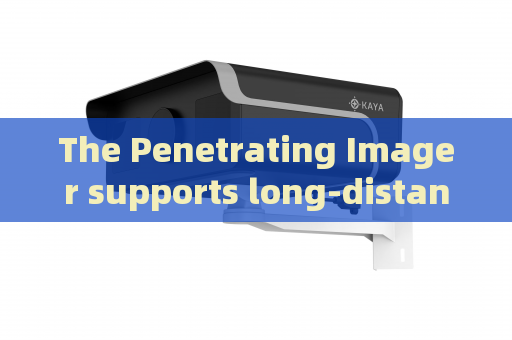
Another critical aspect is the device’s resilience to environmental dynamics. Fog density fluctuates with temperature and wind, but the laser range‑gating technique automatically compensates for varying scattering conditions. Operators do not need to recalibrate constantly. The imaging lens and beam expander ensure a wide field of view while maintaining sufficient resolution for identification tasks, such as reading license plates or recognizing vehicle occupants through tinted glass. This capability is vital for border checkpoints where vehicles must be assessed from a safe distance before they approach. The Penetrating Imager supports long‑distance covert observation in foggy border areas by delivering actionable intelligence without compromising the observer’s safety or stealth. Every component—from the pulsed laser to the gated intensifier—works in concert to defeat the very medium that typically obstructs vision.




