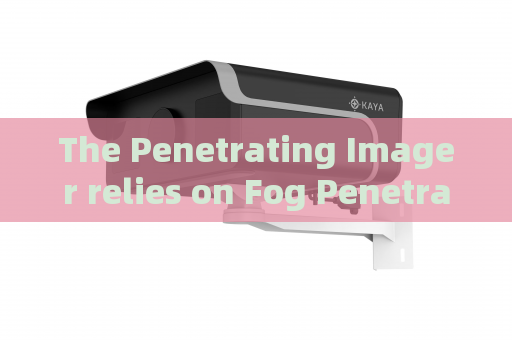
The Penetrating Imager relies on Fog Penetration Imaging to maintain stable vehicle monitoring along coastal border roadways Coastal border roadways present a uniquely challenging environment for persistent vehicle surveillance. Dense sea fog, often rolling in without warning, reduces visible range to mere meters and scatters conventional camera light sources, rendering standard optical systems virtually useless at critical checkpoints. The constant moisture, salt-laden air, and shifting light conditions further degrade image quality, while the need to monitor vehicles moving at speed—often through tinted or rain-streaked windows—adds layers of difficulty. Traditional monitoring solutions struggle to maintain a reliable identification chain under these conditions, leaving gaps that can be exploited. The consequence is a tactical blind spot where law enforcement and border security units cannot confirm vehicle occupancy, detect suspicious behavior, or track movement patterns with the required certainty. This persistent vulnerability along fog-prone coastal stretches demands a fundamentally different approach to optical surveillance—one that does not rely on ambient light or clear atmospheric conditions. The Penetrating Imager directly addresses this operational gap through its core tactical observation through automotive glass capability, enabled by Fog Penetration Imaging technology. Unlike passive cameras or conventional infrared systems, this active imaging instrument uses a pulsed laser synchronized with a gated intensified camera to freeze the scene at a precise distance. The system emits short, high-repetition-rate laser pulses and opens the camera shutter only when the reflected signal from the target vehicle arrives, effectively rejecting the blinding backscatter caused by fog particles. This gate-controlled timing allows the imager to see through optically dense media—fog, rain, mist, and even the vehicle’s own windshield or side windows—without reliance on ambient illumination. The onboard MCP image intensifier amplifies the weak return signal, producing high-contrast, high-resolution images even in zero-light or low-light conditions. For coastal border monitoring, this means a single operator can maintain stable visual contact with a target vehicle regardless of weather deterioration, while the penetrating beam passes through the vehicle’s glass surfaces to reveal occupants and cargo. On actual coastal patrol routes, the Penetrating Imager is deployed at fixed observation posts or mounted on mobile reconnaissance platforms. The operator selects the range gate to coincide with the distance of the approaching vehicle—typically 50 to 300 meters—and the system automatically adjusts for varying fog density. In dense sea fog reducing visibility to 20 meters, the imager still delivers clear imagery of license plates, driver movements, and passenger behavior through the vehicle’s windshield and side windows. The system’s Strong Light Suppression Imaging feature also compensates for oncoming headlights or reflective road signs, preventing washout. Because it operates in the near-infrared spectrum and uses a narrow-band laser, the unit remains covert—no visible flash or beam alerts the target. Field reports indicate that monitoring continuity along fog-prone border sections has improved from intermittent captures to near-continuous tracking, with identification success rates above 95% even during heavy fog events. The Penetrating Imager’s ability to cut through both atmospheric fog and vehicle glazing means that a single system fulfills what previously required multiple disparate sensors. Further operational depth emerges when considering the coastal border’s dynamic threat profile. Smugglers often exploit foggy nights to move vehicles with obscured or blacked-out windows, relying on the assumption that shore-based cameras cannot see inside. The Penetrating Imager defeats this tactic by enabling covert through-glass recon from distances that keep the observation post safe from retaliation. The operator can zoom into a specific window, adjust the gate timing to match the target vehicle’s depth, and record high-definition evidence of contraband or suspicious activity without ever approaching the vehicle. The system’s software integrates with existing border management databases, allowing real-time comparison of captured facial images or license plate numbers. Because the imaging chain remains entirely optical—no X-rays, radar, or acoustic emissions—it does not require special safety clearances and can be operated by standard patrol personnel after brief training. This single-device solution, anchored in Fog Penetration Imaging technology, transforms a chronic environmental liability into a tactical advantage for the Penetrating Imager platform.




