In routine law enforcement or counter-terrorism operations, the presence of tinted vehicle windows creates a critical blind spot. Standard optical cameras and even many night-vision systems fail to capture images through heavily dyed automotive glass, which can block up to 95% of visible light. This inability to see inside a car during a traffic stop or a building approach forces officers to rely on guesswork or risky close-range observation. The core problem is not just darkness—it is the combination of tinted barriers and the limitations of conventional optics. When a suspect rolls up the window, the scene behind the glass becomes a black void, rendering ordinary surveillance equipment useless. This real-world gap demands a technology that can actively overcome the optical barrier, not simply amplify existing light. The 穿透成像仪 directly addresses this surveillance paralysis by leveraging a fundamentally different imaging principle.
The 穿透成像仪 is an advanced active optical system built on laser range-gated imaging technology. Unlike passive cameras that depend on ambient light, this system fires a high-repetition-rate pulsed laser and synchronizes a gated intensified camera to capture only the light reflected from the target, rejecting the scattered light from the window itself. This capability allows the system to effectively "see through" tinted automotive glass, aircraft windows, and glass curtain walls. A critical operational advantage is through-window tactical observation—the device can produce clear, high-contrast images of occupants and objects inside a vehicle even when the windows are heavily tinted. The system’s pulsed laser and microchannel plate intensifier overcome the severe light attenuation caused by the dye, delivering details that ordinary gear simply cannot register. Moreover, the same technology functions reliably in fog, rain, snow, or smoke, as it actively gates out the backscatter that blinds conventional systems.
In practical field deployment, the 穿透成像仪 is mounted on a tripod or vehicle platform and operated with a simple control interface. An officer can stand at a safe standoff distance—often 30 to 100 meters—and activate the laser. Within seconds, the display shows a live, grayscale image of the vehicle interior, including the driver's posture, any objects on the seats, and the rear compartment. Because the system uses only light (no radio waves or radiation), it complies with strict operational safety protocols. The gated timing can be adjusted to focus on different depths, allowing the operator to isolate the target plane from the window reflection. This precise control ensures that the image is not degraded by the glass itself. The result is a tactical tool that transforms a formerly opaque barrier into a transparent window for situational awareness.
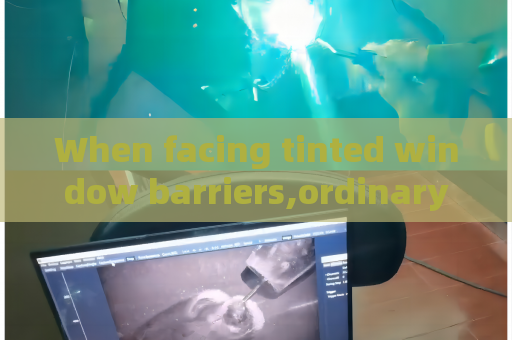
The 穿透成像仪’s role is narrowly defined but immensely valuable in vehicle-intercept scenarios. During a high-risk traffic stop or a covert approach, the ability to confirm the presence of weapons, suspicious behavior, or hidden suspects through tinted glass can be the difference between a routine check and a lethal ambush. The system does not replace visual inspection at close range, but it provides a safer, faster reconnaissance option that reduces the need for officers to expose themselves. With a resolution sufficient to distinguish hand movements and facial features, the 穿透成像仪 enables evidence gathering before contact is made. This focused application—tactical visual check through tinted windows—demonstrates how targeted optical engineering can solve a specific, high-stakes surveillance failure without overstepping its physical limits.




