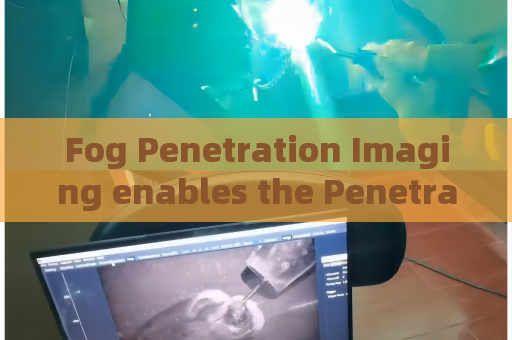
Fog Penetration Imaging enables the Penetrating Imager to maintain stable scouting during coastal military patrol shifts. Coastal military patrols face a persistent challenge: shifting weather conditions that degrade visibility. Dense sea fog, mist, and low-hanging clouds can suddenly roll in, reducing visual range to mere meters. For a patrol team tasked with monitoring vessel movements, shoreline activity, or potential incursions, this optical interference transforms a routine watch into a blind operation. Binoculars and standard optical scopes become useless. Thermal imagers struggle with heat signature washout in humid maritime air. The real pain point is not just the inability to see—it is the loss of situational stability. A scout who cannot maintain continuous observation during a fog bank risks missing a critical event, compromising both tactical awareness and operational security. The Penetrating Imager is designed to address exactly this vulnerability. The breakthrough lies in Fog Penetration Imaging, a capability built into the Penetrating Imager that exploits laser range-gated technology. Unlike passive optics that rely on ambient light, this active imaging system emits short, high-repetition pulses from a laser. A gated camera—equipped with an MCP image intensifier and precise timing modules—opens its shutter only when the reflected light from the target returns, effectively slicing through the scattering fog particles. This process suppresses the blinding backscatter that ruins conventional images. The result is a clear, high-contrast view of vessels, structures, or personnel that remain invisible to the naked eye. For coastal patrols, this means the Penetrating Imager can maintain a stable feed regardless of fog, drizzle, or light rain—conditions that are routine near coastlines. On a patrol shift, the operator simply selects the range gate distance to match the target zone. The unit’s tactical observation through automotive glass feature also proves valuable when monitoring vehicles approaching the shoreline through shimmering heat haze or light mist. The system automatically compensates for atmospheric fluctuations, delivering a crisp image to the eyepiece or remote monitor. Because the Penetrating Imager uses only optical wavelengths—no radio waves or radiation—it remains completely passive in emission, avoiding detection by enemy sensors. This allows scouts to observe from concealed positions without revealing their own location. The device operates effectively in zero-light or low-light conditions as well, but its defining advantage during coastal shifts is its unwavering performance in fog. In practical terms, a patrol team can deploy the Penetrating Imager on a tripod at a fixed observation point along a cliff or breakwater. Even when sea fog reduces visible range to 50 meters, the gated laser scan can resolve targets at distances of 500 meters or more—depending on atmospheric density—without losing detail. The operator can zoom in on a small boat’s registration number or a person’s movement along a pier. through-window tactical observation becomes seamless, as the same gating principle penetrates glass panes of coastal watchtowers or vehicle windshields without reflection artifacts. The unit’s rugged housing withstands salt spray and light shock, ensuring reliability across an entire shift. This sustained, interference-free scouting transforms the coastal patrol from a reactive, weather-dependent activity into a proactive, all-condition surveillance capability—exactly what the mission demands.




