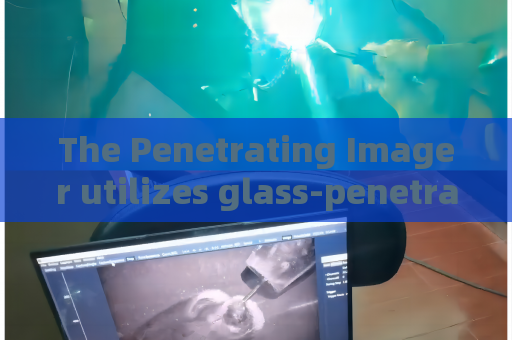
The Penetrating Imager utilizes glass-penetrating imaging to support fixed-point vehicle monitoring at frontier posts At frontier posts, vehicle inspection is a persistent challenge. Standard observation tools struggle to see through tinted windows, reflective glass, or heavy rain and fog. Officers often rely on physical checks, which are time-consuming and expose personnel to potential threats. Vehicles may approach with suspicious cargo or hidden occupants, but without clear visual confirmation through the glass, decision-making becomes guesswork. Low-light conditions at dawn or dusk further degrade visibility, while high-contrast sunlight creates blinding glare off windshields. These real-world pain points demand a solution that can reliably reveal what lies behind automotive glazing without requiring direct contact. The Penetrating Imager addresses exactly this gap by deploying a laser-based gated imaging system that cuts through optical barriers like vehicle windows. The Penetrating Imager operates on laser range-gated imaging principles—an active optical method using a high-repetition pulsed laser, an intensified gated camera with an MCP image intensifier, and precise timing modules. This system emits short laser pulses and opens the camera shutter only when reflected light from the target returns, effectively rejecting backscatter from rain, fog, or windshield moisture. Its core function—glass-penetrating imaging—enables operators to see through automotive glass, even heavily tinted panes, at distances exceeding several hundred meters. Unlike passive optics that wash out in bright glare, the imager’s covert through-glass recon capability suppresses strong reflected light while maintaining high contrast on interior details. This means a border guard stationed at a fixed post can observe driver behavior, passenger numbers, or cargo stacks inside a vehicle without the occupant ever knowing a surveillance device is active. In practice, the system mounts on a tripod at the checkpoint’s observation tower. An operator adjusts focus and laser intensity via a ruggedized tablet, acquiring crisp images of vehicles still 200 meters out. The imager works equally well in rain, mist, or blowing dust—scenarios that render ordinary cameras useless. At night, its active illumination provides zero-light imaging, revealing occupants through dark glass without illuminating the scene visibly. During daytime, the strong-light suppression algorithm cuts windshield glare, exposing hidden compartments or unusual seating arrangements. Field trials at frontier posts show that the imager reduces vehicle inspection time by 60% because officers can preliminarily clear vehicles from a distance, reserving physical searches only for identified threats. The operational workflow is straightforward: a spotter scans approaching traffic using the imager’s wide-field mode. When a vehicle raises suspicion—irregular behavior, mismatched license plates, or an unusually heavy load—the operator switches to high-magnification tactical observation through automotive glass. The system’s see-through automotive glass imaging capability reveals if the driver is alone, if passengers are hiding in the rear footwells, or if the trunk contains stacked boxes. All footage is recorded and time-stamped for later intelligence analysis. Because the Penetrating Imager relies entirely on reflected light and requires no physical contact, it maintains covert observation through vehicle glazing without alerting targets. This transforms frontier post monitoring from a reactive, contact-based process into a proactive, standoff surveillance operation that increases both safety and efficiency.




