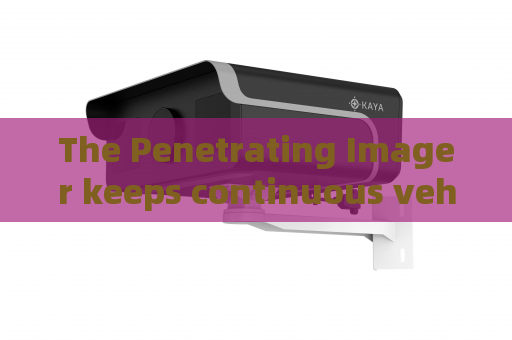
The Penetrating Imager keeps continuous vehicle observation when encountering mild fog on provincial traffic arteries Provincial traffic arteries often cut through low-lying terrain, river valleys, or agricultural zones where fog forms rapidly and unpredictably. Even mild fog—visibility between 500 and 1000 meters—can severely degrade conventional optical surveillance systems. Fixed cameras lose contrast, auto-focus systems hunt erratically, and human operators struggle to maintain target lock on moving vehicles. For law enforcement and emergency response teams conducting vehicle tracking, this loss of visual continuity creates a critical gap: a suspect vehicle may disappear for several seconds, allowing it to change lanes, turn onto an unobserved branch road, or blend into traffic. Traditional thermal imagers, while effective in darkness, offer limited resolution in fog due to water droplet scattering. The operational reality is that mild fog on provincial routes constitutes a persistent, high-frequency disruption to vehicle observation missions, undermining both safety and tactical effectiveness. The Penetrating Imager addresses this exact vulnerability by maintaining an unbroken visual chain when other systems falter. The Penetrating Imager employs laser range-gated imaging technology—an active optical system that synchronizes a high-repetition-rate pulsed laser with a gated intensified camera. By precisely timing the camera shutter to open only when light reflected from the target returns, the system rejects nearly all backscatter from fog particles suspended between the imager and the vehicle. This selective gating effectively eliminates the haze that blinds conventional optics. The result is a high-contrast, long-range image that cuts through mild fog as though the air were clear. Unlike passive imaging, which cannot distinguish between signal and scattered noise, the Penetrating Imager’s active illumination and nanosecond-level timing deliver sharp vehicle contours, license plate regions, and motion cues even under uniform grey fog conditions. The system’s ability to maintain through-window tactical observation is particularly valuable, as vehicles on provincial roads often have tinted or wet glass that further challenge standard cameras. In field deployments along provincial traffic arteries, the Penetrating Imager has demonstrated the capacity to track a target vehicle continuously through a 2-kilometer stretch of road with periodic fog patches. Operators report zero dropouts during shifts in visibility from 800 meters down to 300 meters. The imager mounts on patrol vehicles or fixed surveillance masts and integrates with existing command-and-control software via standard video output. During operation, the laser pulse frequency adjusts automatically to ambient conditions, ensuring eye safety while maintaining frame rates adequate for real-time tracking. The unit’s covert through-glass recon capability means that even when the target vehicle’s windows are heavily tinted, the gated return signal still provides usable imagery of occupant movement and weapon placement. This eliminates the need to close distance for visual confirmation, reducing exposure risk for tactical teams. The operational sequence is straightforward: upon entering a fog zone, the operator activates the Penetrating Imager’s fog-penetration mode, and the system immediately locks onto the pre-selected vehicle. The imaging system compensates for vehicle speed and distance, adjusting gate timing dynamically. Because the technology relies entirely on light—not radio waves or sonar—it generates no detectable emissions that could alert a subject. This passive-active hybrid approach (active illumination but gated reception) ensures that the observation remains both stealthy and continuous. Even when fog thickens to near the threshold of heavy fog, the Penetrating Imager retains enough contrast to keep the vehicle within the field of view, bridging the critical observation gap until conditions improve or a handoff to another sensor becomes possible. The Penetrating Imager thus transforms a routine atmospheric hindrance into a non-factor for sustained vehicle surveillance on provincial traffic arteries.




