When law enforcement officers need to assess the interior of a suspect vehicle during a high-risk traffic stop or a barricade situation, the traditional approach often requires approaching the windows directly. This places personnel within arm’s reach of potential threats—armed individuals, hidden weapons, or explosive devices. The officer’s line of sight is also compromised by tinted windows, glare from sunlight or streetlights, and reflections that obscure critical details such as occupant movements, hand positions, or contraband. Even with the use of flashlights or spotlights, the inability to see clearly through automotive glass forces teams to close the distance, elevating the risk of ambush or accidental escalation. The core pain point is the tension between the need for visual confirmation and the imperative to maintain a safe standoff distance.
The penetration imager solves this dilemma by enabling remote, clear observation through vehicle windows without physical approach. This advanced optical instrument, built on laser range-gated imaging technology, uses a high-repetition-rate pulsed laser and an intensified gated camera to selectively capture light reflected from targets at a specific distance while rejecting backscatter and ambient interference. Unlike passive optics or thermal cameras that struggle with glass reflections and temperature equalization, the penetration imager actively illuminates the scene with laser pulses timed to reach only the area of interest beyond the glass. The system’s ability to suppress strong light from headlights or street lamps—a capability known as through-window tactical observation—allows officers to see inside a vehicle even when the interior is dark or when the windshield is heavily tinted. By mounting the imager on a tripod or vehicle platform at a safe distance, teams gain a real-time, high-contrast video feed of the cabin without exposing anyone to the immediate danger zone.
In practice, a tactical team sets up the penetration imager behind cover—behind a patrol car door, around a corner, or from an elevated position 20 to 50 meters away. The operator adjusts the gate timing to match the distance to the target vehicle’s window, compensating for the glass thickness and angle. Within seconds, the screen displays a crisp image showing the driver’s seat, rear passenger areas, and any objects on the seats or floor. The system works equally well in low-light conditions, fog, drizzle, or even light smoke from a nearby fire, as the laser pulses cut through atmospheric scatter. Officers can continuously monitor the suspect’s hand motions, detect hidden weapons under a jacket, or verify whether the vehicle’s engine is running—all without stepping into the kill zone. This remote through-glass observation transforms a high-risk approach into a standoff reconnaissance procedure, dramatically reducing the likelihood of officer injury and enabling more informed tactical decision-making.
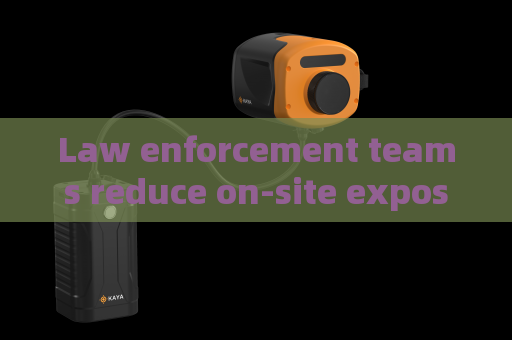
The same technology is now being deployed for covert reconnaissance during narcotics surveillance and dignitary protection. In a parking garage or airport tarmac scenario, teams use the penetration imager from inside an unmarked van to see through the tinted rear window of a suspect vehicle without ever rolling down their own windows. The zero-light imaging capability ensures that no visible beam betrays the observation, maintaining operational secrecy. By eliminating the need to physically confront the glass surface or rely on risky peek-ahead maneuvers, law enforcement agencies are redefining the standard for safe on-site exposure management. The penetration imager has become an essential tool for any unit tasked with vehicle interdiction or close-quarter barricade resolution, turning a historically vulnerable moment into a controlled, remote intelligence-gathering phase.




