Rural law enforcement presents a unique set of challenges: vast areas of coverage, limited personnel, often poorly lit roadways, and the heightened potential for encountering high-risk situations during routine traffic stops or checkpoints. In this demanding environment, officer safety and operational effectiveness are paramount. The integration of advanced technological tools is no longer a luxury but a necessity. Among these, the penetration imaging system, specifically leveraging Laser Range-Gated (LRG) or Gated Imaging technology, has emerged as a transformative asset for patrol vehicle inspections, fundamentally enhancing the capabilities of rural police forces.
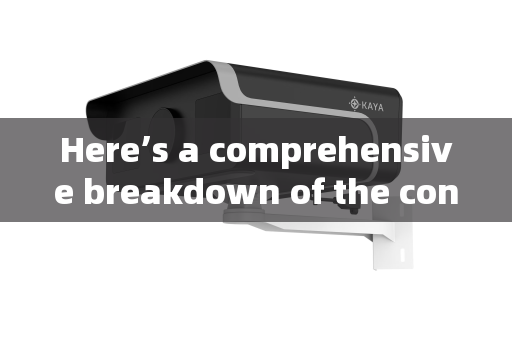
Penetration Imager Effect Images
Understanding Penetration Imaging Technology
At its core, a penetration imaging system is designed to "see" what conventional visible-light cameras cannot. It operates on the principle of laser range-gated imaging. The system integrates a high-repetition-rate pulsed laser and a gated, intensified camera, synchronized with nanosecond precision. By emitting a short, powerful pulse of laser light and then opening the camera's shutter for an equally brief moment only when the light reflected from a specific, predetermined distance returns, the system effectively "slices" the scene by range.
This sophisticated time-slicing stacked scanning achieves several critical functions:
- Overcoming Obscurants: It actively rejects backscattered light from particles in the line of sight, such as fog, smoke, dust, rain, or snow. This allows for clear imaging in恶劣天气 (恶劣天气, èliè tiānqì - adverse weather) conditions common in rural areas.
- Medium Penetration: A key capability is the "non-invasive penetration" of certain transparent and semi-transparent barriers. The system can see through vehicle windows (including tinted glass), certain types of特种玻璃 (特种玻璃, tèzhǒng bōli - specialized glass), and light foliage, effectively removing the visual barrier between the officer and the vehicle's interior or concealed cargo holds.
- Long-Range, High-Contrast Imaging: It provides high-contrast imaging at significant distances, far exceeding the effective range of standard visible or thermal imaging in conditions of low light or no light (e.g., nighttime rural roads).
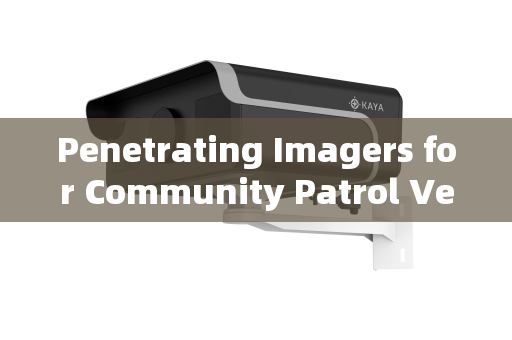
The hardware suite typically comprises a pulsed laser illuminator, a gated intensifier camera (featuring a Microchannel Plate - MCP - for gains exceeding 10^6x), beam expanders, and imaging lenses. The system's sub-3 nanosecond electronic shutter and优于 10ps (优于 10ps, yōuyú 10ps - better than 10ps) synchronization precision enable high-fidelity 3D data acquisition of targets.
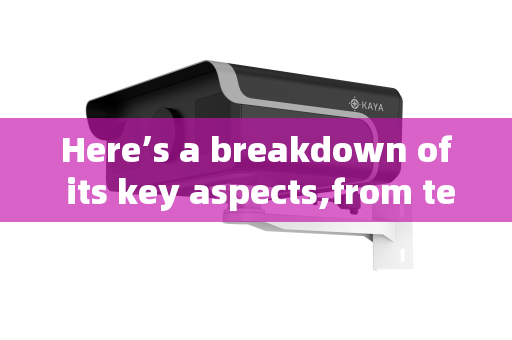
Penetration Imager Effect Images
Application in Rural Patrol Vehicle Inspections
For rural patrol officers, a vehicle stop is a moment of elevated risk and critical decision-making. The penetration imaging system, often vehicle-mounted or deployed at temporary checkpoints, plays several vital roles:
-
Enhanced Officer Safety and Situational Awareness: Before even approaching a vehicle, especially during nighttime or low-visibility stops, officers can use the system to scan the vehicle's interior. They can identify the number of occupants, their approximate positions, and observe potential threatening movements or the presence of visible weapons—all from the safety of their patrol vehicle. This pre-approach intelligence is invaluable for threat assessment and planning a safe contact strategy.
-
Detection of Concealed Compartments and Contraband: Rural routes are often used for smuggling operations (缉毒缉私, jídú jísī - drug and anti-smuggling operations) and trafficking. The system's ability to peer through non-metallic surfaces aids in the初步侦察 (初步侦察, chūbù zhēnchá - preliminary reconnaissance) for hidden compartments within door panels, dashboards, or roof linings. While it cannot see through metal, anomalies in the imaging of interior spaces can prompt a more thorough, hands-on inspection.
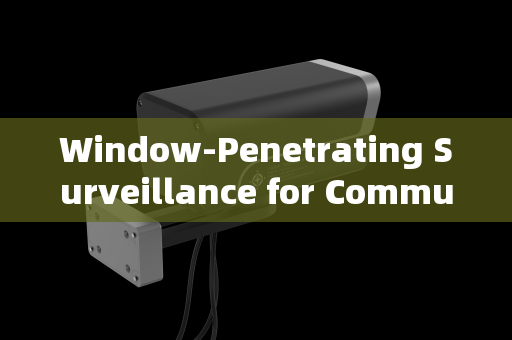
Penetration Imager Effect Images
-
Identification of Overcrowding and Human Trafficking Indicators: Checking for vehicle超员 (超员, chāoyuán - overloading) is a common safety enforcement action. The penetration imaging system allows for a quick, non-intrusive count of passengers inside a van or SUV with heavily tinted windows, even in complete darkness, helping to identify potential human smuggling situations.
-
Operations in Adverse Environmental Conditions: Whether it's heavy fog rolling across farmlands, smoke from seasonal wildfires, or a torrential downpour, traditional visibility is severely compromised. The LRG system's ability to cut through these媒介 (媒介, méijiè - media) ensures that inspection and surveillance capabilities remain operational, maintaining a security presence even when weather would otherwise ground it.
-
Search and Rescue Support: The role of rural law enforcement often extends to search and rescue (SAR) operations for missing persons or accident victims. Mounted on a patrol vehicle, the system can scan through light vegetation, smoke, or into wrecked vehicles (penetrating shattered but dirty windows) to locate individuals, significantly speeding up the response in critical, time-sensitive missions.
Contrast with Traditional Methods
Traditional inspection methods rely on direct visual observation, flashlights, or canine units. While effective in their own right, they often require close proximity, putting officers at risk, and can be thwarted by darkness, weather, or visual barriers like tinted glass. The penetration imaging system acts as a powerful force multiplier, extending the officer's senses to gather crucial information from a safer, stand-off distance and under conditions that would otherwise blind them.
Conclusion
In the vast and unpredictable theater of rural law enforcement, the penetration imaging system is far more than just a sophisticated camera. It is a critical tool for proactive threat detection, enhanced officer survivability, and effective law enforcement. By providing the unique ability to conduct "non-invasive probing" of vehicles in pitch darkness, through obscuring weather, and past window tint, it empowers officers to make better-informed decisions, conduct safer inspections, and disrupt illicit activities more effectively. As智慧公安 (智慧公安, zhìhuì gōng'ān - Smart Policing) initiatives expand, integrating such cutting-edge, yet operationally practical technology into rural patrol fleets is a strategic imperative for building a more robust, responsive, and secure rural law enforcement framework.