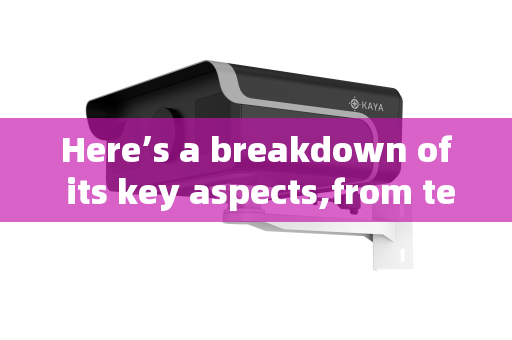
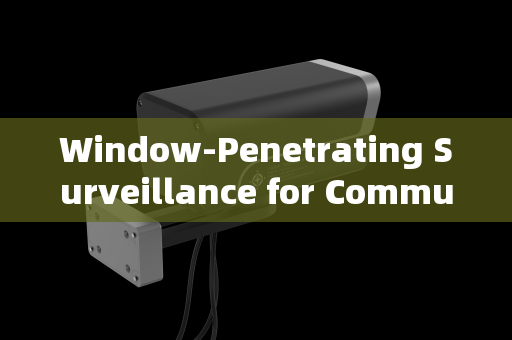
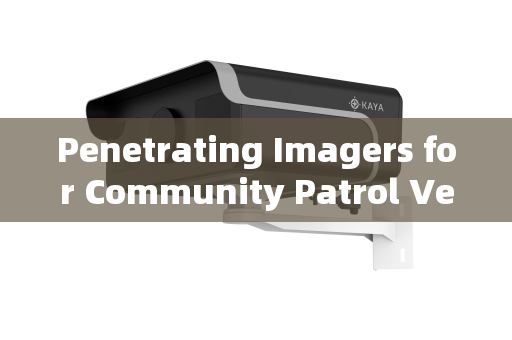
Excellent topic. Through-Window Imaging (TWI) for high-level event vehicle security checks represents a critical, sophisticated layer in modern security protocols. It allows inspectors to see inside a vehicle without opening doors or disturbing occupants, crucial for screening dignitaries, heads of state, or high-value assets at events like summits, major sporting events, or diplomatic conferences.
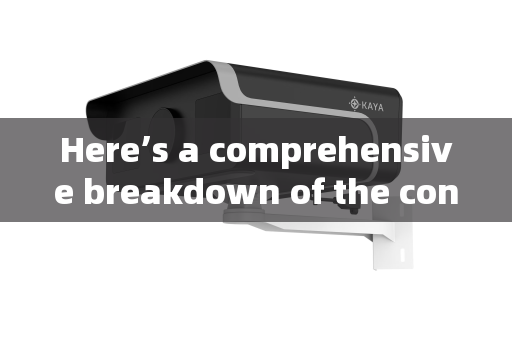
Penetration Imager Effect Images
Core Concept & Objective
The primary goal is to detect threats concealed within the passenger compartment of a vehicle that external scans (under-vehicle, trunk x-ray) might miss. These include:
- Weapons: Firearms, explosives, blades.
- Suspicious Packages: IEDs, unauthorized electronic devices.
- Unauthorized Personnel: Individuals hiding in footwells or under blankets.
- Prohibited Items: In sensitive contexts, this could include recording devices or communications equipment.
The key is to accomplish this rapidly, discreetly, and without physical contact, maintaining the flow of traffic and the privacy/dignity of occupants to the extent possible.
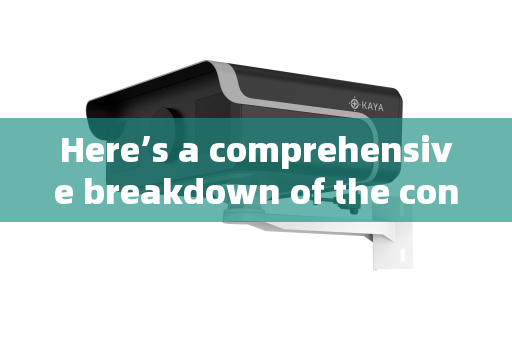
Penetration Imager Effect Images
Key Technologies Employed
TWI systems use non-ionizing radiation (unlike trunk x-rays), primarily in the radio frequency and terahertz spectra.
-
Millimeter-Wave (mmWave) Radar & Imaging:
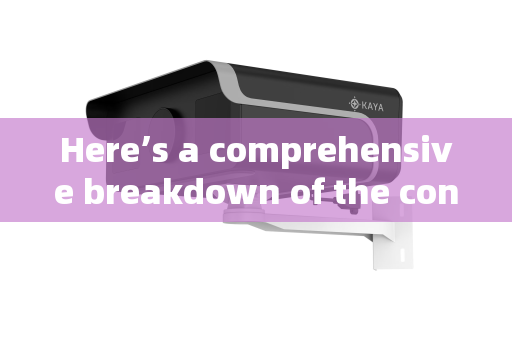
Penetration Imager Effect Images
- How it works: Emits low-power radio waves (typically in the 24-30 GHz or 77-81 GHz bands). These waves penetrate non-metallic materials like glass, plastic, and fabric but reflect off surfaces (skin, metal, dense objects). An array of sensors captures the reflected signals to create a high-resolution 3D image.
- Advantages: Effective through tinted glass and in most weather conditions. Can see through light fabrics (blankets) to detect hidden objects or persons. Provides real-time video-like imagery.
- Limitations: Cannot penetrate metal. Wet clothing or certain materials can reduce clarity.
-
Terahertz (THz) Imaging:
- How it works: Operates in the spectrum between infrared and microwaves. THz radiation can penetrate many non-conductive materials (clothing, paper, plastic) but is strongly absorbed by water and reflected by metal.
- Advantages: Higher resolution than mmWave for certain materials. Can sometimes provide spectroscopic data, hinting at material composition (e.g., distinguishing between plastic explosive and a clay block).
- Limitations: More affected by atmospheric conditions (humidity, rain). Shorter range. Technology is often more expensive.
-
LiDAR (Light Detection and Ranging) & 3D Optical Sensing:
- Role: Often used in conjunction with the above. While it doesn't "see through" materials, ultra-high-resolution 3D surface mapping can detect anomalies in a vehicle's interior profile (e.g., a shape under a blanket that shouldn't be there) when fused with other sensor data.
Operational Workflow at a High-Level Event Checkpoint
A vehicle undergoes a layered screening process:
- Pre-Screening & Verification: License plate reader, visual inspection, credentials check.
- Undercarriage Scanning: A drive-over system checks for threats attached to the vehicle's underbody.
- Through-Window Imaging:
- Deployment: Sensors are typically mounted on portable or stationary gantries, robotic masts, or handheld units.
- The Scan: As the vehicle pauses, the operator activates the system. The sensor array scans the side windows (and sometimes windshield/rear window) from a standoff distance (a few meters).
- Analysis: Real-time imagery is displayed on a monitor in a security operator's vehicle or booth. The operator looks for anomalies—unexpected shapes, metallic signatures, or hidden individuals. The system may use AI-assisted object recognition to flag potential threats (highlighting a rectangular metallic object under a seat).
- Decision: A "clean" scan allows the vehicle to proceed to the next layer (e.g., a physical check of the trunk with an x-ray scanner). An anomaly triggers a secondary, targeted inspection by security personnel, who now have specific intelligence on where to look.
Advantages for High-Level Events
- Speed & Efficiency: Maintains convoy momentum; much faster than manual interior inspection.
- Non-Intrusive: Preserves privacy for VIP occupants; no need to exit the vehicle for this stage.
- Safety: Provides standoff detection, keeping operators at a safe distance from a potential threat vehicle.
- Deception Defeat: Can reveal intentionally concealed items and persons that a visual "look-see" would miss.
- Deterrence: The visible presence of advanced technology acts as a powerful deterrent.
Challenges & Considerations
- Privacy Concerns: The technology can produce anatomically revealing images or reveal personal items. Mitigation: Use of privacy algorithms that only display alerts or avatars (stick-figure representations of people with threat items highlighted).
- Environmental Limitations: Heavy rain, condensation, or certain specialized window films (metallic tint) can degrade performance.
- Cost: High-end systems are a significant investment.
- Operator Training: Interpreting images requires skill to avoid false alarms (e.g., confusing a child's car seat for a threat).
- Legal & Policy Framework: Use must be governed by strict protocols defining data handling, retention, and permissible use.
Integration in the Security Ecosystem
TWI is not a standalone solution. It is one vital node in a Defense-in-Depth strategy:
- Perimeter: Credentialing, intelligence.
- Approach: License Plate Recognition (LPR), behavior detection.
- Checkpoint: Through-Window Imaging, under-vehicle scan, biometric verification of occupants.
- Final Access: Manual verification, trunk x-ray, explosive trace detection (ETD).
Conclusion
Through-Window Imaging is a force multiplier for high-level event vehicle security. It dramatically enhances the ability to detect concealed interior threats in a way that is both effective and respectful of operational tempo and VIP protocol. By moving the security officer's "eyes" inside the vehicle before a door is ever opened, it significantly raises the security baseline and allows for more intelligent, risk-based decisions at critical checkpoints. Its success hinges on proper integration, trained operators, and a balanced approach that addresses both security efficacy and privacy norms.