Excellent topic. Covert Low-Light Imaging for Urban Environments refers to the technology and techniques used to capture visual information in city settings at night or in very dim light, without being detected. It sits at the intersection of advanced optics, sensor technology, signal processing, and tactical operations.
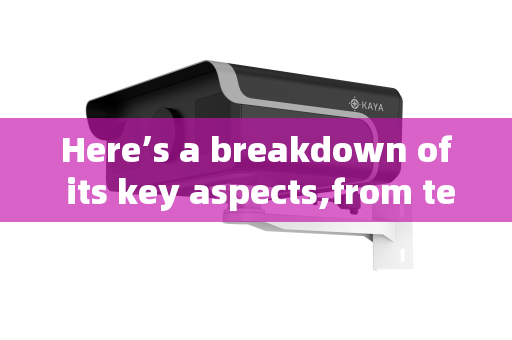
Penetration Imager Effect Images
Core Technological Enablers
To achieve "covert" imaging, you need to gather the maximum amount of available light without adding your own visible light source. The key technologies are:
-
Image Intensification (I²) - "Night Vision Goggles":
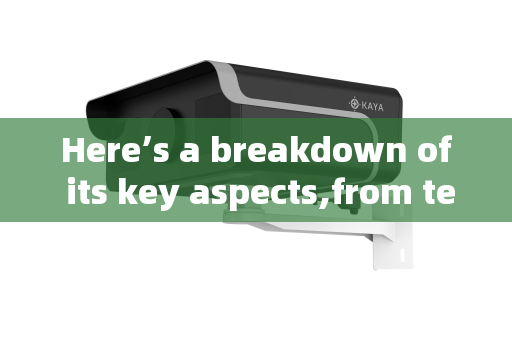
Penetration Imager Effect Images
- How it works: Uses a photocathode to convert scarce photons into electrons, amplifies them through a microchannel plate, and then smashes them onto a phosphor screen to create a glowing green image.
- Covertness: Not inherently covert. The devices can have a faint glow from the photocathode or housing leaks ("niggle light"), and the bright phosphor screen can be visible to someone looking directly at the user. However, Gen 3+ and "filmless" tubes have greatly reduced this signature.
- Urban Challenge: Can be "bloomed" or washed out by sudden bright lights (car headlights, street lamps), a common occurrence in cities.
-
Digital Low-Light Cameras (Low-Light CCD/CMOS):
- How it works: Uses extremely sensitive sensors with high quantum efficiency, cooled to reduce noise. Relies on sophisticated software algorithms for real-time noise reduction and image enhancement.
- Covertness: Highly covert. No light emission. The only giveaway would be a lens reflection (mitigated with hoods) or electronic emissions if not properly shielded.
- Urban Advantage: Handles high-contrast scenes better than I². Can use ambient urban light pollution (skyglow) effectively.
-
Thermal Imaging (Long-Wave Infrared - LWIR):
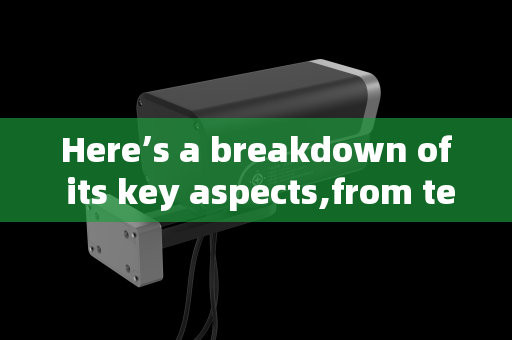
Penetration Imager Effect Images
- How it works: Detects heat signatures (mid-wave or long-wave infrared radiation) emitted by all objects, creating an image based on temperature differences.
- Covertness: Passive and completely covert. It does not require any ambient light and emits nothing. It sees the heat an object gives off.
- Urban Superpower: Sees through smoke, dust, and light fog. Can detect people hiding behind thin obstructions (bushes, fences) based on their heat signature. Crucial for distinguishing humans from inanimate objects in cluttered environments.
-
Short-Wave Infrared (SWIR):
- How it works: Operates in a band (0.9-1.7 µm) where ambient "night glow" (from hydroxyl radicals in the upper atmosphere) and light pollution from city lights are present. It can also see through glass and some materials opaque to LWIR.
- Covertness: Passive and covert. Uses ambient infrared light. Lasers for illumination or ranging in the SWIR band are invisible to the naked eye and most I² devices.
- Urban Utility: Provides imagery that looks more like a visible light image (recognizable shadows, contrasts) while being covert. Useful for identifying specific objects or reading labels.
Urban-Specific Challenges & Solutions
Urban environments present unique hurdles for covert imaging:
- Extreme Dynamic Range: Pitch-black alleyways next to brightly lit storefronts. Solution: Advanced Wide Dynamic Range (WDR) processing and logarithmic sensors that prevent bloom-out.
- Ambient Light Pollution: A double-edged sword. It provides illumination but creates complex shadows, glare, and reflective surfaces. Solution: Multi-spectral fusion (e.g., blending thermal for shape with low-light visible for detail).
- Obstructions & Clutter: Buildings, windows, fences, signs. Solution: Multi-angle/slanted viewing, and using SWIR/Thermal to see through some visual clutter.
- Signatures & Counter-Detection: The operator or device must avoid being seen. Solution: Using pan-tilt-zoom (PTZ) cameras mounted on discreet perimeters or UAVs, employing effective camouflage, and minimizing any electronic or light signature.
Primary Applications
- Military & Special Forces: Reconnaissance, target identification, navigation, and situational awareness in hostile urban terrain (e.g., FIBUA/MOUT operations).
- Law Enforcement & SWAT: Surveillance of suspect locations, hostage rescue scenarios, perimeter security during high-risk operations, and evidence gathering.
- Border & Critical Infrastructure Security: Monitoring ports, power plants, and borders for intrusion without revealing patrol locations.
- Wildlife Monitoring: Observing nocturnal urban wildlife (coyotes, foxes, raccoons) without disturbing them.
- Covert Journalism & Investigative Reporting: Documenting activities in low-light conditions without alerting subjects.
Ethical and Legal Considerations
The covert nature of this technology raises significant questions:
- Privacy: The ability to conduct pervasive surveillance in urban areas, potentially into private residences, challenges expectations of privacy.
- Regulation: Laws (like the U.S. Omnibus Crime Control Act regarding thermal imaging) struggle to keep pace with technology. The use of such gear by law enforcement often requires warrants.
- Asymmetry & Proliferation: The technology, once exclusive to militaries, is now available to non-state actors and private entities, altering the security landscape.
The Future: AI and Fusion
The next generation is defined by sensor fusion and artificial intelligence:
- AI-Powered Enhancement: Real-time algorithms that can "de-noise," sharpen, and even colorize low-light imagery far beyond traditional methods.
- Automated Detection & Tracking: Software that automatically flags humans, vehicles, or weapons in a scene, reducing operator workload.
- Multi-Spectral Fusion: Seamlessly blending Low-Light Visible + Thermal + SWIR into a single intuitive image, overlaying the strengths of each band (e.g., thermal shape of a person with visible-light facial details from a SWIR feed).
- Quantum Imaging: Emerging technologies that use quantum correlations to image with photons that never interacted with the object, offering the potential for imaging around corners.
Conclusion
Covert Low-Light Imaging for Urban scenarios is a rapidly advancing field driven by the need for superior situational awareness under the cover of darkness. It has evolved from simple light amplification to a sophisticated, multi-spectral discipline that leverages the unique—and often challenging—lightscape of the city itself. While offering powerful tools for security and defense, it simultaneously forces a continuous reassessment of the boundaries between security, privacy, and technological capability.