Introduction: The Challenge of Vehicular Glass Penetration A critical task in law enforcement and emergency response is rapidly assessing a vehicle's interior without physical intrusion. Standard optical cameras, however, are often thwarted by reflections, tints, and glare on windows. This is where specialized penetration imaging systems become indispensable. These systems are engineered to overcome the visual barriers presented by vehicle windows, enabling operators to see inside clearly for threat assessment, search and rescue, or surveillance operations. The core technological question is: How does a penetration imaging system achieve this crucial capability?
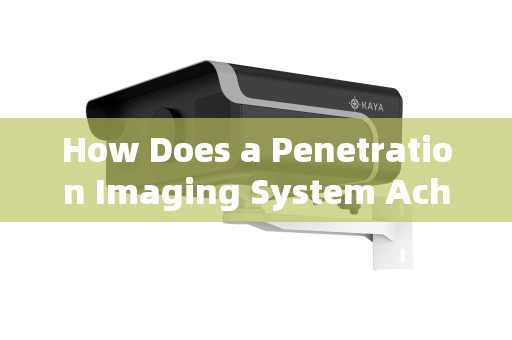
Penetration Imager Effect Images
Fundamental Principles: Beyond Visible Light The key lies in operating in specific wavelengths of the electromagnetic spectrum. Standard automotive glass is transparent not only to visible light but also to certain infrared (IR) bands. A penetration imaging system typically utilizes Short-Wave Infrared (SWIR) or, in some advanced configurations, specific Mid-Wave Infrared (MWIR) wavelengths. These IR bands can pass through glass with minimal attenuation while effectively suppressing the specular (mirror-like) reflections that plague visible-light imaging. The system’s sensor is tuned to detect this penetrating radiation, often from ambient IR illumination or from a covert, eye-safe onboard IR illuminator. This allows it to construct a clear image of the interior space behind the glass, significantly reducing the obscuring effect of surface reflections.
[Image: A diagram comparing visible light reflection on a car window versus IR penetration, showing how IR passes through to image the interior.]
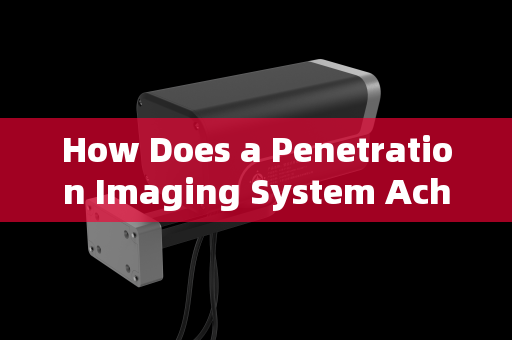
Penetration Imager Effect Images
Overcoming Polarization and Tinting Modern vehicle windows often incorporate laminates, tints, and polarization layers for safety and comfort. A sophisticated penetration imaging system addresses these through advanced optical techniques. For instance, to counter polarization—a primary source of darkened or obscured views—these systems may employ adaptive polarization filters. By dynamically adjusting the filter’s orientation to match and cancel the window’s polarization, the system dramatically increases contrast and detail. Furthermore, algorithmic processing enhances the captured IR image, differentiating between the target (the interior) and the persistent but reduced noise from tints or dirt on the glass.
[Image: Side-by-side photos: a standard visible-light image of a tinted car window (mostly dark/reflective) vs. a penetration system's output showing clear interior details.]
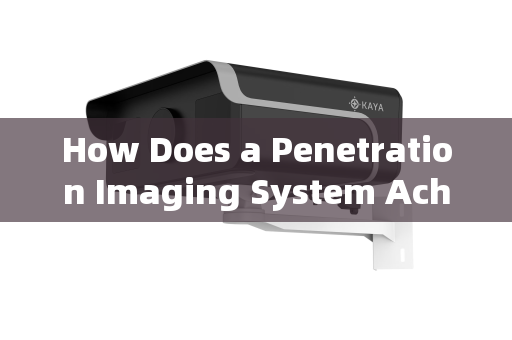
Penetration Imager Effect Images
Operational Applications in Emergency and Police Contexts In practice, this technology is vital for mission safety and efficiency. During a vehicle stop or a crisis situation, officers can use a handheld or tripod-mounted penetration imaging system to safely identify the number of occupants, their posture, and potential weapons without approaching the vehicle. In hostage or barricade scenarios, it provides critical intelligence. For emergency responders, it can help locate unconscious individuals in smoked or tinted vehicles after an accident. The ability to achieve reliable imaging through vehicle windows transforms situational awareness, allowing for informed decision-making and de-escalation strategies from a safer standoff distance.
[Image: An illustration of a tactical officer using a handheld penetration imaging device on a tripod, assessing a vehicle's interior from a concealed position.]
Conclusion Therefore, a penetration imaging system achieves imaging through vehicle windows by leveraging specific infrared wavelengths that penetrate glass, employing optical techniques to manage reflection and polarization, and processing the signal to deliver a clear interior view. This fusion of physics and engineering provides law enforcement and emergency services with a powerful, non-invasive tool for visual assessment, directly enhancing operational safety and effectiveness in scenarios involving vehicles.
[Image: A composite image showing the final output display of a penetration imaging system, with a clear view of a car's interior overlaid on an external photo of the vehicle.]