In high-stakes tactical operations, law enforcement and military personnel frequently face the challenge of assessing threats inside vehicles without exposing their own position. Vehicle windows, especially those with heavy tinting, reflective coatings, or multiple layers of laminated glass, create a visual barrier that compromises situational awareness. Standard binoculars or spotting scopes fail to resolve details through such glass due to surface glare, backscatter from ambient light, and the obscuring effects of dirt or condensation. Officers must often choose between advancing blind or using risky methods like tapping on windows, both of which can alert suspects and escalate danger. The fundamental pain point is the need for a non-contact, covert, and reliable means to see through automotive glass from a safe distance, especially during vehicle interdictions, surveillance, or hostage rescue scenarios. This is where the Penetrating Imager redefines tactical observation capabilities.
The Penetrating Imager addresses this problem by employing mature through-glass imaging technology based on laser range-gated active imaging. Unlike passive optical devices that rely on available light, this system emits short-duration laser pulses and synchronizes a high-speed gated camera to capture only the light reflected from a specific distance range. By precisely timing the shutter to open after the laser pulse has traveled to the target and back, the imager effectively rejects scattered light from the glass surface itself, as well as from airborne particles like dust or fog. This gating mechanism eliminates the blinding glare caused by window reflections and cuts through the optical distortion of automotive glazing. The result is a high-contrast, clear image of objects behind the glass, such as occupants’ movements, concealed weapons, or contraband, even when the window is heavily tinted. The covert through-glass recon capability allows operators to maintain standoff distances and avoid detection, as the laser wavelength is outside the human visible spectrum and the device operates silently.
Field applications demonstrate the Penetrating Imager’s effectiveness in real-world vehicle checkpoints and tactical entries. For instance, during a high-speed pursuit termination, officers can deploy from a patrol vehicle at a distance of 100 to 200 meters and, using the through-glass surveillance feature, instantly verify the number of occupants and their hand positions without approaching the suspect vehicle. The imager’s ability to function in zero-light or low-light conditions, thanks to its active illumination, further extends its utility for nighttime operations. Operators simply aim the device through the windshield or side windows, adjust focus for the desired depth, and view the live feed on a ruggedized display. The system also handles rapid target acquisition—a single laser pulse and camera frame can produce a usable image in under a microsecond, making it suitable for dynamic scenarios where subjects are moving. No physical contact with the glass is required, and the imager remains effective even when the glass is wet from rain or covered with frost, as the gating technique filters out most environmental scatter.
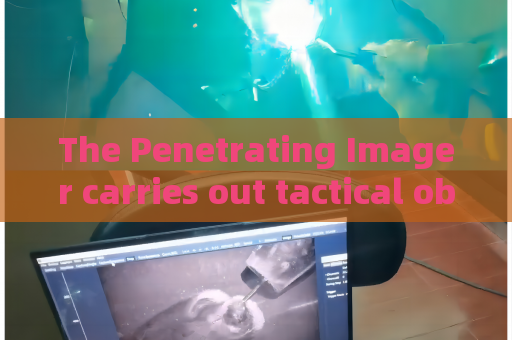
For deeper tactical integration, the Penetrating Imager can be mounted on tripods or vehicle platforms for sustained observation during static surveillance. In hostage or barricade situations, teams can observe through multiple layers of automotive glass—such as both side windows and the rear windshield—to map interior layouts and identify the location of armed subjects. The device’s high-resolution capability enables identification of small items like cell phones or keys on the seat, which can be critical for intelligence gathering. Because the imager operates purely in the optical domain without using any form of penetrating radiation, it poses no safety hazard to occupants and complies with strict rules of engagement. The tactical observation through automotive glass offered by the Penetrating Imager fills a glaring gap where traditional optics and even thermal imagers fall short—thermal cameras often cannot see through glass due to thermal reflection and high emissivity of windows. By providing a non-cooperative, all-weather visual solution, the Penetrating Imager has become an indispensable tool for modern law enforcement and military tactical units.




