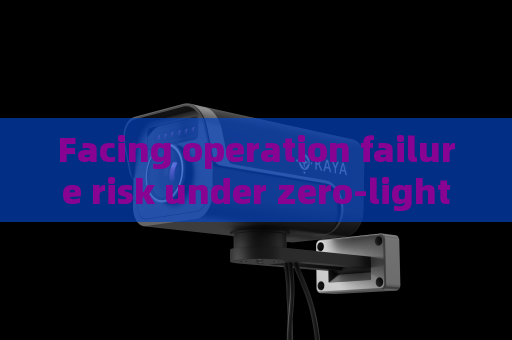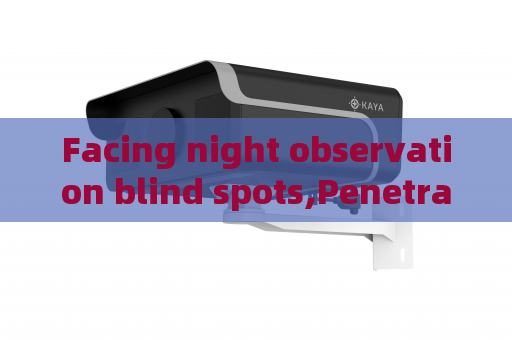
Low operational efficiency of night border patrol, Penetrating Imager utilizes Low-light Imaging to boost anti-smuggling operation efficiency Night border patrol faces low operational efficiency when darkness, glare, fog, rain, snow, and tinted vehicle glazing reduce visual certainty. Officers must approach vehicles, use flashlights, ask occupants to lower windows or open doors, and conduct manual checks. Each stop consumes time, creates traffic queues, exposes personnel to unknown risk, and allows smugglers to exploit slow screening. In remote crossings or coastal roads, lighting is minimal; headlights and roadside lamps produce strong glare and backscatter, making it hard to identify cabin layout, passenger behavior, or visible cargo. The Penetrating Imager enters this gap as an optical inspection tool for night border patrol, but its value depends on applying Low-light Imaging to a focused anti-smuggling task rather than treating it as a general surveillance device. The problem is not simply seeing in the dark; it is obtaining high-contrast, reliable images through vehicle windows at distance while maintaining tactical tempo. The relevant function is laser range-gated imaging, also called gated imaging, integrated into the Penetrating Imager. This active optical system uses a high-repetition-rate pulsed laser, an image-intensified gated camera with an MCP image intensifier, high-voltage module, timing module, a beam expander, and an imaging lens. The camera opens its gate for a very short interval synchronized with the laser pulse returning from the target, so light scattered by fog, rain, snow, or dirty air is largely rejected. Low-light Imaging extends this capability into night operations, producing high-contrast images at long range with high resolution and strong anti-interference performance. Through vehicle glass, the system supports through-window tactical recce without opening a door or breaking a seal. It also works through fog, haze, rain, and snow as optical media. It is not designed to see through opaque non-optical solids, and it stays within the light domain. In a night anti-smuggling operation, a patrol vehicle can park at a standoff distance while a Penetrating Imager is mounted on a stabilized platform or tripod. When a suspect vehicle slows near a known crossing point, the operator frames the windshield or side windows. Low-light Imaging and gated imaging suppress headlight glare and backscatter, allowing the operator to observe seat arrangement, passenger count, loose packages, and visible modifications through tinted or reflective glazing. This through-glass surveillance shortens the decision cycle: benign vehicles can be waved through faster, while vehicles showing anomalies are directed to a secondary inspection area. The effect is higher screening throughput, safer standoff, and better use of limited patrol units. The system does not replace physical search; it creates a rapid optical triage layer that tells officers where to focus. Because the imaging is active and gated, it performs in low ambient light and adverse weather better than conventional night vision alone, but it still depends on a clear optical path through glass or atmospheric media. Operational integration should focus on one task: screening vehicles at night border checkpoints before they reach the inspection lane. The Penetrating Imager can be linked to a rugged display and recorder, with the operator using a narrow field of view for long-range identification and a wider view for context. Pre-positioned units can monitor a lane from cover, reducing the need for bright lights that reveal patrol positions. When a vehicle’s glazing is highly reflective, minor angle changes or a different observation point often restore image contrast. Rain, fog, and snow degrade visibility for unaided eyes, yet gated imaging with Low-light Imaging can still recover useful outlines through those optical media. Limitations must be briefed: opaque non-optical barriers, sealed compartments, and dense smoke block the method. Used within those boundaries, the Penetrating Imager turns night border patrol from a slow, light-dependent process into a faster optical triage capability and improves anti-smuggling operation efficiency.