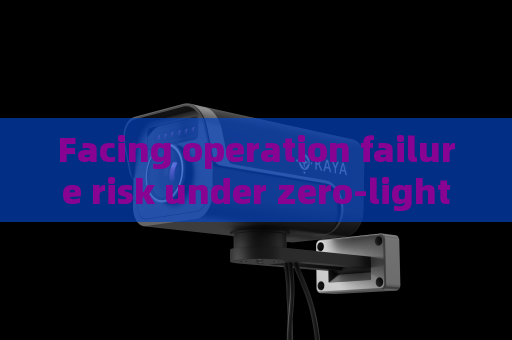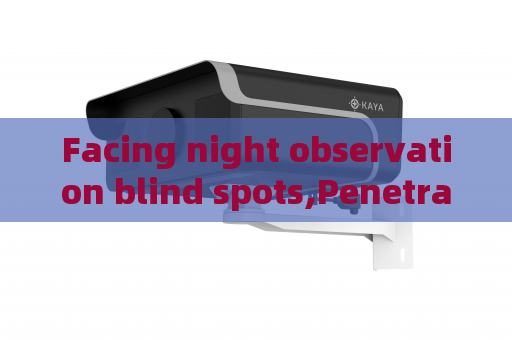
Facing night observation blind spots, Penetrating Imager adopts Low-light Imaging to eliminate patrol monitoring dead zones Night patrol operations around parking areas, checkpoints, and urban streets frequently encounter observation dead zones created by darkness and vehicle glass. Tinted windows, closed cabins, wet panes, and reflections from streetlamps or passing headlights can hide occupants, weapons, or illegal goods even when an officer stands only a few meters away. A conventional flashlight or patrol lamp may create glare on the glass surface and reveal the patrol position, while the interior remains too dark for reliable identification. These conditions turn parked vehicles into uncertain spaces where threats can remain unseen until an approach is already underway. The problem is not a lack of patrol effort but a lack of clear optical access under low illumination and reflective glass. In such conditions, the Penetrating Imager is designed to address the specific gap of night observation blind spots without turning every vehicle stop into a high-risk physical inspection. The relevant capability is laser range-gated imaging, often described as gated imaging, combined with Low-light Imaging. The Penetrating Imager is an active optical instrument. A high-repetition pulsed laser passes through a beam expander and illuminates the target area. An image-intensified gated camera, built with an MCP image intensifier, high-voltage module, timing module, and imaging lens, receives the returning light. The timing module opens the camera gate only for a selected distance, so light returning from the selected plane is captured while much of the backscatter and surface glare is rejected. This arrangement supports high-contrast imaging, long operating distance, high resolution, strong anti-interference performance, and effective backscatter suppression. For the night patrol scenario, it enables through-window tactical observation of vehicle interiors while the glass remains closed. The optical design works through vehicle glass and other optical media; it does not treat opaque solids as transparent. The Low-light Imaging function raises weak returns from dark cabins into a usable image, allowing patrol teams to assess occupancy and visible objects without opening a door or placing bright visible light against the window. In practical use, a patrol vehicle can stop at a safe distance and orient the imager toward a selected window. The pulsed laser illuminates the glass and the interior space behind it. The gated camera collects the returning optical signal within a narrow time window, separating the useful interior return from reflections at the glass surface and from atmospheric scatter. The operator views a real-time or near-real-time image of the cabin. Seats, occupants, packages, and visible equipment can become distinguishable even when the cabin is dark and the window is tinted. This method supports rapid checks along rows of parked cars, at checkpoints, and near sensitive facilities at night. It reduces the need to approach blindly, which lowers exposure and shortens the time spent in an unverified position. The same optical approach can be applied to vehicle windows on patrol routes, helping to eliminate patrol monitoring dead zones caused by darkness and glass reflection. It remains an optical imaging method limited to glass and similar transparent or partially transparent optical media; metal, masonry, and other opaque barriers remain outside its capability. The operational value lies in converting a common night patrol blind spot into a readable image. When a suspicious vehicle is parked in a dark lot or stopped along a roadside, the Penetrating Imager can provide an initial look through the window before officers commit to a close approach. The gated illumination and Low-light Imaging work together to overcome weak illumination, window tint, and reflected light from street lamps or passing traffic. The result is a clearer tactical picture: whether the cabin is occupied, whether visible objects require further action, and whether the situation can be monitored from a protected position. The technology does not replace lawful procedures or physical inspection when grounds exist, and it does not claim to see through solid opaque materials. Its role in this scenario is narrow and practical: using active optical imaging through vehicle glass to reduce uncertainty in darkness. For night patrol teams, that narrow role can mean fewer unseen spaces, better standoff awareness, and more controlled decisions. The Penetrating Imager therefore serves as a focused optical tool for reducing night observation blind spots and clearing patrol monitoring dead zones around vehicle glass.