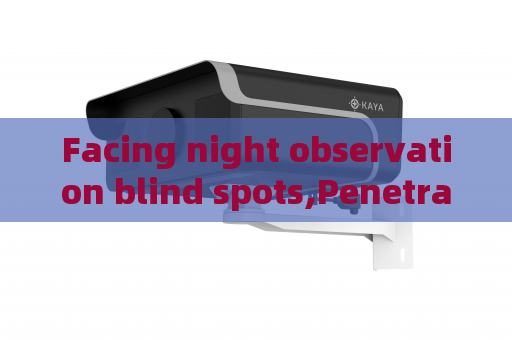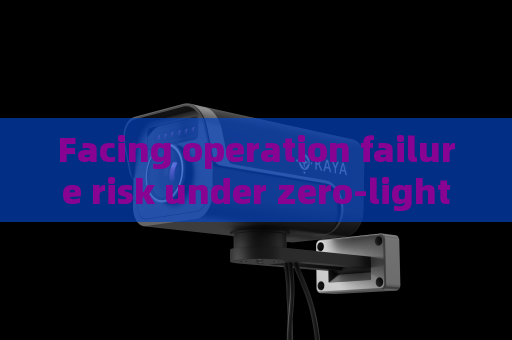
Facing operation failure risk under zero-light environment, Penetrating Imager adopts Zero-light Imaging to guarantee all-weather police duty A night vehicle stop can turn into an operation failure within seconds when the interior of a stopped car remains completely dark. Tinted windows, wet glass, strong headlights, and street glare create layered reflections that hide seating positions, hand movements, and objects held near the dashboard. Officers approaching without reliable visual information face a severe tactical disadvantage. A passenger may reach under a seat, conceal a weapon, or swap places while the exterior view remains unclear. The risk is not only sudden violence but also mistaken decisions, delayed containment, and unsafe approaches. In a zero-light environment, ordinary cameras and human vision cannot separate useful detail from window reflection or deep shadow. The Penetrating Imager is designed for this exact police problem: to restore visual awareness before an officer crosses the danger line. The relevant capability is Zero-light Imaging built on laser range-gated imaging. The Penetrating Imager is an active optical instrument. A high-repetition-rate pulsed laser sends short light pulses toward the target, while an image-intensified gated camera with an MCP image intensifier, high-voltage module, timing module, beam expander, and imaging lens receives only the light returning from a selected distance. This timing control rejects much of the backscatter from the glass surface and atmospheric media. The result is high-contrast, long-range, high-resolution imaging with strong anti-interference, without dependence on ambient light. In the vehicle-stop scenario, the system can look through automotive glass and tinted windows to reveal occupants and visible interior areas. It works through optical media such as vehicle windows, train windows, aircraft portholes, and glass curtain walls. It also maintains clarity in fog, haze, rain, and snow. For police duty, the key value is not seeing through solid metal or opaque panels; it is seeing through glass under zero light while suppressing glare and reflection. In practice, a patrol unit can set the Penetrating Imager on a tripod, vehicle mount, or handheld support and aim it at the stopped vehicle from a covered position. The operator selects the gating distance so the returning light is collected from the cabin area rather than from the glass surface or nearby streetlights. The display then shows a real-time image of visible occupants, their posture, and hand placement. This observation through the window supports decisions about which side to approach, when to issue commands, and whether to hold position for additional units. During rain, fog, or snow, the same optical channel continues to provide usable imagery, so all-weather police duty does not collapse when visibility drops. The imager does not replace physical cover, verbal control, or tactical patience. It supplies a clearer visual picture before contact, reducing the chance that an officer walks into an unseen threat. At a checkpoint or high-risk stop, the value becomes sharper. The target vehicle may have interior lights switched off, occupants may sit in shadow, and reflections from warning lights can wash across the windshield. The Penetrating Imager can be positioned to observe through the side glass or rear window while the main team remains behind cover. A clear image of a driver's hands, a rear passenger leaning forward, or an object moving into view can change the tactical plan immediately. If a weapon or suspicious movement appears, the team can delay the approach, reposition, or call for specialized support. If the cabin appears calm, the stop can proceed with better confidence. The equipment is limited to optical media and does not defeat opaque barriers, but within the zero-light vehicle-stop scenario, that limitation is acceptable because the glass is the barrier that matters. By combining Zero-light Imaging with range-gated optical control, the Penetrating Imager helps guarantee all-weather police duty and lowers the risk of operation failure in darkness.