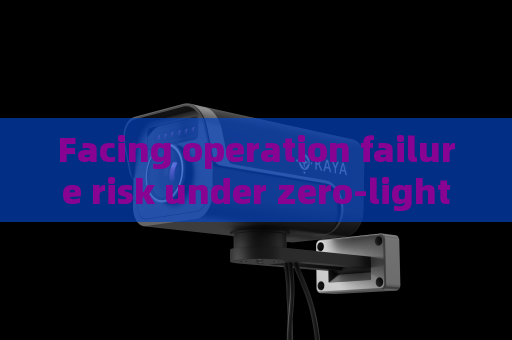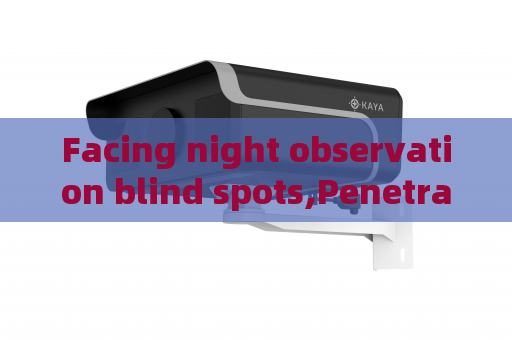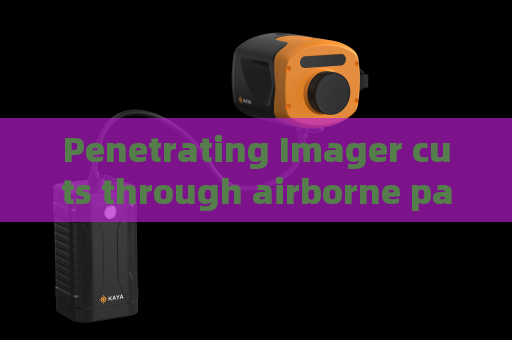
Penetrating Imager cuts through airborne particles to deliver sharp target outlines in heavy fog and smoke conditions In heavy fog and smoke conditions, airborne particles scatter light in every direction. Water droplets, soot, dust, and combustion aerosols reduce contrast, blur edges, and turn a familiar road, doorway, or vehicle into a soft gray mass. Conventional optical surveillance suffers from backscatter: the camera receives light reflected by particles before the target, washing out silhouette and hiding movement. For police and emergency teams, this is not a minor image-quality issue. A missing outline can delay route selection, mask a person near a fireground, or prevent confirmation of a hazard beyond a smoke layer. The scene demands an image in which the target boundary remains distinct while the intervening atmosphere is rejected. The need is captured by the Penetrating Imager concept: sharp target outlines must survive heavy fog and smoke conditions. The requirement is not to see through solid structures. It is to recover useful geometry through optical media that ordinary cameras cannot handle. The relevant capability is laser range-gated imaging, also known as gated imaging. A Penetrating Imager is an active optical instrument built around a high-repetition-rate pulsed laser, an image-intensified gated camera with an MCP image intensifier, high-voltage module, timing module, beam expander, and imaging lens. The system emits short laser pulses toward the scene. The camera gate opens only for a very brief interval synchronized with the expected return from the target range. Light scattered by fog droplets, smoke particles, and other airborne material arrives at different times and is largely rejected before the intensifier. This is Fog Penetration Imaging in practical form: the receiver favors ballistic or near-ballistic photons from the target while suppressing backward-scattered photons from the intervening medium. The result is higher contrast, sharper target outlines, and stronger resistance to interference. The function is optical and active. It does not rely on any non-optical sensing method. It works through optical media such as fog, haze, rain, snow, fire, and certain smoke conditions. Dense smoke that blocks enough light remains a limitation. The instrument improves visibility; it does not create information from an optically opaque volume. In field use, the operator selects a range gate that matches the distance to the area of interest. The pulsed laser illuminates that slice. The gated camera opens for nanoseconds, collecting the target return while most light from foreground fog or smoke has already passed. The beam expander widens the laser illumination to cover the search area; the imaging lens forms a high-resolution image on the intensified sensor. Moving the gate closer or farther allows a tactical visual check through layered fog, rain, or fire-generated smoke. A target behind a light smoke layer can appear with a clear torso outline, limb position, or vehicle shape, while the same view in a standard camera is flat and low-contrast. In fireground support, the technology can increase visibility by roughly three to five times compared with unaided optical observation. That gain helps teams identify exits, obstacles, and victim locations before entering a hot zone. The image remains a real-time optical view, so the tactical picture is direct and easy to interpret under stress. The operational value lies in target outline rather than scene brightness. A sharp silhouette gives a commander a measurable shape: a person crouched beside a barrier, a doorway edge, a vehicle profile, or a debris line in a flooded access route. Range-gating also reduces the glare and veiling effect that turn airborne particles into a bright curtain. This makes the Penetrating Imager useful for route reconnaissance, perimeter observation, and search coordination in heavy fog and smoke conditions where enough light can still return from the target. It is not a substitute for physical search, and it cannot overcome solid walls, metal, masonry, or clothing. Its advantage is confined to optical media. When dense smoke blocks nearly all light, no optical system can produce a reliable outline. When the medium permits partial transmission, gated imaging extracts a cleaner target edge than conventional optics. The title claim is therefore best understood as a narrow, realistic optical capability: sharp outlines through fog, haze, rain, snow, fire, and smoke layers that still pass light. The device supports faster decisions while keeping expectations within physical limits.