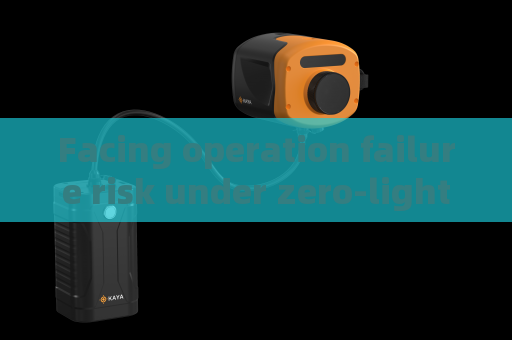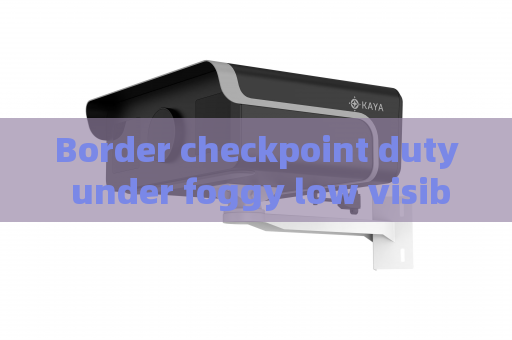
Facing strong light interference, Penetrating Imager relies on Strong Light Suppression Imaging to stabilize law enforcement imaging At a night traffic checkpoint or tactical stop, law enforcement imaging is often defeated by light rather than by distance. High-beam headlights, LED bars, roadside floodlights, emergency vehicle strobes, and wet-glass reflections can saturate a camera sensor and flatten the interior of a vehicle into a white smear. The problem becomes acute when officers need to assess occupants through automotive glass, especially tinted or highly reflective windows. A conventional camera adjusts exposure for the brightest source, so hands, seats, faces, and objects inside the cabin disappear into shadow. The operational risk is immediate: reduced situational awareness, delayed threat recognition, and poor visual documentation. The Penetrating Imager addresses this optical conflict, because the scene is not simply dark; it is overloaded with intense, directional light that masks the target behind glass. The relevant capability is Strong Light Suppression Imaging built on laser range-gated imaging, also known as gated imaging. The Penetrating Imager is an active optical system. A high-repetition-rate pulsed laser sends short light pulses toward the vehicle window. An image-intensified gated camera, containing an MCP image intensifier, high-voltage module, timing module, beam expander, and imaging lens, opens its gate only for the brief return window selected by distance. Continuous ambient light, including headlight glare and floodlight spill, is largely rejected because it arrives outside the gate. Backscatter from glass, rain, or haze is suppressed as well. This produces high-contrast imaging with long range, high resolution, and strong anti-interference performance. The function does not rely on non-optical detection. It remains an optical imaging method. In law enforcement use, Strong Light Suppression Imaging stabilizes the view through vehicle windows by keeping the cabin return strong while the interfering light is blocked. In practical operation, an officer at a checkpoint aims the Penetrating Imager at a vehicle window from a safe position. The range gate is adjusted to the cabin depth, so the exterior glass reflection falls outside the active slice. The resulting image shows occupants, hand placement, seat positions, and visible objects with stable contrast even when headlights or floodlights point toward the lens. This supports external visual surveillance and tactical observation without opening the door or approaching blindly. In rain, fog, haze, or snow, the same optical gating reduces scatter that normally washes out details, allowing a clearer visual check through wet or tinted automotive glass. The instrument cannot see through metal, doors, engine blocks, or other opaque solids. Its lawful and practical value lies in optical media: vehicle windows and similar transparent barriers. For a traffic stop, checkpoint, or protected-site screening, the operator gains a readable image where ordinary optics fail. The operational effect is greater consistency. Facing strong light interference, Penetrating Imager relies on Strong Light Suppression Imaging to stabilize law enforcement imaging, so officers can make faster visual assessments, identify changing hand positions, and coordinate a safer response. The image remains usable across shifting glare from passing vehicles, changing weather, and reflective glass. Because the system is active and gated, it maintains high contrast without turning the cabin into a dark void. In a field environment where decisions occur in seconds, that stability matters. The Penetrating Imager does not replace standard procedures or physical verification. It strengthens the visual layer of law enforcement operations by delivering reliable optical observation through vehicle glass when strong light would otherwise erase the scene. This narrow but critical capability helps officers see more, earlier, and with less confusion, while keeping the technical boundary clear: light passes through optical media, and opaque barriers remain opaque.