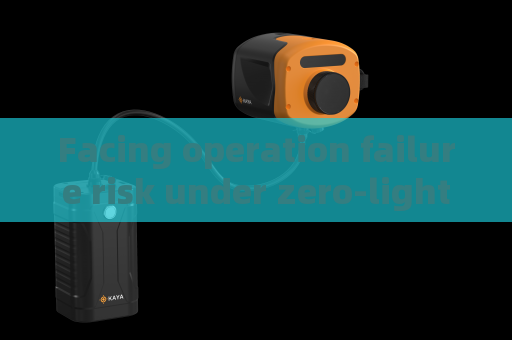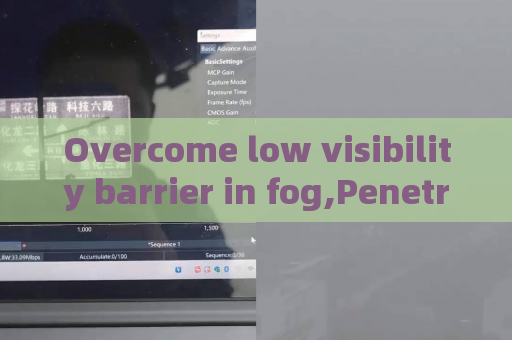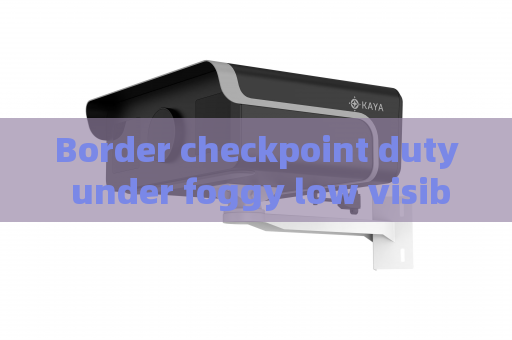
Border checkpoint duty under foggy low visibility, Penetrating Imager adopts Fog Penetration Imaging to sustain continuous monitoring At a border checkpoint, duty under foggy low visibility turns a controlled inspection lane into a slow, uncertain process. Fog droplets scatter light from headlamps, overhead lamps, and conventional lane cameras. Images lose contrast, vehicle outlines blur, windows reflect glare, and continuous monitoring breaks into intermittent fragments. Officers cannot reliably see occupants, vehicle type, or visible cargo from a safe distance. Traffic must be slowed, stopped, or checked at close range, creating queues and weakening interdiction against smuggling and illegal crossing. The fog itself becomes cover. A driver can use the reduced visibility to mask movement, swap positions, or approach a checkpoint without clear observation. The operational gap is not a lack of personnel or procedure. It is a loss of usable visual information at the exact moment when border checkpoint duty under foggy low visibility demands constant awareness. Penetrating Imager is built for this condition. Penetrating Imager is an advanced optical imaging instrument that uses laser range-gated imaging, also known as gated imaging. The system consists of a high-repetition-rate pulsed laser, an image-intensified gated camera with an MCP image intensifier, high-voltage module, timing module, beam expander, and imaging lens. It is an active imaging system. The laser emits short light pulses; the beam expander shapes the illumination; the gated camera opens its gate only during the brief arrival window of light reflected from the target range. Light scattered by fog droplets returns earlier and is largely rejected, which suppresses backscatter. The Fog Penetration Imaging function allows clear imaging through fog, haze, rain, and snow while maintaining high contrast, long range, high resolution, and strong anti-interference performance. The same optical design supports observation through vehicle glass, train windows, aircraft portholes, and glass curtain walls. It does not penetrate non-optical solid media. For border checkpoint duty under foggy low visibility, Penetrating Imager sustains continuous monitoring instead of depending on clear weather. At the checkpoint, Penetrating Imager can be mounted on lane-side posts, overhead gantries, or mobile surveillance units. Each lane is illuminated by pulsed light, and the Penetrating Imager's gated camera captures a stable image of the vehicle body, windows, occupants, and visible items inside. Operators in a control room receive a continuous feed even as fog density rises. When a vehicle approaches, the timing module adjusts gate delay to match distance, keeping the target in sharp focus. The beam expander spreads the laser light across the lane, allowing coverage without blinding glare. Suspicious movement inside a vehicle can be checked through the glass while the vehicle remains in the lane. This through-glass surveillance supports tactical observation without immediate close contact. If an image indicates an anomaly, the vehicle is directed to secondary inspection. Normal traffic continues with fewer unnecessary stops, and officers gain time to assess risk before opening a door or approaching a window. The practical value appears in sustained lane coverage. Fog often changes from patchy to dense within minutes, and ordinary cameras lose detail as backscatter increases. Penetrating Imager maintains useful imagery because its active illumination and range-gated reception are synchronized to the target distance, not to the fog layer. Vehicle outlines, window frames, and occupant positions remain visible. License plates and reflective markings may be less clear at long range, but the system still provides the continuous monitoring needed to detect approach, queue formation, and unusual behavior. It can also observe through vehicle glass, which helps border officers check tinted windows before deciding on secondary inspection. The system is limited to optical media such as glass and atmospheric obscurants. It is not a substitute for physical search. Used as an optical surveillance layer, Penetrating Imager keeps border checkpoint duty under foggy low visibility coherent, safer, and more continuous.