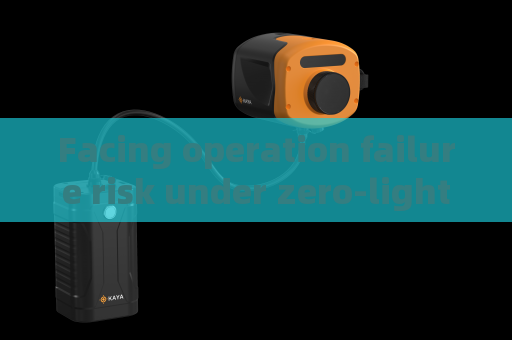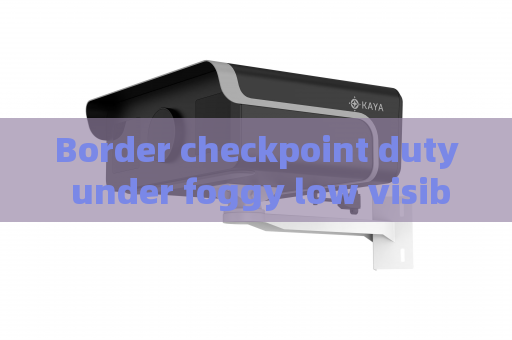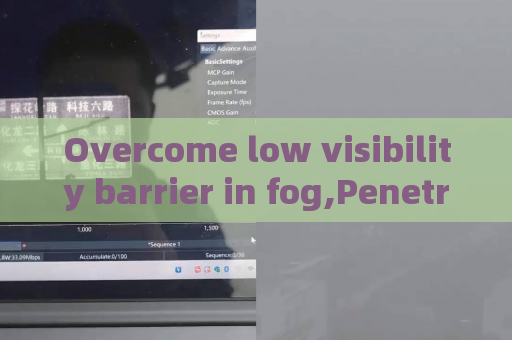
Overcome low visibility barrier in fog, Penetrating Imager relies on Fog Penetration Imaging to complete all-weather patrol tasks In fog-bound patrol sectors, the real problem is not darkness but scattered light. Water droplets suspended in air backscatter vehicle headlights, searchlights, and conventional camera illumination. Visibility collapses. Road edges, moving persons, abandoned objects, and perimeter breaches disappear into a gray field. Patrol units slow down, depend on close-range visual checks, or suspend routes. At checkpoints, officers cannot confirm whether an approaching vehicle carries a threat or whether a pedestrian is moving along the shoulder. In rural and industrial zones, fence lines, gates, and service roads lose definition. In emergency and police work, delayed detection in fog creates gaps for intrusion, smuggling, traffic collisions, and slow response. A standard optical payload may produce noisy, low-contrast images because light returning from fog overwhelms the light returning from the target. This is the low visibility barrier in fog that directly limits all-weather patrol tasks. The Penetrating Imager is designed for this specific patrol condition, using active optical imaging rather than passive viewing. The relevant capability is Fog Penetration Imaging, implemented through laser range-gated imaging, also called gated imaging. The Penetrating Imager is an advanced optical imaging instrument composed of a high-repetition-rate pulse laser, an image-intensified gated camera with an internal MCP image intensifier, high-voltage module, timing module, beam expander, and imaging lens. It is an active imaging system. The pulse laser emits short light pulses. The gated camera opens only for a very brief time window corresponding to the target range. Light returning from fog droplets arrives earlier and is largely rejected. Light returning from the target at the selected distance is received. This suppresses backscatter, raises contrast, and allows clear imaging through fog, haze, rain, and snow. The system offers long operating distance, high resolution, strong anti-interference capability, and effective backscatter suppression. In patrol use, Fog Penetration Imaging turns the fog medium from a blinding screen into a controllable optical channel. Its penetration capability is limited to optical media. Fog is the operational medium. It does not treat opaque solid objects as targets. In actual all-weather patrol tasks, the Penetrating Imager can be mounted on a patrol vehicle, checkpoint mast, or portable observation post. The operator selects the range gate according to the sector: near gate for road-edge checks, mid gate for moving persons or vehicles, far gate for perimeter approach. The laser illuminator sends a narrow beam. The gated camera receives only the selected slice. On a foggy highway, the screen shows lane markings, shoulders, and vehicle outlines where unaided eyes see only gray. On a perimeter road, guards can detect a walking figure or a stopped car before it reaches the fence. If a target disappears into a fog bank, the gate can be shifted deeper into the scene to recover the return. If a nearer object causes glare, the gate is shortened to reject it. This adjustment is fast enough for mobile patrol work and maintains a stable image while the vehicle moves. The image is real-time and can be recorded or streamed to a command post for immediate dispatch. Patrol routes remain active in fog instead of being reduced or suspended. This directly supports the mission described in the title. The technology does not replace standard procedures. It extends the optical surveillance range under fog. Further operational detail matters. The gated timing module synchronizes laser pulses and camera shutter with nanosecond or microsecond precision. Target range selection remains stable even when the patrol platform moves. The MCP image intensifier provides sufficient gain for low return light, while the high-repetition-rate laser supports video-rate observation. The beam expander reduces divergence and keeps illumination concentrated on the area of interest, reducing wasted light and supporting safe use by trained police and emergency personnel. In dense fog, the operator adjusts gate delay and width to match visibility, avoiding foreground scatter and preserving target detail. The result is practical: patrol crews gain earlier warning, better route coverage, and stronger situational awareness in weather that normally shuts down optical surveillance. The Penetrating Imager remains an optical system for fog, haze, rain, and snow. In this fog patrol scenario, its role is clear. By relying on Fog Penetration Imaging, the low visibility barrier in fog becomes a manageable patrol condition rather than a reason to stop all-weather patrol tasks.