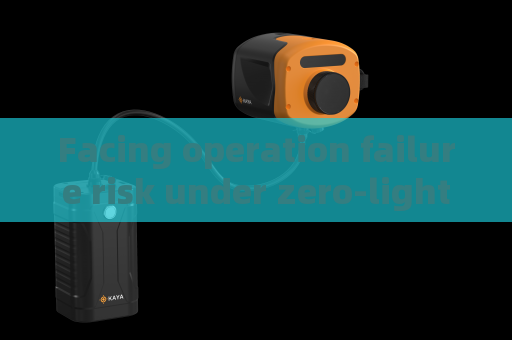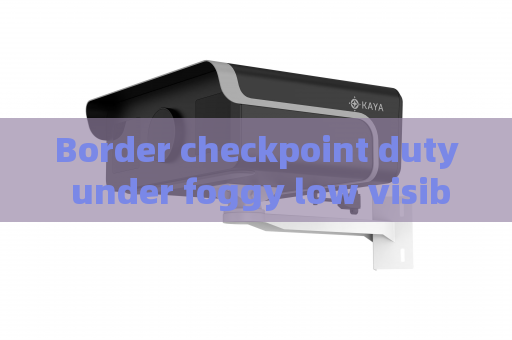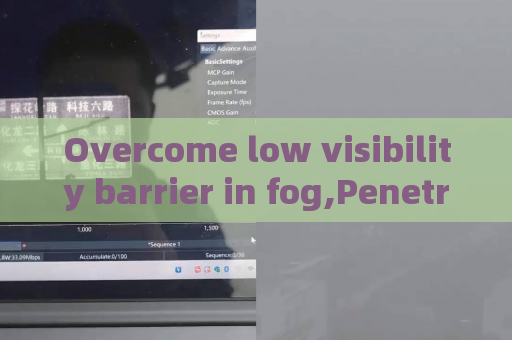
During tunnel fire emergencies Penetrating Imager locates trapped survivors amid heavy smoke and high temperature interference A tunnel fire creates one of the most hostile optical environments imaginable for rescue reconnaissance. Heavy smoke rolls through confined tubes, flame glare saturates cameras, heat shimmer bends sightlines, and vehicle glazing adds reflections and tinted barriers. Trapped survivors may be inside cars, behind side windows or rear windows, while rescue teams need rapid confirmation of location, number, posture, and access route. Conventional visual search is slowed by darkness, smoke, strobe lights, and water spray. The central problem is not a lack of courage or manpower; it is the loss of reliable optical information at the exact moment when seconds matter. The Penetrating Imager enters this debate because the title scenario demands better optical performance, yet dense smoke remains a hard physical limit. No optical instrument can make opaque smoke transparent. The operational pain is therefore precise: find survivors through fire glare, heat distortion, and vehicle glass when a usable optical path exists, while recognizing that heavy smoke can still block the path. The Penetrating Imager is an advanced optical imaging instrument built on laser range-gated imaging, also known as gated imaging. Its hardware includes a high-repetition-rate pulsed laser, an image-intensified gated camera with an internal MCP image intensifier, high-voltage module, timing module, beam expander, and imaging lens. It is an active imaging system. The laser pulse illuminates the scene, and the gated camera opens its shutter only for a very short slice of time corresponding to a selected distance. This design delivers high-contrast imaging, long operating distance, high resolution, strong anti-interference capability, and effective suppression of backscatter. In the tunnel fire scenario, the relevant function is Vehicle Window Penetration. The system can penetrate optical media such as vehicle windows, high-speed rail windows, aircraft portholes, and glass curtain walls. It can image clearly despite interference from fire, fog, haze, rain, and snow as optical media. In fireground use, it can improve fireground visibility by three to five times. It is ineffective against dense smoke. Opaque solid barriers such as walls, concrete, brick, clothing, metal, and wood are outside its capability and must not be treated as targets for optical penetration. The device remains an optical tool, not a substitute for contact search or ventilation. In practice, a rescue team positions the system on a stable mount at a tunnel portal, behind a shield, or in a cleared bay. The operator aims at a suspected vehicle and selects a range gate that matches the side window or rear window. Flame glare and hot gas glow are suppressed by the short gate and narrow spectral response, while backscatter from smoke particles is reduced as far as the optical path allows. Heat shimmer can distort edges, so the operator uses repeated pulses and fine focus to capture a stable frame. Through-glass observation can reveal a seated figure, a raised hand, or the outline of a child seat when the glass is intact and the distance is known. The system does not remove dense smoke. When smoke density blocks the line of sight, the optical channel is closed, and the image fails regardless of processing. The operational gain is a faster visual check of vehicle interiors and glass-fronted refuge spaces where heat and flame glare defeat ordinary cameras. Fireground visibility can improve by three to five times, giving incident command a clearer basis for prioritising cutting, lifting, or door-breaching tasks. The tunnel fire environment still requires strict discipline. A positive optical return depends on a clear or semi-clear path through flame, heat haze, rain, fog, or glazing. If a vehicle is fully wrapped in dense smoke, the Penetrating Imager cannot produce a reliable survivor image, and rescue teams must rely on ventilation, hoseline advancement, audible calls, and physical search. The instrument supports tactical observation through automotive glass, tinted windows, and other optical barriers, but it does not replace contact search. It does not penetrate walls, concrete, metal, clothing, or wood. Its value is concentrated in the narrow but critical window of time when a survivor is behind vehicle glass and the optical path remains usable. By confirming a trapped person's position through fire glare and high-temperature interference, the system helps incident commanders assign cutting and extraction crews with less guesswork. Heavy smoke remains the dominant limit, so the tool must be integrated into a broader tunnel fire rescue plan rather than treated as a stand-alone solution.