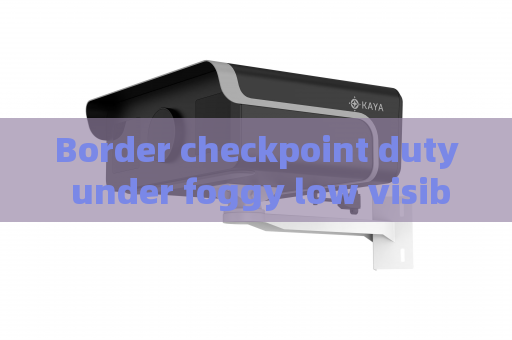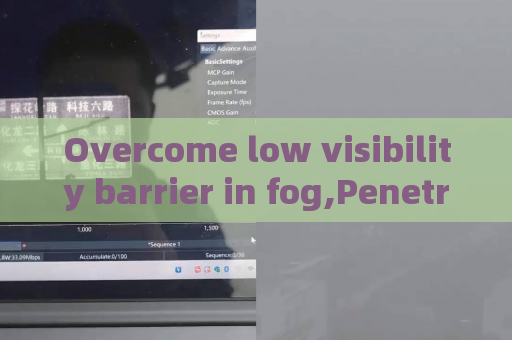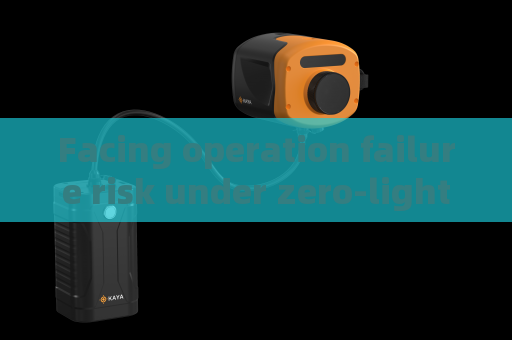
Facing operation failure risk under zero-light environment, Penetrating Imager adopts Zero-light Imaging to guarantee all-weather police duty Night vehicle stops and high-risk interdictions often unfold in zero-light conditions on rural roads, unlit highways, and industrial zones. The operational problem is not darkness alone. Officers approaching a stopped vehicle cannot read the cabin because automotive glass reflects ambient sources, emergency lights, or handheld illumination. Tinted, laminated, or wet glazing lowers contrast further. White-light spotlights expose police positions and may provoke sudden movement inside the vehicle. Passive night vision can be washed out by headlights and may lack the resolution needed through glass. Rain, fog, and snow add glare and backscatter. A routine stop then carries operation failure risk: an occupant may conceal a weapon, discard evidence, or change seating position before contact. The Penetrating Imager targets this exact zero-light tactical observation gap by generating a controlled optical return from the vehicle interior through glazing rather than relying on ambient light. The relevant capability is Zero-light Imaging built on laser range-gated imaging, also known as gated imaging. The Penetrating Imager is an advanced optical imaging instrument. It consists of a high-repetition-frequency pulsed laser, an image-intensified gated camera with an internal MCP image intensifier, high-voltage module, timing module, a beam expander, and an imaging lens. As an active imaging system, it provides high-contrast imaging with long operating distance, high resolution, strong anti-interference capability, and effective suppression of backscatter. In this police scenario, short laser pulses illuminate the vehicle cabin through optical media such as vehicle glass. The gated camera opens only during a narrow time window that matches light returning from the target depth. Reflections from the outer glass surface, rain, fog, or snow arrive outside that window and are largely rejected. This timing separation is the core reason that glass glare and weather backscatter do not overwhelm the desired return. Clear observation through car windows becomes possible without visible illumination. The instrument penetrates optical media only, including vehicle windows, high-speed rail windows, aircraft windows, and glass facades, and it resists interference from fog, haze, rain, and snow as optical media. During a stop, an officer or remote operator aims the device at a side window, windshield, or rear window from a covered position. The pulsed laser sends brief optical pulses toward the vehicle. The image-intensified gated camera synchronizes its shutter with the returning pulse, building an image from light reflected by occupants, seats, hands, and visible objects inside the cabin. Surface glare from glass, wet glass, or airborne particles is separated in time and suppressed. The resulting high-contrast image supports assessment of passenger count, seating positions, hand movement, and visible weapon outlines before approach. Because the system is active and gated, ambient light is not required. Zero-light conditions, heavy rain, fog, or snow no longer force a choice between officer safety and covert observation. A brief visual check can be completed without opening a door, lowering a window, or illuminating the cabin. The device can be mounted on a patrol vehicle, checkpoint platform, or tripod for all-weather police duty during vehicle interdiction, checkpoints, and pursuit. Observation can be repeated in seconds, enabling rapid tactical decisions. In sustained operations, the same zero-light vehicle-glass observation capability changes checkpoint and pursuit tactics. A stop in rural darkness or a highway check in rain can be screened from a distance. The Penetrating Imager provides a clear optical channel through automotive glass before an officer leaves cover. If a driver refuses to lower a window or a tinted window blocks direct view, the gated active image still reveals interior layout and movement. If multiple occupants are present, their positions and visible hand activity can be monitored. Long range, high resolution, and anti-interference performance reduce the chance that darkness, glare, or weather causes a failed approach. The system also avoids the strong light signature of conventional spotlights, which can escalate a stop. With Zero-light Imaging, the Penetrating Imager supports all-weather police duty by turning an unreadable vehicle cabin into a tactically usable image. Officers gain observation before contact, and operation failure risk falls in the exact zero-light environment where duty cannot pause.