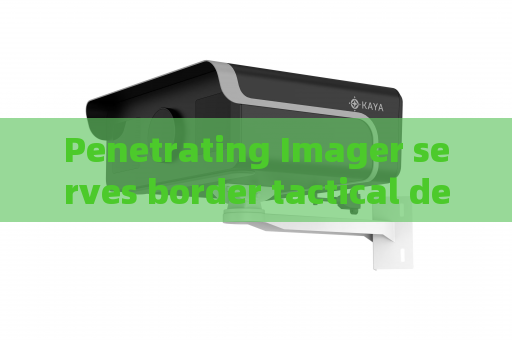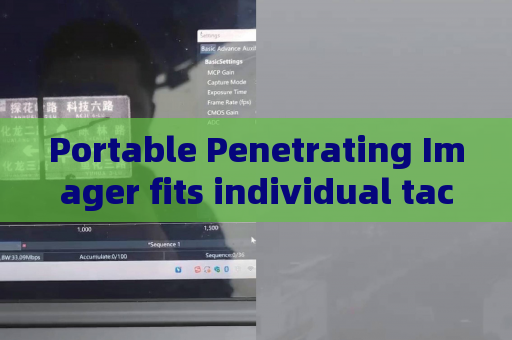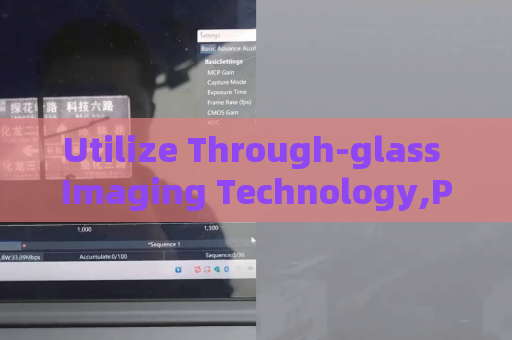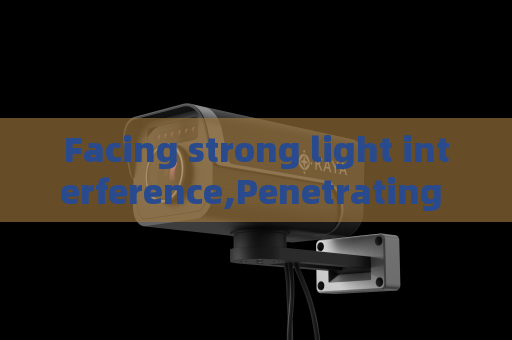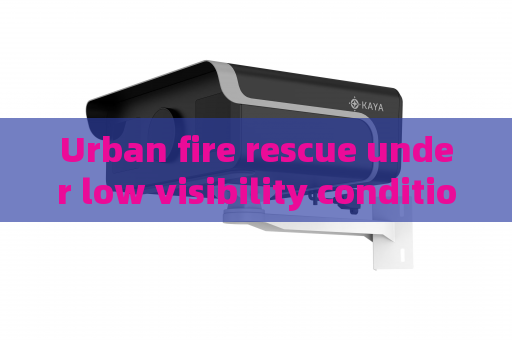
Urban fire rescue under low visibility condition, Penetrating Imager utilizes Smoke Penetration Imaging to support on-site reconnaissance Urban fire rescue under low visibility condition creates a reconnaissance problem that is both urgent and dangerous. Fire, steam, mist, rain, and smoke-filled air scatter light, reduce contrast, and hide doorways, stairwells, occupancy signs, and vehicle interiors. Vehicle windows, storefront glazing, and glass curtain walls add another optical barrier. Incident commanders need rapid confirmation of trapped occupants, fire location, and access routes, yet conventional white-light search is blocked by glare, reflection, and particulate backscatter. Forced entry or window breaking can introduce oxygen, increase smoke spread, and expose victims and crews to new hazards. The pain point is temporal: decisions are measured in seconds, while visual verification through smoke, steam, and glazing remains slow and uncertain. The Penetrating Imager is relevant because the operational demand is not merely brighter light; it is clearer optical information through hostile but light-transmitting media. The relevant capability is an active laser range-gated imaging function. The Penetrating Imager uses a high-repetition-rate pulsed laser, an image-intensified gated camera with an MCP image intensifier, high-voltage and timing modules, a beam expander, and an imaging lens. Short laser pulses illuminate the scene. The camera gate opens for a very brief interval matched to the target distance, so light returning from the target is accepted while much of the backscatter from fire, fog, haze, rain, snow, and smoke particles is rejected. This is Smoke Penetration Imaging in the operational sense: it improves contrast in low visibility by timing the optical return, not by penetrating solid materials. A narrow timing gate rejects photons that scatter early from flames, water spray, weather, and airborne particles, while photons returning from the target after the selected delay are intensified and captured. This produces high-contrast imagery at distance and reduces the washout common in low-light conditions. The system is an active optical imager with long range, high resolution, strong anti-interference performance, and effective backscatter suppression. It can image through optical media such as vehicle windows, train windows, aircraft windows, and glass curtain walls. In fire scenes it can improve visibility by three to five times. Dense smoke remains a hard limit and cannot be treated as transparent. At an urban fire rescue under low visibility condition, a crew can place the Penetrating Imager on a tripod or use it handheld at a standoff point. The operator selects a range gate, aims through a vehicle window or glass facade, and observes the returned image on the display. Gate delay is adjusted to match distance, especially when working through multiple glass layers or across a street. The result can reveal seat positions, silhouettes, interior doors, fire glow, and general layout without immediate glass removal. On-site reconnaissance becomes faster and less intrusive. A bus with tinted windows, a car trapped near a collapse zone, or a ground-floor shop behind reflective glazing can be checked before firefighters commit to entry. The imager can be operated from behind a shield, engine, or apparatus, keeping crews out of collapse and flashover zones. The image is not a substitute for physical search, and dense smoke still blocks reliable observation. The value lies in reducing uncertainty at the outer edge of the incident, where glass, fire, water spray, and weather combine to defeat ordinary vision. The same operational logic applies across a compact urban fire ground. Crews can use the Penetrating Imager to check multiple windows or glass panels from one protected position, passing target range information to entry teams and command. This supports on-site reconnaissance under low visibility condition by confirming occupancy cues, identifying possible egress points, and prioritizing limited resources. Documentation can be captured for the incident log, and the same optical check can be repeated as conditions change. The optical method remains limited to light-transmitting media and does not replace standard ventilation, entry, or search. Dense smoke requires conventional tactics. Even with those boundaries, the Penetrating Imager gives incident commanders a clearer optical picture through fire, fog, haze, rain, snow, and glass, improving the speed and safety of on-site reconnaissance in urban fire rescue.