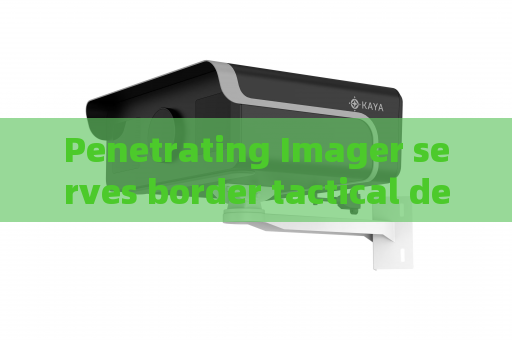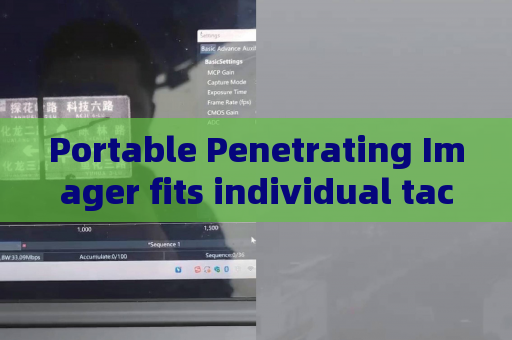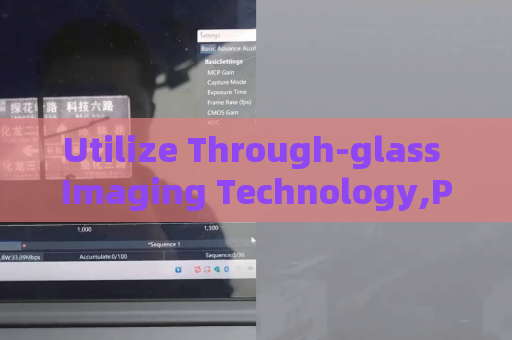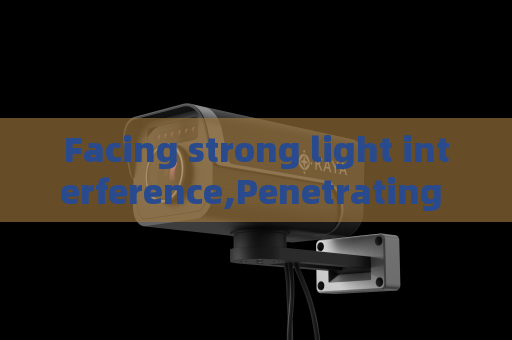
Ordinary surveillance cameras fail under low visibility scenes, Penetrating Imager applies to fire and smoke environments for reliable reconnaissance A working fire produces a rapidly changing optical environment. Flames emit intense light, smoke particles scatter that light in every direction, and contrast collapses across the visible spectrum. Ordinary surveillance cameras fail under low visibility scenes because they depend on ambient or broad illumination and cannot separate target reflections from scattered light. In a compartment fire, a vehicle fire, or a warehouse blaze, the video feed often shows only a bright, pulsating mass. Doorways, hallway geometry, fallen occupants, and exit routes disappear into the glare. Incident commanders waiting outside receive an image that cannot support reliable reconnaissance. Entry teams face uncertainty about conditions just a few meters ahead. The cost appears as delayed decisions, unprotected searches, and unnecessary exposure. A Penetrating Imager is built to operate inside this specific optical problem rather than merely record it. The relevant function is laser range-gated imaging, also known as gated imaging. A high-repetition-rate pulsed laser sends short light pulses into the scene. An image-intensified gated camera, containing an MCP image intensifier, high-voltage module, and timing module, opens its shutter for a brief, synchronized interval. The gate is timed to accept light returning from a chosen distance. Light scattered by flame and smoke close to the camera arrives earlier and is rejected before it reaches the sensor. A beam expander and imaging lens shape the illumination and return path. This active optical approach produces high-contrast imagery, long operating distance, strong anti-interference performance, and effective backscatter suppression. It relies solely on optical returns and does not use any non-optical detection principle. The capability is best described as Fire Penetration Imaging. In fire and smoke conditions, the Penetrating Imager can improve visibility by three to five times. Dense smoke remains a hard physical limit, and no optical instrument can guarantee a clear view through every concentration of particulate matter. Operationally, a fire crew can mount the imager on a helmet, a handheld brace, or a small tripod at the threshold of a structure. The operator selects a range gate that matches the distance to a doorway, a corridor intersection, or a last known victim location. The pulsed laser and gated camera then deliver a real-time image in which the flame front is suppressed and nearby smoke scatter is reduced. Structural edges, door frames, stair landings, and human forms become visible when they would otherwise be lost in the glow. The same setting can be adjusted as the crew advances, keeping the gated slice aligned with the next decision point. This turns reconnaissance into a controlled optical task rather than a guess based on a washed-out feed. The image supports a simple tactical question: whether the path ahead is clear enough to enter, hold, or withdraw. The value for incident command is a shorter loop between arrival and reliable information. A safety officer or entry team can pause at a doorway, use the Penetrating Imager to confirm a clear path or locate a downed occupant, and then commit with better awareness. The instrument does not replace established firefighting procedures, nor does it claim capabilities beyond optical media. It cannot see through solid non-optical barriers, and it is not a substitute for physical search or ventilation. Its contribution is bounded and precise: active optical imaging that overcomes flame and moderate smoke interference. Ordinary surveillance cameras fail under low visibility scenes, and that failure is costly in time, safety, and mission confidence. Penetrating Imager applies to fire and smoke environments for reliable reconnaissance, giving responders a clearer optical advantage when every detail matters.