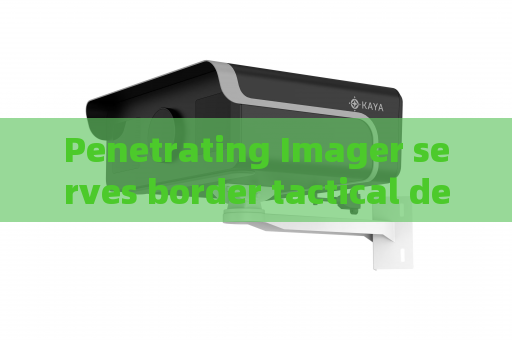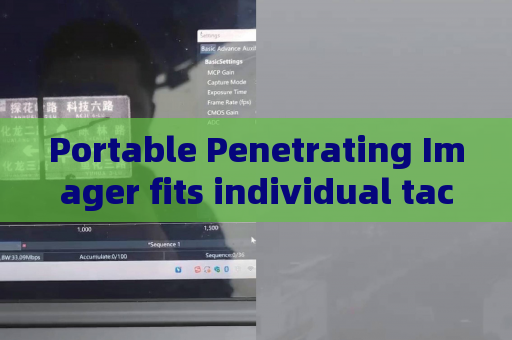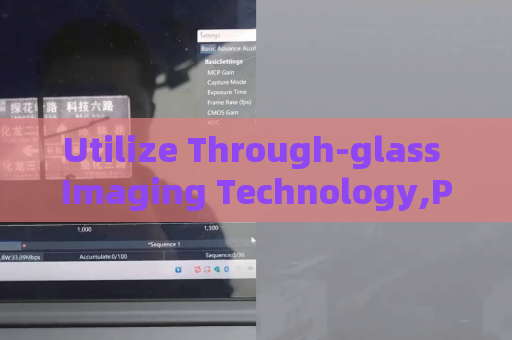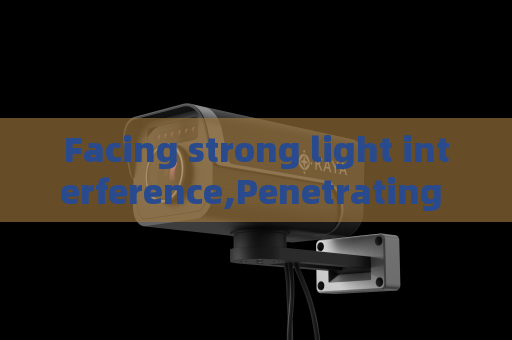
Facing strong light interference, Penetrating Imager relies on Strong Light Suppression Imaging to stabilize law enforcement imaging At a night highway checkpoint, a vehicle stops with headlights on high beam, auxiliary lamps lit, and warning beacons flashing across the windshield. Streetlights and wet pavement create hard reflections on glass. Tinted side windows add another layer of reduced transmission. The interior becomes a field of glare, bloom, and backscatter. Conventional cameras, body-worn optics, and low-light viewers struggle because ambient light saturates the sensor or reflects from the glass surface before useful light from inside the vehicle returns. Law enforcement personnel need a rapid visual check of occupants, hand position, seat layout, and movement, but the strong light interference can turn a routine stop into an uncertain approach. Delay increases risk because a tactical decision must be made without a stable image. The Penetrating Imager is designed for this exact optical problem: imaging through vehicle glazing when strong light interference destabilizes ordinary law enforcement imaging. The relevant capability is Strong Light Suppression Imaging, delivered through laser range-gated imaging. The Penetrating Imager is an advanced optical imaging instrument. Its active architecture combines a high-repetition-rate pulsed laser, an image-intensified gated camera with an MCP image intensifier, high-voltage module, and timing module, plus a beam expander and imaging lens. The pulsed laser sends short light pulses toward the vehicle glass. The gated camera opens only for a very narrow time window synchronized to the return from the target plane. Ambient light from headlights, street lamps, and beacons is largely rejected because it arrives outside the gate. Backscatter from the windshield surface and atmospheric haze is suppressed. This creates high-contrast imaging with long range, high resolution, strong anti-interference performance, and effective rejection of backward scatter. The function remains strictly optical. It works through optical media such as vehicle window glass, train windows, aircraft windows, and glass facades. It does not pass through opaque solid structures. For the checkpoint scenario, the result is stable law enforcement imaging through automotive glass under extreme glare. In operation, the Penetrating Imager can be mounted on a tripod or a patrol vehicle and aimed at an approaching or stopped vehicle. The operator selects the target distance and monitors the gated display. Laser pulses pass through the windshield or side window. The camera captures the returning light from the passenger cabin while ignoring the intense glare from headlights and roadside fixtures. The image appears with consistent contrast, allowing through-window tactical observation from a protected position. Personnel can assess the number of occupants, visible hand movement, seating posture, and immediate activity before closing distance. The system supports through-glass surveillance without approaching the vehicle. Because the gate can be adjusted, reflections from the outer glass surface do not overwhelm the view. Rain, haze, and snow in the optical path are also managed by the same range-gated method, keeping the scene usable during bad weather. The benefit is not a novelty image but a steadier tactical picture under strong light interference. The stabilization effect comes from precise timing. The high-repetition-rate laser and the gated camera work as an active system. Light returning from the selected range is amplified, while continuous ambient light and scattered light are excluded. This is why Strong Light Suppression Imaging can preserve contrast when headlights point directly at the camera or when multiple light sources cross the windshield. The Penetrating Imager therefore gives law enforcement personnel a reliable optical tool for vehicle glass encounters at checkpoints, traffic stops, and security cordons. It does not replace direct observation or tactical judgment. It improves the visual feed when strong light interference would otherwise reduce the interior to glare. Within its defined optical limits, the Penetrating Imager helps keep law enforcement imaging stable, readable, and tactically useful.