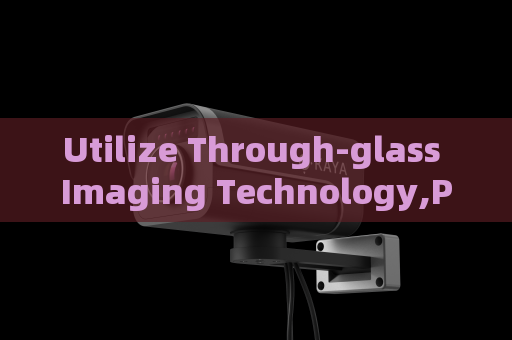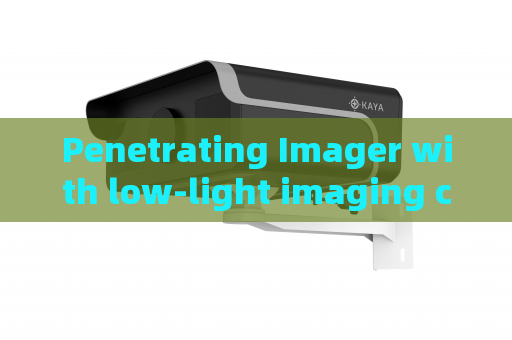
Penetrating Imager with low-light imaging capability for border night patrol to achieve long-distance tactical reconnaissance Border night patrols operate in a punishing visual environment. Moonless stretches, cloud cover, rough terrain, and long distances compress contrast until people, vehicles, and tracks merge into the background. Fog, haze, rain, and snow add scattering that turns searchlights and ordinary low-light cameras into white-out tools. Backscatter from airborne particles worsens with range, because light reflected by fog, rain, or snow can mask the very object the patrol needs to identify. A patrol may need to observe a suspect vehicle moving along a remote track, identify whether occupants are present, and decide whether to intercept, shadow, or hold position. Standing off at distance is safer, yet distance reduces detail. Approaching to gain clarity can expose the patrol and collapse response time. The tactical problem is not simply seeing in the dark; it is obtaining reliable, high-contrast images at long range through weather and glass while maintaining concealment. A Penetrating Imager with low-light imaging capability can close this gap. The relevant function is laser range-gated imaging, also called gated imaging. The Penetrating Imager is an active optical system. A high-repetition pulsed laser illuminates the scene; an image-intensified gated camera, built around an MCP image intensifier, high-voltage module, and timing module, opens its reception window for a selected range. A beam expander shapes the laser beam, and an imaging lens collects the returned light. Because the gate rejects light returning from nearer particles, the system overcomes backscatter and produces high-contrast images at long distance with high resolution and strong anti-interference performance. In border night patrol, this low-light imaging capability allows through-glass surveillance of suspect vehicles from a concealed position. The imager can work through optical media such as vehicle windows, train windows, aircraft windows, and glass curtain walls. It also images clearly despite fog, haze, rain, and snow. Its limits remain optical; only optically transmissive media are within scope. Operationally, the imager can be mounted on a border patrol vehicle, a fixed watchtower, or a tripod at an observation post. The operator selects a range gate matching the target distance, adjusts the beam expander and imaging lens, and scans the sector. Foreground brush, rain streaks, and fog particles are suppressed, while a vehicle at a distant crossing remains visible. If a vehicle stops near the line, the patrol can conduct through-glass surveillance from a standoff position, checking the cabin, counting occupants, and observing movement without illuminating the target with a visible searchlight. The active laser and gated reception keep the image stable in low light, so the patrol can decide whether to intercept, follow at a distance, or request support. The same setup supports long-distance tactical reconnaissance along roads, riverbanks, and open border corridors. For long-distance tactical reconnaissance, range gating also separates layers. A narrow gate can isolate a target behind light vegetation or weather clutter; a wider gate can survey an entire approach route. The high-resolution image helps distinguish a car from a truck, a driver from a passenger, and routine movement from a possible border violation. In fog, haze, rain, or snow, the imager maintains clarity that ordinary night optics cannot match. The system is an optical instrument, not a substitute for lawful procedures; it supports observation through optical media and adverse weather, while confirming targets by trained patrol judgment. Used from a concealed position, the Penetrating Imager extends the patrol's visual reach, improves early warning, and reduces the need to close distance in darkness. Its low-light imaging capability makes border night patrol more informed, more deliberate, and safer, turning long-distance tactical reconnaissance from a vulnerable approach into a controlled observation task. Recorded or streamed frames can support briefings, handovers, and after-action review without altering the patrol's tactical posture.