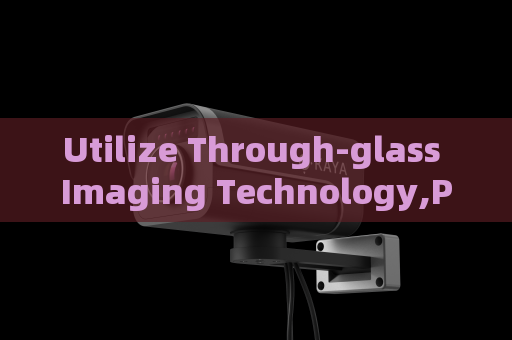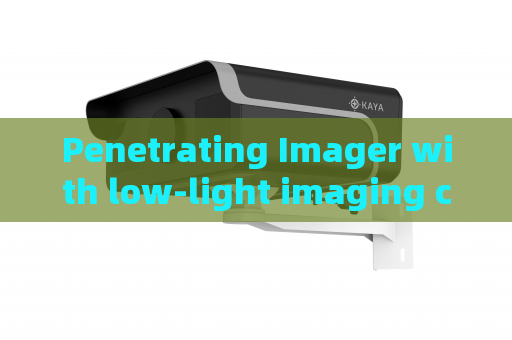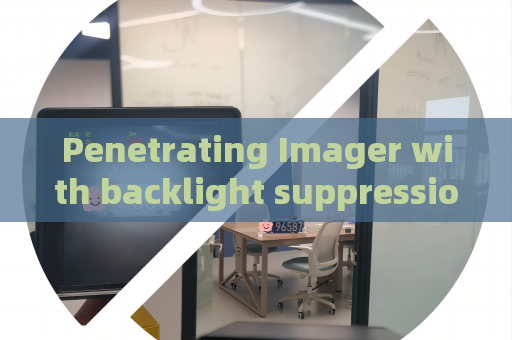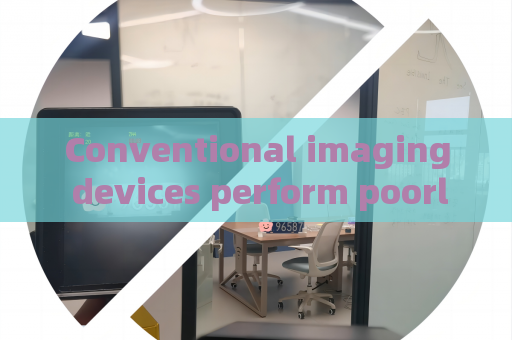
Conventional imaging devices perform poorly in foggy conditions, Penetrating Imager utilizes Fog Penetration Imaging for reliable reconnaissance Fog transforms a clear field of observation into a low-contrast maze of scattered light. Conventional imaging devices perform poorly in foggy conditions because droplets scatter and absorb light before it reaches the lens, erasing edges, flattening contrast, and hiding the shape of a vessel, vehicle, or person at distance. In police, border, and maritime reconnaissance, this failure is not merely technical. A patrol crew may know that movement exists near a shoreline, port channel, or highway corridor, yet the camera display shows only gray haze. False negatives delay interception. False positives waste resources. Teams are forced to move closer to the uncertain area, reducing standoff distance and increasing exposure. The operational need is reliable reconnaissance under fog, not a cleaner image after conditions improve. The Penetrating Imager is designed for this exact gap. The relevant function is Fog Penetration Imaging. The Penetrating Imager is an advanced optical imaging instrument built on laser range-gated imaging, also called gated imaging technology. It is an active optical system. A high-repetition-rate pulsed laser; an image-intensified gated camera with an MCP image intensifier, high-voltage module, and timing module; a beam expander; and an imaging lens work together. Laser pulses travel into the fog. The camera gate opens only for a precise delay, so returning light from the selected range is captured while much of the backscatter from fog is rejected. This timing control is the operational core of Fog Penetration Imaging. The result is high-contrast imaging with long range, high resolution, strong anti-interference performance, and effective backscatter suppression. The Penetrating Imager can operate despite optical media interference such as fog, haze, rain, and snow, and it can also image through optical media including vehicle windows, high-speed rail windows, aircraft portholes, and glass curtain walls. Its advantage remains within the optical domain. For foggy reconnaissance, the function delivers the clarity that conventional imaging devices cannot maintain. In actual use, a Penetrating Imager can be mounted on a patrol vehicle, coastal vessel, or fixed checkpoint. During fog, the operator selects the range gate rather than flooding the scene with continuous illumination. The pulsed laser and gated camera isolate a target plane, allowing a vessel hull, vehicle outline, or moving figure to appear against the fog with higher contrast. This supports tactical observation, route security, port approach monitoring, and border waterway checks. The system extends the useful reconnaissance distance and reduces the need to enter the fog bank for visual confirmation. A crew can maintain overwatch, pass timely descriptions to response units, and decide whether to intercept, track, or hold position. This shortens the decision cycle without forcing teams into the obscured zone. Because the Penetrating Imager is an active optical imager, it does not depend on ambient light alone. It provides reliable reconnaissance in conditions that routinely defeat conventional cameras. The operational value of the Penetrating Imager in this scenario comes from repeatable range-gated optical imaging, not from a single lucky frame. Operators can adjust gate delay and laser pulse timing to match the distance of interest, keeping the observed layer sharp while suppressing scattered light from nearer fog. High pulse repetition supports continuous surveillance, and the MCP-based gated camera preserves image brightness and contrast across changing fog density. The same optical principle allows clear imaging through haze, rain, snow, and selected optical media, but the core mission remains fog reconnaissance. When conventional imaging devices perform poorly in foggy conditions, the Penetrating Imager utilizes Fog Penetration Imaging for reliable reconnaissance, giving law enforcement and emergency teams a disciplined optical tool for observing, verifying, and reporting targets before contact. The displayed image can be recorded for after-action review and intelligence sharing.