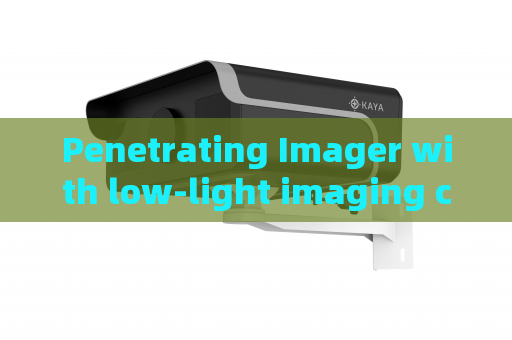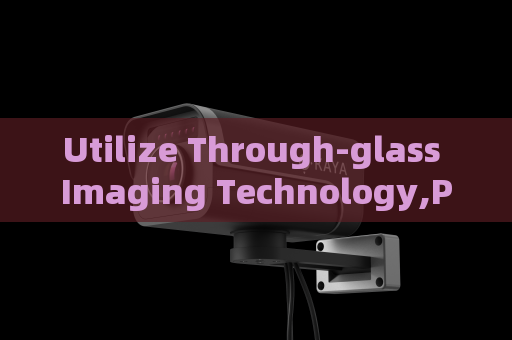
Utilize Through-glass Imaging Technology, Penetrating Imager supports vehicle hidden danger inspection to observe internal status At roadside checkpoints, border crossings, secure perimeters, and incident cordons, vehicle hidden danger inspection often depends on opening a door, lowering a window, or asking occupants to step out. Each action consumes time, creates confrontation risk, and may alert subjects to police interest. Tinted glass, deep shadow, bright headlights, rain-streaked windows, and layered reflections can reduce the cabin to a dark rectangle. A quick visual check through the windshield or side window may reveal little beyond vague shapes. The operational question is simple: how can internal status be observed through vehicle glazing without compromising officer safety or traffic flow? This is where Utilize Through-glass Imaging Technology, Penetrating Imager supports vehicle hidden danger inspection to observe internal status. The relevant capability is optical through-glass imaging. A Penetrating Imager is an advanced optical imaging instrument using laser range-gated imaging, also called gated imaging. It comprises a high-repetition-rate pulsed laser, an image-intensified gated camera with an MCP image intensifier, high-voltage module, timing module, a beam expander, and an imaging lens. As an active imaging system, it delivers high-contrast images with long operating distance, high resolution, strong anti-interference performance, and effective backscatter suppression. In this vehicle scenario, the system uses light passing through automotive glass to form a clear view of the cabin. It supports through-window tactical observation of occupants, seating positions, loose items on seats or dashboards, and other visible internal conditions. The optical path is limited to transparent media such as vehicle windows, high-speed rail windows, aircraft windows, and glass curtain walls. It does not pass through metal, door panels, cargo boxes, or other non-transparent solids. The value lies in inspecting what can be seen through the glass, not in replacing a physical search. During a stop or cordon operation, the device can be positioned from a safe distance. The operator aims at the side window, windshield, or rear glass while the gated camera and pulsed laser work together to reject glare and backscatter from the glass surface. This allows a sharper view of the interior under low light, strong oncoming lights, rain, fog, haze, or snow. Tinted windows become less of a barrier to observation. Officers can assess whether the driver is alone or accompanied, whether passengers are seated normally or hiding, whether packages or bags are placed in unusual positions, and whether the cabin shows signs of fire risk, smoke accumulation, or other immediate hazards. Through-glass imaging technology helps confirm internal status before a door is opened or a person is asked to exit. The result is better decision-making at the vehicle, with less exposure and less disruption. The image can be displayed in real time, allowing a supervisor to guide the check and to decide whether a closer inspection is justified. For sustained vehicle hidden danger inspection, the Penetrating Imager can be mounted on a tripod, vehicle roof, or checkpoint frame, then connected to a monitor for real-time review. Multiple glass surfaces can be checked in sequence: driver side, passenger side, rear, and windshield. Recorded frames can support later review and briefing. Weather interference from fog, haze, rain, or snow is reduced by the active gated optical design. In fire-related vehicle incidents, the same optical principle can improve visibility through fire and smoke by roughly three to five times, though dense smoke remains a hard limit. A steady rest, a clean line of sight through the glass, and a consistent aiming angle improve image stability. When multiple agencies operate at the same checkpoint, the same display can be shared for immediate coordination. The operational rule is clear: inspect through glass, respect the limits of optical media, and keep the physical search separate. Utilize Through-glass Imaging Technology, Penetrating Imager supports vehicle hidden danger inspection to observe internal status with speed, distance, and a safer tactical posture.