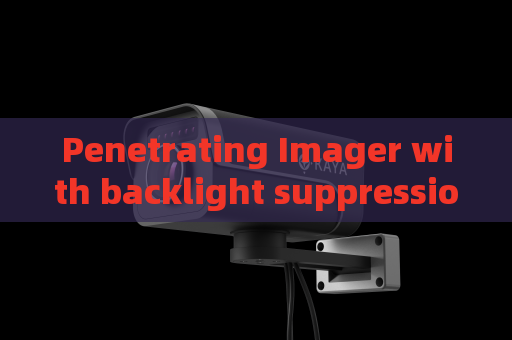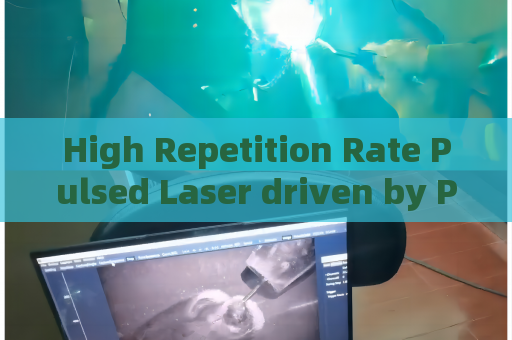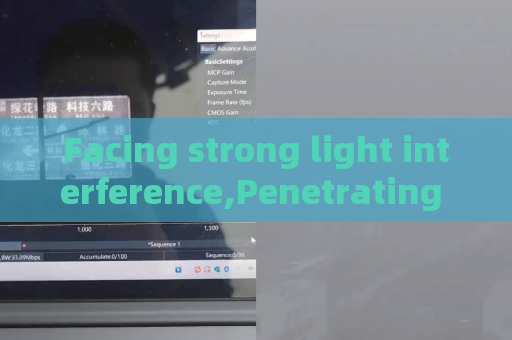
Facing strong light interference, Penetrating Imager relies on Strong Light Suppression Imaging to stabilize law enforcement imaging At vehicle checkpoints, border inspection lanes, and moving surveillance operations, law enforcement teams often need to observe the interior of a vehicle without opening a door or approaching a window. The task is complicated by intense, unpredictable light. High-beam headlights, auxiliary driving lamps, roadside searchlights, reflected sunlight from glass, and sudden glare from oncoming traffic can saturate conventional cameras. The result is blooming, washed-out highlights, loss of contrast, and unstable images exactly when a tactical decision is most urgent. Tinted windows, reflective coatings, and curved automotive glazing add internal reflections that obscure occupants, hand movements, seat positions, and visible objects. The operational pain is not a lack of magnification; it is the inability to maintain clear, reliable imaging through vehicle glass while strong light overwhelms the sensor. In this environment, the Penetrating Imager is designed to keep law enforcement imaging stable rather than let glare dictate what can be seen. The relevant capability is Strong Light Suppression Imaging within the Penetrating Imager's laser range-gated architecture. The instrument is an active optical imaging system. A high-repetition-rate pulsed laser sends short light pulses toward the vehicle. A beam expander shapes the illumination. An image-intensified gated camera, built with an MCP image intensifier, high-voltage module, timing module, and imaging lens, opens its gate only for a very brief interval. That interval is synchronized with the return time of light reflected from a selected distance. Continuous strong light from headlights, searchlights, or reflective glare arrives outside the gate and is largely rejected. The camera therefore receives the pulsed illumination returning from the target zone instead of the overpowering continuous light. This gating principle also suppresses backscatter and preserves high contrast. The system can penetrate optical media such as vehicle windows and glass surfaces, supporting through-glass surveillance, through-window tactical observation, and see-through vehicle glass imaging. Its advantages include long operating distance, high resolution, strong anti-interference performance, and high-contrast output. The function does not rely on non-optical effects; it works within the domain of light and optical media. During a checkpoint stop, the imager can be mounted on a vehicle or used in a handheld configuration to view a suspect vehicle from a covered position. The operator selects the range gate for the distance to the vehicle window. The pulsed laser illuminates the target through the glass, and the gated camera captures the returning light while ignoring the direct glare of headlights or a searchlight. If a driver switches on high beams during the stop, the image remains stable because the strong continuous light is not gated into the frame. The display can reveal occupants, their posture, hand placement, and visible items through the window. The same method supports covert through-glass recon, tactical observation through automotive glass, and tactical visual check through tinted windows. The MCP intensifier amplifies weak returns, while the timing module keeps the gate aligned with the selected distance. In practical law enforcement imaging, this means the operator can keep a clear view without opening a door, stepping into the roadway, or exposing position. The system is limited to optical media such as automotive glass, and it remains a light-based imaging tool. In moving surveillance or a multi-lane checkpoint, light conditions can change from frame to frame as vehicles approach, stop, and depart. Strong Light Suppression Imaging gives the Penetrating Imager a way to maintain useful imagery despite that interference. Reflections on tinted glass, bright signage, and direct lamp glare no longer dominate the exposure. The gate rejects light that does not return at the selected range, while the high-repetition pulsed laser provides sufficient illumination for real-time observation. Law enforcement personnel can conduct through-window tactical recce while the vehicle is still occupied, evaluate visible threats, and coordinate a safer approach. The image remains stable enough to support identification of posture, movement, and visible objects behind the glazing. Because the technology is active optical imaging, performance depends on clear line of sight to the glass and on the optical properties of the medium. It is not a tool for non-optical detection. Used within those boundaries, the Penetrating Imager helps turn a glare-filled vehicle stop into a controllable observation task, with Strong Light Suppression Imaging holding law enforcement imaging steady when strong light would otherwise blind the view.