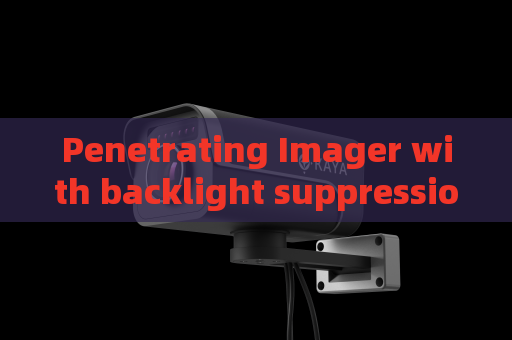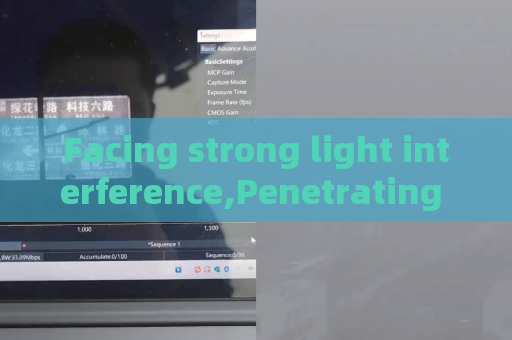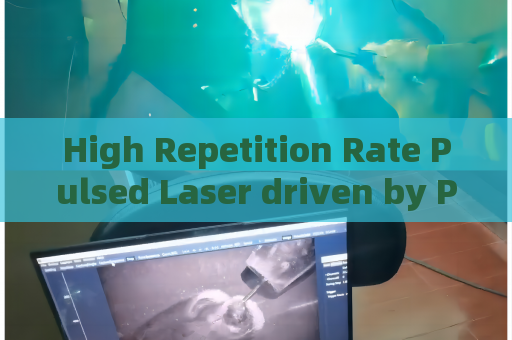
All-weather tactical duty under complex environments, Low-light Imaging ensures stable law enforcement reconnaissance Law enforcement reconnaissance in complex environments often fails in the last few meters. Night operations, rain, fog, haze, snow, street glare, and tinted vehicle glass reduce contrast until ordinary optical tools show only reflections, silhouettes, and uncertain shapes. A checkpoint team may need to know whether a driver is alone, whether passengers are moving, whether hands are visible, or whether an object on a seat matches a threat report. Approaching the vehicle to see inside changes the tactical balance, exposes officers, and may trigger a violent response. Waiting for better light is not an option during time-sensitive duty. The 穿透成像仪 addresses this exact problem by providing controlled optical observation through glass and through weather interference, but its value depends on using the right imaging mode rather than relying on ambient light. The relevant capability is laser range-gated imaging. The penetrating imager is an active optical instrument built from a high-repetition-rate pulsed laser, an image-intensified gated camera with an MCP image intensifier, high-voltage and timing modules, a beam expander, and an imaging lens. Short laser pulses travel to the scene, and the camera gate opens only for the brief interval when light returns from the selected distance. This timing suppresses much of the backscatter from rain, fog, haze, snow, and glass surface reflections. The intensifier preserves weak returns when ambient light is very low. The result is high-contrast imaging with long range, high resolution, strong anti-interference performance, and effective rejection of backscatter. In this scenario, the key mode is through-window tactical observation: the system uses optical media such as vehicle windows and glass facades to observe activity beyond the glass. Low-light imaging supports stable law enforcement reconnaissance because readable images can be formed without visible floodlights that reveal the observation post. During deployment, a surveillance unit places the penetrating imager at a covered position and sets the range gate for the target vehicle. The pulsed laser illuminates the vehicle and the surrounding scene. The gate rejects returns from nearby rain, fog, and window reflection, favoring light returning from the cabin. Officers can observe passengers, seating positions, hand movements, and visible objects through side, rear, or front windows, including tinted glass, while remaining at distance. In darkness, the image intensifier amplifies the returning laser light; in rain or snow, the gating interval limits scattered light. The operational effect is steady imagery instead of flickering guesses. The same approach supports all-weather tactical operations in complex environments, whether the vehicle is parked in a dim lot, moving through a checkpoint, or stopped under a foggy overpass. Recorded imagery can support later review, but the immediate gain is tactical: clearer decisions before contact and better evidence of what was visible from a lawful observation point. Limits remain part of professional use. The 穿透成像仪 works through optical media such as vehicle glass, high-speed rail windows, aircraft windows, and glass facades; it is not a tool for seeing through opaque structures or vehicle body panels. Its strength in law enforcement reconnaissance is optical discipline: choosing a clean glass angle, managing gate depth, and using short pulses to defeat glare, rain, fog, haze, and snow. When several reflective surfaces appear, the operator adjusts the gate to isolate the cabin return and reduce surface flash. When ambient light is almost absent, the intensifier and pulsed illumination still deliver readable contrast. The outcome is a stable visual chain from observation to decision: identify the vehicle, assess occupants, confirm visible threats or evidence, and coordinate interdiction only when the picture is clear. All-weather tactical duty under complex environments, Low-light Imaging ensures stable law enforcement reconnaissance, and the 穿透成像仪 provides the controlled through-glass optical advantage that keeps that reconnaissance reliable.