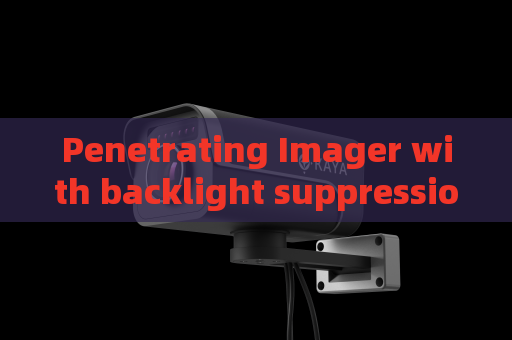
High Repetition Rate Pulsed Laser driven by Penetrating Imager supports long-distance imaging in dim border environments Dim border environments often stretch across remote roads, river crossings, and unlit checkpoints where ambient light is scarce. Patrol teams need to detect, recognize, and track people or vehicles at long range, but conventional visible cameras lose contrast quickly. Low-light conditions, haze, rain, snow, and glare from vehicle glass reduce detail. Tinted windows and reflective surfaces can hide occupants or cargo from direct view. At distance, atmospheric scatter washes out silhouettes, and near lights or wet surfaces create strong backscatter that blinds the sensor. The operational problem is not simply darkness; it is the combination of weak illumination, long range, weather, and optical barriers at border crossings. A Penetrating Imager must provide reliable observation under these conditions without exposing patrol positions or requiring close approach. The relevant capability is the High Repetition Rate Pulsed Laser driven by the Penetrating Imager. It uses laser range-gated imaging, also known as gated imaging. The system is an active optical instrument composed of a high repetition rate pulsed laser, an image-intensified gated camera with an internal MCP image intensifier, high-voltage module, timing module, beam expander, and imaging lens. Pulses illuminate the scene. The camera gate opens only for a selected time window matched to the target distance. Returns from the target are captured, while light scattered by fog, rain, snow, haze, and glass surfaces arrives outside the gate and is rejected. This design produces high-contrast images, long operating distance, high resolution, strong interference resistance, and effective backscatter suppression. It operates through optical media such as vehicle glass, train windows, aircraft windows, and glass facades. This timing control supports border observation when weather reduces visibility. At a dim border checkpoint or remote crossing, the operator mounts or points the imager toward a road segment. The high repetition rate pulsed laser sends short optical pulses downrange. The timing module delays camera activation so that the gate opens when light returns from a chosen distance. Near scatter from mist, rain, wet asphalt, and reflective glass is excluded. The result is a clear view of vehicles, plate areas, and occupants at long distance even when scene light is minimal. The imager can observe through vehicle glass at checkpoints, supporting tactical visual checks before a vehicle reaches the inspection point. Operators can switch gate delays to scan different ranges, comparing near and far returns. In fog or heavy rain, Fog Penetration Imaging maintains contrast where ordinary cameras show gray haze. The system does not rely on ambient light, so it remains stable in dark sectors and under sudden glare from headlights. It can support continuous surveillance along a narrow border corridor, helping units identify approach direction, vehicle type, and window-level details. For sustained border missions, the high repetition rate pulsed laser provides frequent pulses that improve image accumulation and reduce motion blur from moving vehicles. The gated camera can be tuned to reject backscatter from fog, haze, rain, snow, and glass reflections. Long-distance imaging in dim border environments depends on this precise optical gating, not on ambient illumination. The Penetrating Imager remains an optical system; its through-media capability applies to vehicle glass, train glass, aircraft windows, and architectural glazing, while weather interference is handled through optical timing rather than any non-optical method. In practical use, border units can place the imager on a fixed post, vehicle mount, or observation tower. A narrow field of view can be selected for distant targets, or a wider beam expander setting can cover a road bend. When a suspect vehicle approaches, the operator confirms window transparency, occupant presence, and vehicle outline from a safe standoff. The same setup can monitor a river crossing or mountain pass where lighting is absent and weather changes quickly. The value is clear: reliable long-range optical observation in dim border environments, with high contrast and reduced interference, supporting timely decisions before a crossing becomes a security incident.