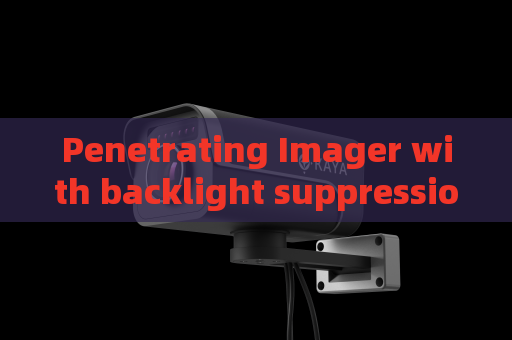
Penetrating Imager with backlight suppression capability for highway checkpoint surveillance to identify obscured vehicles and hidden suspects At highway checkpoints, screening is often defeated by simple daylight geometry. A vehicle stops with the sun directly behind it, or with headlights, emergency flashers, and wet pavement throwing glare into the inspection lane. Tinted side glass, reflective windshield film, rain, haze, and road spray further obscure the cabin. Officers must assess whether a vehicle contains an unrestrained passenger, a concealed suspect, or objects inconsistent with the driver’s account, yet opening a door or leaning into the cabin creates risk and slows the queue. Standard cameras and direct vision record the brightest reflection and lose the interior. The result is a blind spot at the exact moment when tactical decisions matter. A penetrating imager can reduce that blind spot without forcing immediate physical contact. The operational need is a fast, optical way to see through vehicle glazing and recover contrast when strong light is present. This is the problem that must be solved at the lane before the vehicle reaches the secondary inspection area. The relevant capability is active laser range-gated imaging with synchronized backlight suppression. A high-repetition pulsed laser illuminates the target lane. A beam expander shapes the beam, while an image-intensified gated camera containing an MCP image intensifier, high-voltage module, and timing module opens its gate only for the brief interval when light returns from the chosen distance. The gate duration and delay are matched to the lane distance, so light reflected from the windshield surface can be separated from light returning from the cabin behind it. Light from the sun, headlights, reflective film, and atmospheric backscatter arrives outside that window and is largely rejected. The imaging lens collects the selected return, producing high-contrast images through vehicle window glass. The process remains optical from illumination through detection. It can work through automotive glazing and maintains clarity through fog, haze, rain, and snow. At a checkpoint, the advantage is precise: backlight suppression restores interior detail; range gating isolates the cabin from foreground glare; high resolution supports identification of occupants and objects visible through the glass. The method does not see through opaque solid barriers, so the operational claim remains within optical limits. In practice, the imager can be mounted on a checkpoint gantry, lane camera pole, or portable tripod. As a vehicle enters the screening zone, the operator aligns the imaging lens with the windshield or side window. The selected range can be set to the driver or rear cabin. Backlight suppression keeps the image from washing out when the sun or headlights face the lens. The result is a clearer view of the cabin, seat positions, hand movements, and passengers who might otherwise be hidden by tint or reflection. tactical visual check through tinted windows becomes possible before an officer approaches the door. Through-glass surveillance also allows a second officer to monitor the vehicle while the driver is questioned. A live display or recorded frame can be passed to the lane supervisor, allowing a rapid decision on whether to direct the vehicle to a secondary inspection bay. In rain or fog, the same optical gating reduces scattered light and preserves a usable image. The imager supports decisions; physical inspection and legal authorities remain separate. The checkpoint benefit is strongest in high-volume, high-risk lanes where speed and officer safety compete. A queue can be observed from a protected position. When a vehicle has dark glazing, heavy backlight, or reflective film, the penetrating imager provides a magnified, high-contrast optical view through the glass. Suspicious occupancy, hidden suspects, or obscured vehicle interiors that would be missed by direct vision can be flagged for secondary screening. The system can record the gated image for review and can be integrated with lane cameras without changing its optical nature. The same optical approach is useful at night, when headlights and overhead lamps create severe contrast, and during daytime glare from a low sun. Its limits must be understood: it does not reveal occupants behind opaque solid barriers, and it does not replace physical search. Within those boundaries, the penetrating imager offers a focused, practical answer for highway checkpoint surveillance: see through vehicle glazing, suppress blinding backlight, and identify obscured vehicles and hidden suspects before the situation escalates.