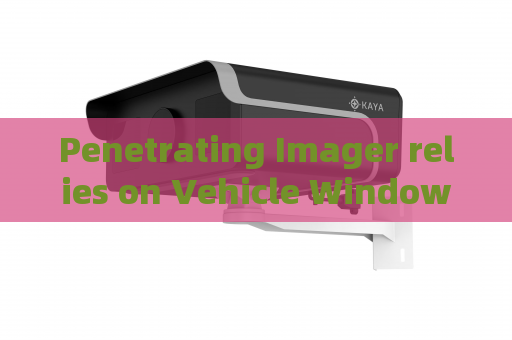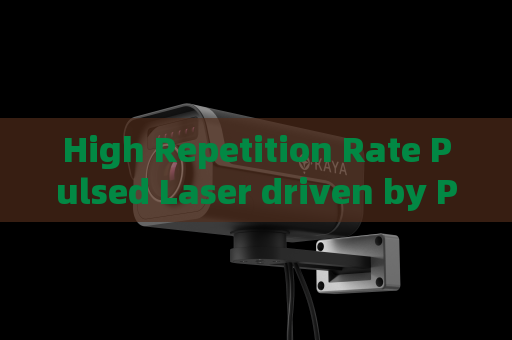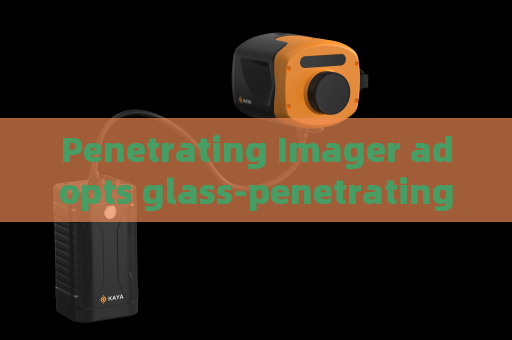
Penetrating Imager adopts glass-penetrating imaging, carries out tactical observation for static vehicle inspection Static vehicle inspection often begins with a pause: an officer or tactical team must assess a parked car, van, or light truck without opening a door, breaking a window, or stepping into a possible ambush. The most useful information sits behind automotive glass—occupant posture, hand placement, seat arrangement, rear-cabin movement, and visual anomalies that may indicate a weapon or concealed subject. Ordinary visual checks struggle with tinted panes, strong reflections, low light, rain streaking, and interior shadows. Approaching to peer inside changes the tactical balance, alerts occupants, and narrows reaction time. A stationary vehicle can become a blind spot precisely because the glass that should reveal the interior instead turns into a bright, distracting surface. The Penetrating Imager addresses this tactical gap by treating the window as an optical interface rather than an opaque barrier. The relevant capability is laser range-gated imaging, also called gated imaging. The Penetrating Imager is an active optical system: a high-repetition pulse laser, an image intensifier gated camera with an MCP image intensifier, high-voltage module, timing module, beam expander, and imaging lens work together. Short light pulses travel toward the stationary vehicle. The camera opens its gate only for a selected time window, so it collects light returning from a chosen distance—such as the cabin interior—while rejecting light reflected from the glass surface and backscatter from fog or rain. This produces high-contrast images with long range, high resolution, anti-interference performance, and effective backscatter suppression. For static vehicle inspection, the function that matters is through-window tactical observation: the system supports see-through imaging of vehicle glass, including tinted windows, without converting the process into a physical search. It is limited to optical media such as window glass; it does not penetrate opaque structural materials. In practice, the equipment is set at a covered position or checkpoint, aimed at one stationary vehicle at a time. The operator selects a range slice that corresponds to the front or rear cabin, then fine-tunes the gate to reduce glare from headlights, streetlights, or wet glass. The resulting image can show whether a driver’s hands are on the wheel, whether passengers are seated normally, whether someone is crouched in a footwell, or whether objects on seats match the declared purpose of the stop. In rain, fog, haze, or snow, the active gated method maintains a clearer view than passive observation because ambient scatter is gated out. The check remains observational: it informs positioning, verbal commands, backup requests, and approach decisions before any door is opened. It also helps avoid unnecessary exposure when the interior appears empty or when the scene presents no immediate tactical concern. A stable rest or tripod improves image steadiness, and slight aim shifts can avoid direct reflection from window curvature or trim. Front, side, and rear glazing can be checked individually while the team keeps standoff and uses available cover. For a static vehicle inspection corridor, the Penetrating Imager can be used repeatedly across multiple parked vehicles while the team maintains standoff. Each window is treated as a separate optical target. The operator adjusts range-gate timing for different cabin depths—compact car, van, or truck cab—and records a clear visual baseline of occupants and interior layout. This glass-penetrating imaging function does not replace physical search or legal authority; it adds a tactical observation layer that reduces uncertainty before contact. The Penetrating Imager adopts glass-penetrating imaging, carries out tactical observation for static vehicle inspection, and gives officers a safer way to read the interior of a stationary vehicle through its glazing. When the window is the only transparent barrier, the system turns that barrier into an advantage rather than a blind spot.