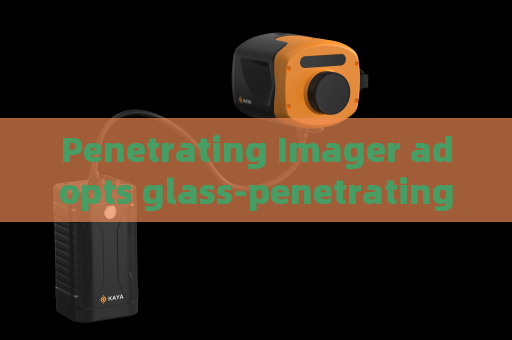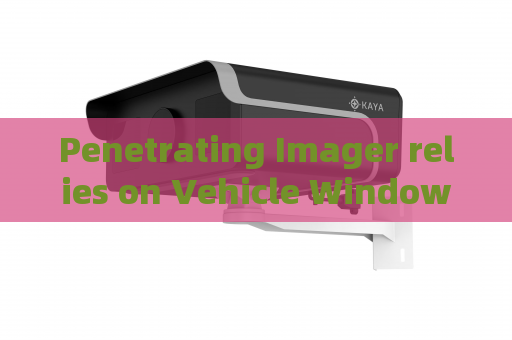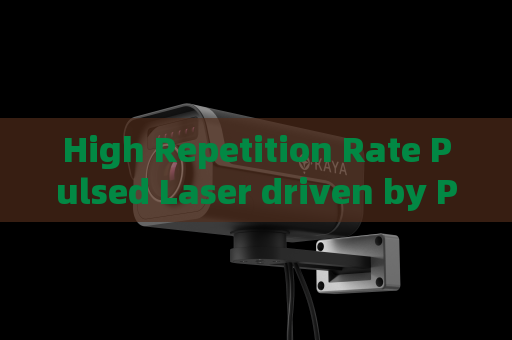
High Repetition Rate Pulsed Laser driven by Penetrating Imager supports long-distance imaging in dim border environments Dim border environments expose a stubborn surveillance problem. The area may be dark, but darkness is only part of the difficulty. Long distances reduce contrast, atmospheric particles scatter light back toward the sensor, and fog, haze, rain, or snow can turn a scene into a flat gray field. Ordinary cameras depend on ambient light or broad floodlights. At a distance, those methods produce noisy images, blown highlights, and weak target separation. Border units need to detect and identify a person, vehicle, or small craft before it reaches a sensitive line. A moving shape in shadow may be a legitimate traveler, an animal, or an intruder. The cost of a wrong call is high, yet the visual evidence is often poor. The Penetrating Imager is designed for this optical challenge, not for non-optical detection. It works with light and optical media, so the operational demand is clear: maintain long-distance visual awareness when the border is dim and the atmosphere is dirty. The relevant function is the High Repetition Rate Pulsed Laser driven by the Penetrating Imager. The instrument is an advanced optical imaging system using laser range-gated imaging, also called gated imaging. A high repetition rate pulsed laser emits short light pulses. An image-intensified gated camera, containing an MCP image intensifier, high-voltage module, timing module, beam expander, and imaging lens, opens its gate for a very brief interval. That interval is timed to collect light returning from a selected distance. Light scattered by fog, haze, rain, or snow near the camera arrives earlier and is largely rejected, while light from the target range passes to the sensor. This active imaging method produces high contrast, long range, high resolution, and strong anti-interference performance. It overcomes backscatter and supports Low-light Imaging without relying on ambient illumination. The system only penetrates optical media such as vehicle windows, high-speed rail windows, aircraft windows, and glass curtain walls. It does not penetrate solid non-optical barriers. This boundary keeps the capability clearly within optical imaging, not any other detection method. In a dim border sector, the Penetrating Imager can be mounted on a watchtower, mobile patrol vehicle, or fixed observation post. The operator sets the gate delay to match the distance of interest and adjusts pulse repetition for the viewing condition. High repetition rate operation delivers more pulses per second, which helps build a steadier image at long range. Motion blur from walking figures or vehicles is reduced. The beam expander shapes the laser output, while the imaging lens and timing module keep the camera synchronized with each pulse. The high-voltage module drives the MCP image intensifier so that weak returning light becomes a usable image. The operator can scan a valley, shoreline, fence line, or open ground and keep visual contact as targets move. Fog, haze, rain, and snow remain optical media, so gated imaging can still return usable detail when conventional low-light cameras lose contrast. A suspected crossing can be observed without turning on wide visible floodlights that would reveal the surveillance position. The image remains tactical: enough resolution to judge direction, posture, and vehicle type at distance, while the camera and laser stay under the control of the border team. The practical effect is a longer decision window. Border personnel receive a clearer view in dim conditions and can distinguish a human from an animal, a patrol vehicle from an intruder, or a fishing boat from a smuggling craft. The Penetrating Imager does not replace sound border procedure, but it strengthens long-distance imaging in dim border environments by using controlled light pulses and precise gating. Its limits remain optical. Dense smoke can block the view, and solid non-optical barriers cannot be seen through. Rain, snow, haze, and fog are optical media that can be managed, while heavier obscurants may reduce performance. When the border is dark, wet, and hazy, the High Repetition Rate Pulsed Laser driven by Penetrating Imager supports long-distance imaging in dim border environments by turning scattered light into a managed signal and preserving visual detail where passive optics fail. The result is a persistent optical watch that helps border teams act on verified visual information rather than uncertain silhouettes.