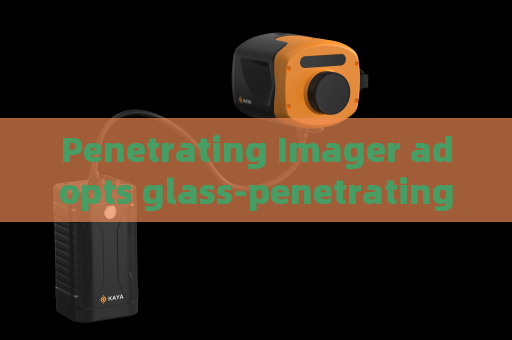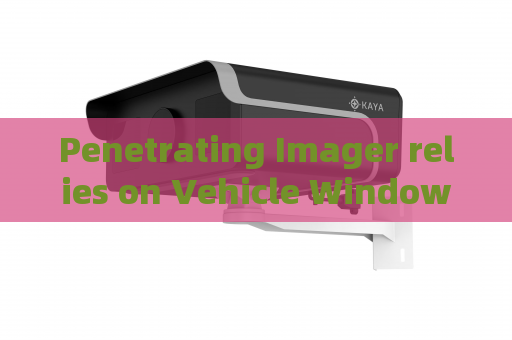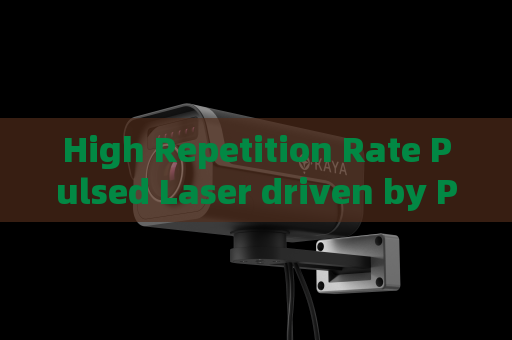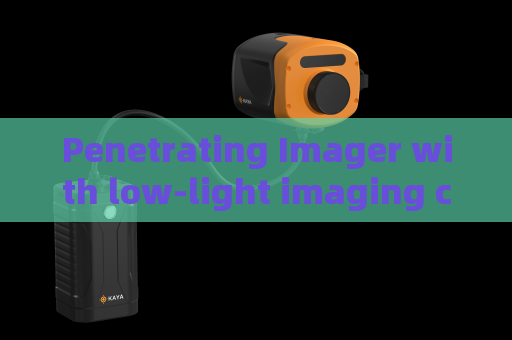
Penetrating Imager with low-light imaging capability for border night patrol to achieve long-distance tactical reconnaissance Border night patrols often operate along remote roads, riverbanks, and mountain passes where street lighting does not exist and reliable surveillance infrastructure is absent. The operational demand is long-distance tactical reconnaissance: detecting, recognizing, and tracking vehicles, persons, and small groups before they reach a checkpoint or crossing point. Darkness reduces contrast. Fog, haze, rain, and snow scatter light and create backscatter that washes out conventional night vision. Headlamps and roadside lights produce glare. Vehicle windows, including tinted glass, obscure occupants and cargo from direct observation. Patrol teams must decide whether to intercept, observe, or hold position, yet the visual evidence available at distance is often insufficient. A penetrating imager with low-light imaging capability addresses this gap by providing usable imagery under exactly these conditions. The relevant function is laser range-gated imaging. A high-repetition pulsed laser illuminates the scene. An intensified gated camera, containing an MCP image intensifier, high-voltage module, and timing module, opens only for a very short interval. The beam expander and imaging lens shape and collect the returned light. Because the gate is synchronized to the target distance, light scattered by fog, haze, rain, snow, or intervening glass is largely rejected before it reaches the sensor. This active optical method produces high-contrast images with long range, high resolution, and strong anti-interference performance. The low-light imaging capability amplifies weak returns, so targets remain visible when ambient illumination is minimal. For border night patrol, the imager can support through-window tactical observation: vehicle windshields, side glass, and other optical media can be imaged without opening doors or approaching the vehicle. The system works within the optical band and is limited to transparent optical media such as glass. This function directly supports long-distance tactical reconnaissance by preserving detail at range rather than merely detecting a vague silhouette. In field use, the imager is mounted on a tripod, vehicle roof, or forward observation post. The operator selects a range gate for the sector of interest, adjusts gain for low-light conditions, and focuses the imaging lens. Laser pulses travel to the target area. The gated camera captures returning light from that selected distance and suppresses backscatter from weather and nearby glass surfaces. On a border road at night, a patrol can observe an approaching vehicle from hundreds of meters away, identify its type, and check the cabin through the windshield or side windows. If fog, haze, rain, or snow reduces visibility, the range-gated active imaging still provides a clearer view than passive night optics. The low-light imaging capability allows the same imager to operate after dusk, under cloud cover, or in areas with no artificial light. Through-window tactical observation helps confirm whether a vehicle carries passengers, concealed persons, or suspicious cargo before a stop is initiated. The patrol can choose interception, tracking, or continued observation with better tactical awareness and less exposure. At a border night patrol station, the value of the penetrating imager is cumulative. Long-distance tactical reconnaissance is not a single image; it is a continuous sequence of observations that informs command decisions. The imager can monitor a road, a gate, or a known crossing route, and shift to a vehicle of interest as it approaches. The low-light imaging capability maintains image quality as illumination drops. Range gating reduces the impact of fog, haze, rain, and snow, while optical media such as vehicle glass no longer block a useful view of the cabin. This supports timely warnings, targeted checks, and safer interception. The penetrating imager with low-light imaging capability for border night patrol to achieve long-distance tactical reconnaissance therefore extends the patrol’s visual reach without changing the fundamental rule: it works with light, through optical media, at distance, and in low light.