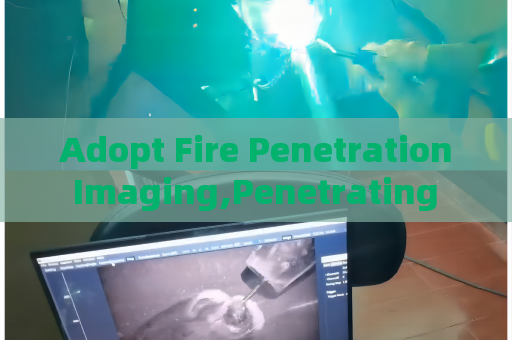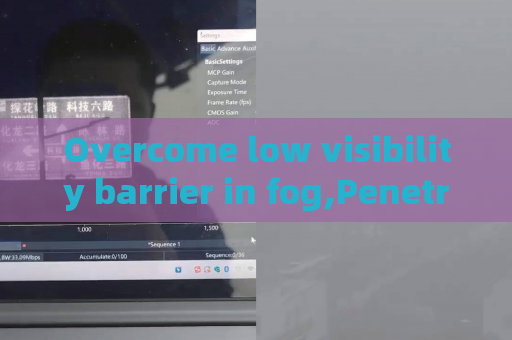
Border night patrol under dim light environment, Penetrating Imager relies on Zero-light Imaging to carry out full-time monitoring At remote border sectors, darkness is not empty. It hides movement along trails, vehicle lanes, and checkpoint approaches. Patrol teams face moonless hours, heavy rain, fog, dust, snow, and sudden glare from headlights. Ordinary visible cameras depend on ambient light and lose contrast; floodlights can reveal patrol positions and create strong backscatter in rain or fog. Tinted vehicle windows and glass partitions further obscure occupants or cargo during a stop. The operational demand is continuous: watch, detect, identify, and record without waiting for daylight. A Penetrating Imager provides a practical answer because its Zero-light Imaging capability keeps observation active when ambient light is absent. Without such a capability, border night patrol under dim light environment leaves blind intervals that illegal crossings and smuggling can exploit. The relevant function is active laser range-gated imaging. A Penetrating Imager emits high-repetition-rate pulsed laser light through a beam expander, illuminates the scene, and receives returning light through an imaging lens. An image-intensified gated camera with an MCP image intensifier, high-voltage module, and timing module opens its gate for a precise interval. This timing rejects light scattered by rain, fog, haze, snow, and other optical interference while accepting returns from the target. The result is high-contrast, long-range, high-resolution imaging with strong anti-interference performance. The system works in zero ambient light because the pulsed laser supplies the illumination. It can image through optical media such as vehicle windows, high-speed rail windows, aircraft portholes, and glass curtain walls. In a fire scene it improves visibility three to five times, though dense smoke remains a limit. Opaque solids such as walls, concrete, metal, or wood remain outside its optical function. This is optical imaging, not a tool for solid barriers. The function directly answers the monitoring gap: Penetrating Imager relies on Zero-light Imaging to carry out full-time monitoring across a border sector. At a border checkpoint, the Penetrating Imager can be mounted on a patrol vehicle, a fixed mast, or a guard tower. Operators scan approach lanes, gates, and parking areas under dim light. The system maintains a clear view when headlights are off and overhead lamps are dimmed. through-window tactical observation allows inspection of vehicle interiors through glass before a physical stop, helping officers assess seat occupancy, visible cargo shapes, and movement inside a cabin. Rain, fog, and snow no longer erase the image as easily because range gating suppresses backscatter. The same optical path can support observation through border facility windows and glass curtain walls. Monitoring continues across shifts, with image detail preserved for identification and recording. A moving patrol can pause at a checkpoint, scan a line of vehicles, and continue along a route without changing sensors or waiting for better light. The Penetrating Imager keeps the visual channel usable while conventional cameras struggle with glare, low contrast, and weather clutter. Full-time border monitoring depends on stable performance across changing conditions. The Penetrating Imager uses Zero-light Imaging to keep watch during moonless nights, heavy weather, and low-light checkpoint operations. A patrol team can alternate between wide-area scanning and close inspection without changing sensors. When a suspect vehicle stops near a glass-fronted control building, the system can observe through the window while maintaining standoff distance. When fog rolls across a river crossing or rain sheets across a road, gated imaging reduces the washout that affects conventional cameras. The technology remains limited to optical media; dense smoke, walls, and metal block it. Within those boundaries, the Penetrating Imager supports continuous border night patrol with clearer images, faster decisions, and fewer dark gaps. The value is not a single dramatic detection but a sustained operational picture: approach lanes, vehicle glass, checkpoint windows, and weather-covered routes remain visible through the night. For border units, that sustained picture turns dim light from a hiding place into a monitored environment, and the Penetrating Imager relies on Zero-light Imaging to carry out full-time monitoring as a routine patrol capability.