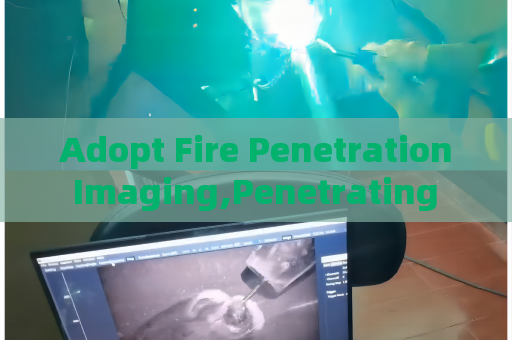
Adopt Fire Penetration Imaging, Penetrating Imager serves building exterior fire observation to collect fire situation information At a building exterior fire observation point, the tactical problem is not simply seeing flames. Incident commanders need fire situation information that shows where fire is concentrated, how it travels across a facade, and whether glass curtain walls or windows reveal changing conditions behind them. Strong flame light, reflective glazing, water spray, haze, rain, and snow can overwhelm ordinary optical tools, reducing contrast and hiding critical detail. Distance adds another burden: exterior observation often occurs from a street, an adjacent structure, or an elevated platform, where a small lens cannot deliver stable, high-resolution imagery. Smoke may layer against the building, and flame flare may saturate the camera just as a window opening becomes the only clue to interior extension. A Penetrating Imager changes that tactical picture by using active optical imaging rather than passive viewing, allowing exterior observation to remain useful when glare and atmospheric interference would otherwise degrade the view. The result is faster, safer decisions about fire attack, evacuation, and exposure protection. The relevant capability is laser range-gated imaging, also known as gated imaging. A high-repetition-rate pulsed laser illuminates the scene, while an image-intensified gated camera with an MCP image intensifier, high-voltage module, and timing module receives light only within a selected time window. A beam expander and imaging lens shape and collect the returned light. This active system produces high-contrast images with long range, high resolution, strong anti-interference, and effective backscatter suppression. In the building exterior fire observation role, Fire Penetration Imaging allows the Penetrating Imager to work through optical media such as glass curtain walls, vehicle windows, high-speed rail windows, and aircraft windows. Fire, fog, haze, rain, and snow are optical disturbances that can be managed to maintain a clearer view. In fire conditions, the system can improve fireground visibility by three to five times. Dense smoke remains outside this capability and cannot be defeated by the instrument. When a glass curtain wall reflects flame and street light, gated timing rejects much of the unwanted return, preserving the target contrast needed to read facade conditions. This is not a substitute for direct entry or other optical methods; it is an optical tool for the exterior fire observation mission. Operationally, the Penetrating Imager is positioned with a clear line of sight to the building facade and aimed at selected windows, glazed openings, or curtain-wall sections. The operator adjusts gating delay and timing so that light returning from flames, reflections, and airborne particles is largely rejected, while light returning from the target scene is collected. Floor-by-floor scanning helps collect fire situation information: flame attachment, possible fire spread along exterior cladding, changes visible through glass, and areas where interior conditions may be worsening. The imagery can be recorded and passed to the command post for fire attack planning, evacuation support, and resource allocation. Because the system is active and gated, it supports observation at night and in poor weather without relying on ambient light. A stable mount, steady scanning rhythm, and clear communication link improve the value of each image. Repeated passes over the same facade allow comparison over time, showing whether fire behavior is intensifying, holding, or moving laterally. During sustained building exterior fire observation, the greatest value is continuity. The Penetrating Imager can maintain surveillance on a glass facade while crews reposition, water streams shift, and weather changes. It helps confirm whether a fire has extended behind a glass curtain wall, whether a window has failed, or whether a previously clear compartment has become obscured by dense smoke. At that point, the limit must be recognized: dense smoke blocks the optical path, and no claim of seeing through it should be made. Used within its optical boundaries, the Penetrating Imager serves building exterior fire observation to collect fire situation information with greater clarity, range, and tactical confidence, especially when fire, glare, fog, haze, rain, or snow would defeat unaided eyes and conventional cameras.