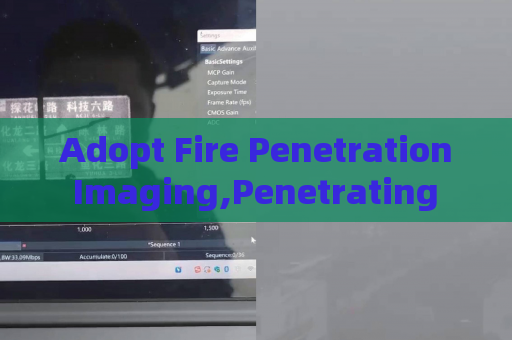
Remote border surveillance under dim light conditions, glass-penetrating imaging supports accurate observation of vehicle interior Remote border surveillance under dim light conditions exposes a persistent operational gap at isolated crossings, mountain roads, and coastal checkpoints. At night or during heavy weather, vehicle cabins become dark boxes. Headlights, wet asphalt, roadside lamps, and reflective glass produce glare and false highlights. Tinted windows, sun film, and curved windshields further reduce contrast. A standard camera often records only silhouettes, reflections, or empty-looking seats. Officers must decide whether a vehicle carries concealed occupants, prohibited goods, or weapons before opening a door. Approaching every vehicle at close range increases risk and slows traffic. A penetrating imager addresses this gap by using active optical imaging to evaluate vehicle interiors from a standoff position while the checkpoint remains under dim light conditions. The problem is not simply darkness; it is the combination of distance, motion, reflective glazing, and unpredictable illumination. The relevant capability is glass-penetrating imaging with laser range-gated active imaging. A penetrating imager combines a high-repetition-rate pulsed laser, a gated intensified camera with an MCP image intensifier, high-voltage module, timing module, beam expander, and imaging lens. Short laser pulses illuminate the scene. The camera gate opens only for a narrow time window matched to the target distance. Light returning from the vehicle window and cabin is collected, while backscatter from fog, haze, rain, snow, dust, and glass surface reflections is strongly rejected. This active method produces high-contrast images with long range, high resolution, and strong anti-interference performance. The function directly supports through-window tactical observation: the system looks through vehicle glass and reveals interior shapes, seat occupancy, packages, and movement without requiring a door to be opened. Because the process stays within the optical spectrum, it is limited to optical media such as automotive glass; it is not a tool for solid barriers. For border crews, the practical value is a clear cabin view under low light, not a general search of opaque structures. In field use, the unit can be mounted on a tripod, patrol vehicle, or fixed checkpoint post. The operator selects a range gate, adjusts zoom, and views a real-time monitor. The pulsed laser provides illumination that is invisible or near-invisible to the unaided eye, so the checkpoint can remain dark and discreet. Glass-penetrating imaging supports accurate observation of vehicle interior as a vehicle slows or stops at a distance. Occupants can be counted, seated positions noted, and suspicious items identified before an inspection team approaches. Strong light suppression helps when oncoming headlights or reflective signs enter the field of view. Rain, fog, and snow degrade ordinary optics, yet range gating keeps the returning signal from the target range dominant, preserving image contrast. A short recording can be saved for briefing, and the same optical channel can track the vehicle as it advances to the search area. The result is faster triage: low-risk vehicles pass, while high-risk vehicles receive closer attention. For remote border surveillance under dim light conditions, the penetrating imager provides a focused optical solution rather than a broad sensor suite. It does not replace physical inspection, but it gives officers a remote visual check through vehicle glazing before a stop escalates. At night, in rain, or across a windswept checkpoint, the system can confirm whether a cabin appears occupied, whether cargo blocks the rear seat, or whether movement occurs behind tinted glass. Remote border surveillance under dim light conditions becomes more accurate because glass-penetrating imaging supports accurate observation of vehicle interior at safe standoff distance. The penetrating imager therefore serves as a targeted surveillance tool for vehicle glazing, preserving concealment, improving officer safety, and supporting rapid decisions at the border.