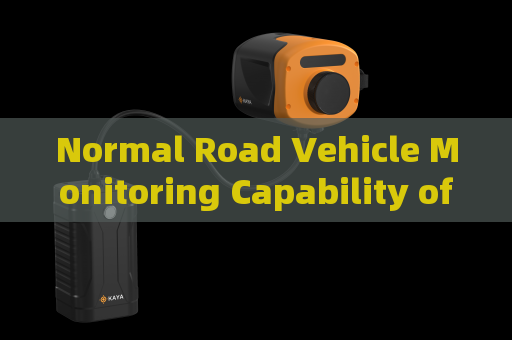
Normal Road Vehicle Monitoring Capability of the Penetration Imager with All-Weather Penetration Technology in Severe Weather In severe weather conditions such as heavy fog, rainstorms, or blizzards, law enforcement and traffic surveillance face a critical challenge: conventional optical cameras become nearly blind. The reflected light from headlights and taillights scatters through suspended water droplets or ice crystals, producing blinding glare and severely reducing contrast. Officers positioned at checkpoints or along highways cannot reliably see through vehicle windows to assess driver behavior, identify occupants, or detect suspicious objects inside the cabin. This limitation creates a dangerous blind spot—traffic stops become high-risk encounters when the driver’s intentions remain hidden behind rain-streaked or fogged glass. The inability to maintain continuous visual surveillance in adverse weather undermines both public safety and officer security, yet the need for real-time vehicle monitoring remains unchanged regardless of meteorological conditions. The Penetration Imager, an advanced optical instrument employing laser range-gated imaging technology, directly addresses this operational gap. Its core components—a high-repetition-rate pulsed laser, an image intensifier gated camera with microchannel plate, and synchronized timing modules—enable it to selectively capture light reflected from a target at a precise distance while rejecting backscatter from fog, rain, or snow particles. Unlike passive cameras that struggle with low contrast, the system actively illuminates the scene with nanosecond laser pulses and opens its imaging gate only when the reflected signal from the target vehicle arrives. This process effectively cuts through intervening obscurants, delivering a high-contrast, high-resolution image of the vehicle interior and its occupants through the windshield or side windows. The Penetration Imager is specifically designed for optical media such as automotive glass, airplane windows, and glass curtain walls, and cannot penetrate non-transparent solids such as walls or metal—a critical distinction that keeps it within the optical domain. Field deployment demonstrates immediate benefits for road vehicle monitoring. During a severe fog event with visibility below fifty meters, a mobile checkpoint equipped with the Penetration Imager can still acquire clear imagery of drivers and passengers through a vehicle’s laminated windshield from a standoff distance of over one hundred meters. The system suppresses the blinding effect of oncoming headlights by gating out the scattered light, allowing operators to see facial features, hand movements, and items on seats or dashboards. In heavy rain, water sheets on glass cause severe distortion for conventional optics, but the Penetration Imager’s short exposure window freezes motion and eliminates most droplet-induced blur. This capability transforms a previously impracticable surveillance scenario into a routine, reliable observation method. The Penetration Imager’s active operation remains unaffected by ambient light levels, making it equally effective during nighttime storm conditions where passive infrared systems would be overwhelmed by rain glare. Operational protocols center on the Penetration Imager’s simple two-stage process: target acquisition and gated capture. An operator first uses the system’s wide field-of-view to locate the approaching vehicle, then adjusts the range gate to match the distance read from a laser rangefinder. Once locked, the imager continuously produces real-time video of the vehicle interior through the windscreen, even as the car moves within the tactical zone. In severe weather, the system enhances visibility through fire, fog, rain, or snow by a factor of three to five, though it cannot penetrate thick smoke—a known limitation that must be factored into mission planning. Training drills confirm that with less than ten minutes of familiarization, patrol officers can switch from a blinded conventional scope to a fully operational Penetration Imager, restoring the critical capability to monitor normal road vehicles regardless of weather severity. The technology does not rely on any form of radiation or ultrasound; it simply uses pulsed light and precision timing to see through the optical barriers that weather creates.




