In vast desert border regions or remote military outposts, sudden sandstorms can reduce visibility to zero within minutes, creating a moving wall of suspended particles that blinds conventional surveillance systems. The core challenge lies in the fact that standard optical cameras, whether visible-light or near-infrared, are rendered completely useless because sand particles scatter and absorb light, producing a uniform, featureless haze. Thermal imagers also struggle, as the sand itself carries heat and masks the thermal signature of a human body. This leaves security forces with a dangerous blind spot: a potential trespasser can approach unseen behind a zero-visibility sand barrier, exploiting the natural phenomenon to bypass detection. The real pain point is not just the lack of sight—it is the inability to confirm whether a threat exists in that obscured zone, forcing guards to rely on guesswork or delayed physical patrols, which risk ambush or escalation. Here, the penetration imager emerges as a critical tool to solve this exact scenario.
The penetration imager, leveraging laser range-gated imaging technology, directly addresses the optical chaos caused by sand. Its system components—a high-repetition-rate pulsed laser, an intensified gated camera with a microchannel plate (MCP), high-voltage module, timing module, a beam expander, and an imaging lens—work in concert to overcome the problem of backscatter. Unlike floodlight illumination that bounces off the first layer of sand particles and blinds the sensor, the penetration imager fires extremely short laser pulses and opens the camera gate only after a precise delay, corresponding to the round-trip time of light to the target distance. This technique effectively slices through the scattering medium: the near-field sand particles are ignored because their backscattered light arrives too early, while the distant trespasser’s reflection arrives exactly when the gate opens. The result is a high-contrast, high-resolution image of the target, even when visibility is zero. The penetration imager can penetrate optical media such as airborne sand, dust, fog, rain, snow, and even fire (improving visibility 3-5 times within fire scenes, though ineffective against thick smoke), making it ideal for this sand-barrier scenario where no solid physical obstacle exists, only a dense particulate suspension.
In practice, at a desert border checkpoint, the penetration imager is mounted on a tripod and aimed toward the area of concern—a stretch of open ground frequently obscured by blowing sand. When a sandstorm hits, an operator activates the system and adjusts the gate delay to match the estimated range of potential approach paths, typically 100 to 500 meters. The live feed on the monitor instantly replaces the uniform beige haze with a crisp image showing the terrain and any human-shaped objects moving behind the sand wall. Because the laser operates in the near-infrared spectrum, it is covert and invisible to the naked eye, preventing the trespasser from knowing they are being observed. The operator can track multiple individuals, relay coordinates to response teams, and even record evidence—all while maintaining a safe distance. This capability transforms a previously exploitable vulnerability into a surveillance advantage, as the sand barrier no longer hides intruders but instead becomes a predictable and penetrable challenge.
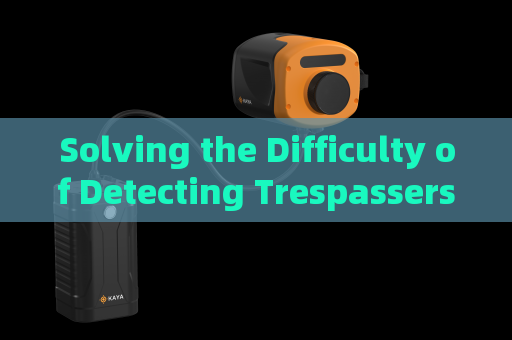
Further refining the operation, the penetration imager’s digital timing module allows dynamic range adjustment. In a zero-visibility sand barrier, the density of particles can vary with wind gusts, causing fluctuations in backscatter intensity. However, the system’s automatic gain control and adaptive gate width compensate in real time. For example, if a trespasser crouches low behind a sand dune, the operator can narrow the gate to only receive reflections from a specific depth, effectively eliminating irrelevant scatter layers. This ensures that even small movements—a hand reaching for a weapon, a footstep shifting sand—are visible. The same principle applies when the sand barrier is mixed with other optical disturbances, such as heat haze or light rain. The penetration imager remains resilient, providing a consistent imaging solution that neither thermal imagers nor standard cameras can match. For law enforcement and military units tasked with perimeter security, this single device closes a critical detection gap, turning an environmental hazard into a tactical asset.




