Patrolling a national border demands unwavering vigilance, yet severe weather—blinding snowstorms, dense fog, driving rain, or wildfire smoke—routinely cripples conventional optical surveillance systems. Standard cameras falter when scattering particles obscure the line of sight, reducing visibility to mere meters and leaving critical stretches of perimeter vulnerable. Thermal imagers, while useful in darkness, fail to see through fog or rain and offer limited clarity against wet surfaces or glass barriers like vehicle windows. Border guards face a decisive challenge: how to maintain stable and continuous protective border surveillance when natural elements actively conceal potential incursions. A penetrating imager must bridge this gap, providing an imaging solution that operates reliably regardless of atmospheric interference, without relying on non-optical detection methods. The core problem is not just seeing through weather but ensuring uninterrupted, high-contrast recognition of moving targets at extended ranges, day or night.
The penetrating imager addresses this gap through laser range-gated imaging technology. This advanced optical instrument integrates a high-repetition-rate pulsed laser, an intensified gated camera incorporating a microchannel plate (MCP) intensifier, a high-voltage module, and precise timing circuitry, along with a beam expander and imaging lens. Unlike passive systems, the penetrating imager is an active imaging device that emits short laser pulses and synchronizes the camera shutter to capture only the light reflected from the target at a specific distance. This gating mechanism effectively rejects backscatter from fog, rain, snow, or fire, delivering clear images through optical media such as vehicle windshields, train windows, aircraft portholes, or glass facades. In severe weather, the penetrating imager enhances scene contrast and extends operational range far beyond what conventional optics can achieve, while maintaining resistance to ambient light glare and adverse conditions. Crucially, it operates strictly within the optical spectrum, penetrating only transparent or semi-transparent obstructions—never walls, concrete, or other opaque solids.
Deploying a penetrating imager for border surveillance transforms how guards cope with persistent bad weather. Mounted on fixed towers or mobile patrol vehicles, the system can continuously scan long perimeters, automatically adjusting laser pulse parameters to compensate for varying atmospheric density. Operators view real-time imagery on ruggedized monitors, where human silhouettes, vehicle contours, and even subtle movements behind fog or falling snow become sharply defined. The penetrating imager functions equally well in complete darkness, eliminating the need for separate night-vision goggles. In a typical operational scenario, a border checkpoint equipped with this imager can maintain visual contact across a valley shrouded in thick fog, identifying suspicious individuals attempting to cross unnoticed. The system’s ability to see through glass also proves invaluable for inspecting approaching vehicles at roadblocks without requiring physical contact, reducing risk to personnel.
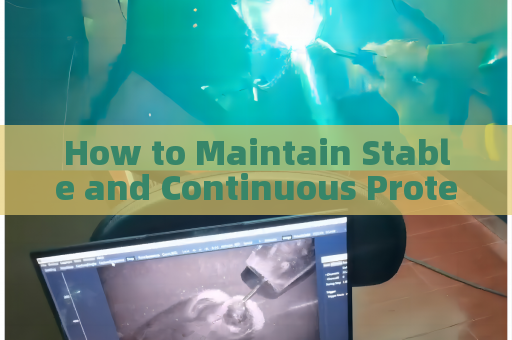
Weather resilience demands not only penetration but also stability under shifting conditions. The penetrating imager’s internal timing modules and high-power pulsed laser ensure consistent performance even during rapidly deteriorating storms. For example, during a heavy snowfall, conventional cameras degrade to monochrome static, while the penetrating imager continues to return crisp images by rejecting snowflake scatter through its range gate. Similarly, wildfire smoke that blinds other optical sensors—though not thick smoke that is opaque—still allows the imager to improve visibility through the haze by three to five times. Operators rely on the system’s high resolution to distinguish between wildlife and human intruders at distances exceeding a kilometer. This capability directly supports protective border surveillance continuity, enabling guards to monitor vulnerable sectors throughout the harshest weather cycles without interruption. The penetrating imager thus becomes an indispensable tool for sustaining situational awareness when atmospheric conditions would otherwise force a patrol stand-down.




